
Your bathroom’s sewage smell likely stems from one of five common culprits.
A dried P-trap—the U-shaped pipe under your sink—loses its water seal, letting sewer gases escape.
Your toilet’s wax ring seal might be failing.
Clogged drains trap rotting organic material.
Cracked pipes or blocked vent pipes release gases indoors.
Multiple bad-smelling drains suggest sewer line trouble.
Start with quick fixes like running water for thirty seconds or using baking soda and vinegar.
Continue reading to discover which specific problem matches your situation.
Common Causes of Sewer Smell in Your Bathroom
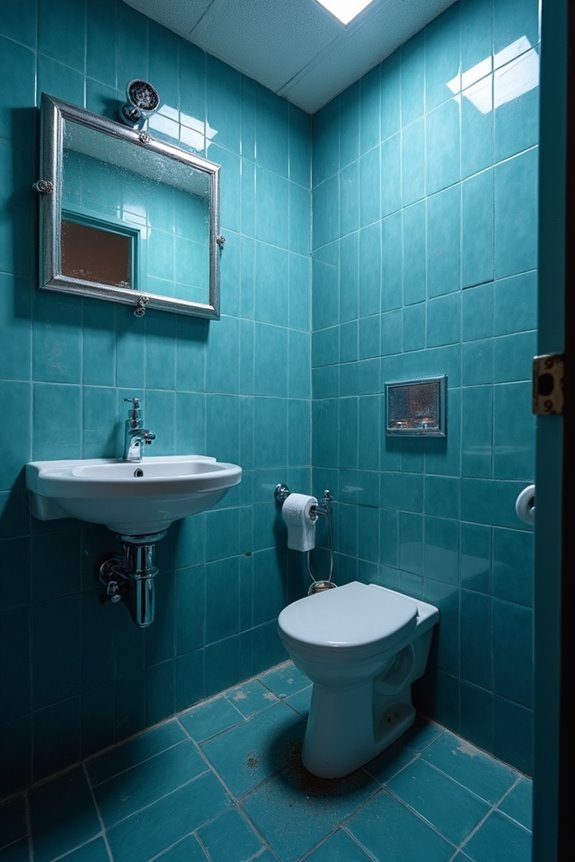
Why does your bathroom smell like a sewer? Several issues could be causing that unpleasant odor in your home. A clogged drain traps organic material that rots, producing sewage-like smells and gurgling sounds. Your P-trap—that U-shaped pipe under your sink—normally holds water that seals out sewer gases. When a dry trap loses its water seal, those gases escape into your bathroom. Cracked pipes or a faulty toilet seal, like a damaged wax ring, also release sewer gases indoors. Blocked or faulty vent pipes prevent proper plumbing venting, causing gases to accumulate. Finally, sewer line issues create backflow, allowing gases to migrate through your drains. Identifying which cause affects you helps determine the right fix.
Dry P-Trap: Refill It in 30 Seconds
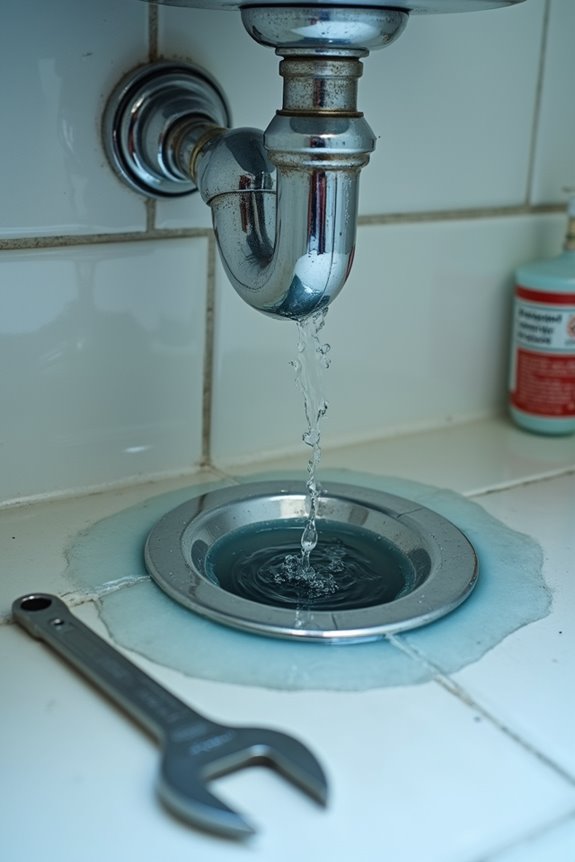
One of the quickest fixes you can try is refilling your P-trap with water. This U-shaped pipe holds water to block sewer gases from entering your bathroom. When it dries out, those nasty odors escape upward. Here’s what you need to know:
- Run water for 30 seconds down the drain to refill the trap completely
- Smell for improvement after running water to test if odor reduces noticeably
- Infrequently used drains dry out faster, especially after 2–4 weeks without use
- Monthly priming with water maintains the seal and prevents future odor problems
- Persistent odors after refilling suggest deeper plumbing issues requiring professional inspection
This simple maintenance task takes seconds and often solves your sewer smell problem. Regular use or occasional water priming keeps your P-trap functioning properly and your bathroom fresh.
Check Your Toilet Seal for Leaks and Damage
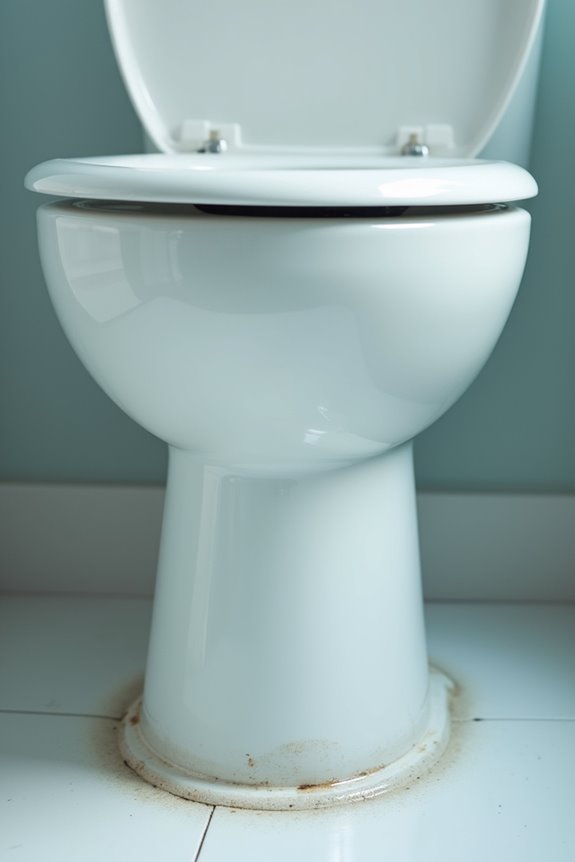
Your toilet’s wax ring seal can fail over time, allowing sewer gases to escape into your bathroom. You’ll notice persistent odors near the toilet base, visible moisture, or stronger smells after flushing—all signs that your seal is compromised. Fixing this usually means lifting the toilet, scraping away old wax, and installing a new ring to restore the seal properly.
Wax Ring Seal Failure
Have you noticed a stubborn smell right around your toilet’s base? That persistent bathroom odor often signals wax ring seal failure. The wax ring creates a watertight barrier between your toilet and the flange underneath. When it deteriorates, sewer gases escape freely into your bathroom.
Here’s what happens when your seal fails:
- Sewer gases leak through gaps in the wax ring seal
- Your toilet rocks slightly when you sit down
- Water seeps underneath, creating damp spots on the floor
- Flushing sounds become unusual or gurgling noises occur
- Odors intensify despite cleaning efforts
A professional can lift your toilet, remove the old seal, clean the flange thoroughly, and install a new wax ring for a proper seal. This straightforward repair prevents further damage and eliminates those unwelcome smells from your bathroom.
Signs Of A Compromised Seal
Now that you understand how wax ring failure happens, it’s time to spot the warning signs before things get worse. Watch for these specific indicators around your toilet:
A rocking toilet is one red flag. Check the base of your toilet for water pooling or dampness. Persistent odor near the base suggests your toilet wax seal is compromised. If sewer gases escape, you’ll notice that unmistakable smell lingering in the area. Look for visible water damage on your toilet floor or moisture accumulation. Test seal integrity by flushing and inspecting closely afterward.
Tightening connections might help temporarily, but ongoing odors indicate you’ll likely need to reseal your toilet soon. Ignoring these signs allows water damage to spread beneath your toilet and into the subfloor, leading to structural problems and mold growth.
Lifting the toilet and installing a new wax ring prevents serious damage from developing. The longer you wait, the more costly repairs become.
Replacement And Prevention Steps
Fixing a compromised wax ring is straightforward if you’re willing to get your hands a bit dirty. You’ll lift your toilet, clean the flange thoroughly, and install a new wax ring to restore that plumbing seal. This process stops sewer gases from escaping around your toilet base and eliminates that stubborn bathroom odor.
Here’s what you’ll need to handle:
- Turn off water and flush completely before removal
- Disconnect supply line and unbolt the toilet carefully
- Scrape away old wax ring debris from the flange
- Position new wax ring and reseat toilet with proper alignment
- Check P-trap connections for additional venting issues
If DIY wax ring replacement doesn’t solve your odor problem, call a professional plumber. They’ll inspect hidden leaks and identify drainage issues you might’ve missed, preventing the problem from recurring.
How Clogged Drains Create Sewer Smell
When hair, soap scum, and debris pile up in your drain, they create blockages that trap organic material and allow it to rot, producing that nasty sewage smell you’re noticing. Inside these clogs, bacteria thrive on the rotting matter and release foul-smelling compounds that seep into your bathroom, while gases from the sewer line back up through the drain when water can’t flow freely. You’ll know you’ve got a clog problem if you notice slow draining, hear gurgling sounds, or smell persistent odors near your sink or shower—and fixing it usually means plunging, snaking the drain, or calling a professional to clear the blockage.
How Blockages Trap Odors
Ever wonder why your drain smells so bad? When blockages trap wastewater in your pipes, they create the perfect environment for bacteria to thrive and produce those nasty sewer gases.
Here’s what happens inside your drain:
- Hair, soap scum, and debris accumulate, forming a clog that blocks water flow
- Stagnant wastewater backs up behind the blockage, creating a breeding ground for odor-producing bacteria
- Sewer gases get trapped instead of venting safely through your roof vent
- Slow draining and gurgling sounds signal that gases are building pressure in your pipes
- The P-trap’s water seal breaks down, allowing sewer odors to escape into your bathroom
When you notice these warning signs, it’s time to address the clog before the smell gets worse and causes bigger plumbing problems.
Bacteria Growth In Clogs
Why’s that drain smell getting worse? Bacteria thrive in your clogged drain’s warm, moist environment. When organic buildup gets trapped, bacteria multiply rapidly behind the blockage. They break down hair, soap scum, and other debris, producing sulfur compounds and methane gas. These create that unmistakable sewage smell you’re noticing.
| Bacteria Stage | Location | Odor Level |
|---|---|---|
| Early growth | Drain opening | Mild musty |
| Active colonization | P-trap and pipes | Strong sewage |
| Peak proliferation | Blockage zone | Overwhelming |
| Post-cleaning | Cleared drain | Fresh air |
Slow draining and gurgling signal bacteria are multiplying. Standing water behind the clog becomes their breeding ground. Professional hydro-jetting removes organic matter and bacteria colonies. Restoring normal flow prevents future odor problems and keeps your bathroom clean.
Warning Signs And Solutions
How do you know if a clog’s behind that bathroom smell? Watch for these warning signs that a blockage needs attention:
- Slow draining water in sinks, showers, or toilets indicates trapped debris
- Gurgling sounds coming from drains suggest sewer gases backing up through your pipes
- Foul odors that won’t disappear point to bacteria growth in the clogged area
- Multiple drains acting up simultaneously mean the blockage affects your whole venting system
- Persistent sewage smell after basic cleaning reveals a deep P-trap issue
If you notice these signs, you have options. Start with plunging. Still stuck? A plumber can use a drain snake or hydro-jetter for serious clogs. Removing the P-trap sometimes becomes necessary for complete odor elimination. Address clogged drains quickly to prevent bigger plumbing problems and restore fresh bathroom air.
Spotting Cracks and Leaks Behind Walls
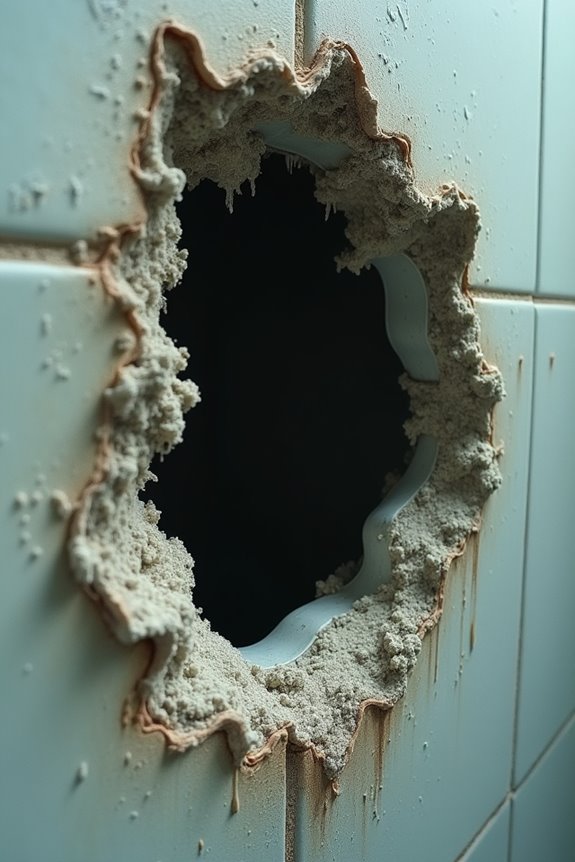
Sometimes the worst plumbing problems hide right behind your walls. You can’t see them, but you’ll definitely notice the signs. If you spot visible moisture, stains, or mold near walls or floors, that’s your red flag. Persistent bathroom odors paired with damp patches suggest concealed plumbing damage lurking beneath the surface.
| Warning Sign | What It Means |
|---|---|
| Sewer gases smell | Cracks behind walls releasing odors |
| Moisture behind walls | Hidden leaks in supply pipes |
| Visible mold patches | Structural moisture from drainage issues |
| Persistent odors | P-trap evaporation or pipe cracks |
| Damp stains | Leaks behind walls need attention |
Don’t ignore these signals. Camera inspection pinpoints the exact break location. Early detection prevents expensive repairs and protects your home’s structure from water damage.
Is Your Sewer Line the Problem?
Your sewer line’s probably fine—but it’s worth checking if multiple drains smell bad at once. When several bathrooms reek simultaneously, you’ve likely got a sewer line problem rather than isolated issues.
Multiple bathroom drains smelling bad simultaneously signals a sewer line problem, not isolated issues.
Tree root intrusion commonly blocks sewer lines. Roots seek moisture and crack pipes, creating blockages that emit sewer odors throughout your home.
What to investigate:
- Camera inspection pinpoints exact clog or pipe break locations before treatment
- Hydrojetting blasts high-pressure water through pipes to clear buildup effectively
- Tree root intrusion requires professional removal and pipe repair or replacement
- Vent pipe leak allows sewer gas to escape inside your house
- Pipe replacement becomes necessary when damage is too severe for hydrojetting
A camera inspection reveals whether you’re dealing with a clogged drain or actual pipe damage. This guides your next move—whether that’s hydrojetting or full pipe replacement.
DIY Fixes Before You Call a Plumber
Before you call a plumber, try these simple fixes yourself. Start by plunging your clogged drain, which traps organic matter that rots and smells awful. If you’ve got infrequently used drains, refill that dry P-trap by running water for thirty seconds to reset the water seal and block sewer gases. Mix baking soda and vinegar, pour it down the drain, then flush with hot water. This combo tackles buildup naturally. For drains you rarely use, install a drain seal to prevent odors. Check your toilet wax seal at the base for damage or looseness. Finally, inspect your vent pipe for blockages that prevent proper ventilation. These straightforward steps often solve the problem without professional help.
When to Call a Professional Plumber
When does a DIY fix stop working? If your bathroom still reeks after trying simple solutions, it’s time to call a professional plumber. You’re dealing with something bigger than a dry trap or clogged drain.
Here’s when to pick up that phone:
- Your P-trap refilling doesn’t stop the sewage smell from returning
- You notice a rocking toilet or pooling water around its base, suggesting a broken toilet wax seal
- Gurgling drains persist despite your cleaning efforts
- A blocked vent or damaged vent pipes require professional clearing
- Hidden leaks, sewer line problems, or tree-root intrusion are suspected
A professional plumber uses camera inspection to diagnose complex issues accurately. They’ll identify whether sewer gases are backing up through your vent pipes or if deeper problems exist. Don’t let persistent odors linger—professional help saves time and prevents costly damage.