
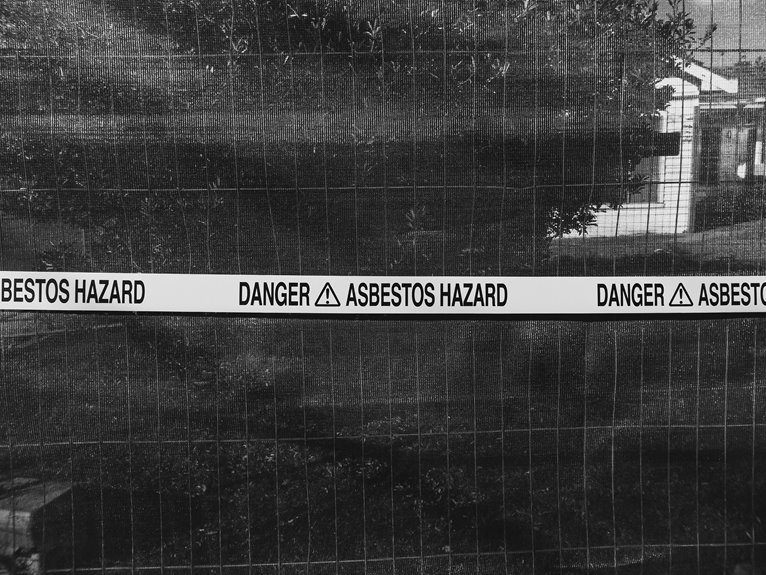
If your home was built between the 1950s and 1980s, your popcorn ceiling likely contains asbestos. Manufacturers used it for fire resistance and sound absorption. Here’s the thing: you can’t identify asbestos just by looking. The fibers are microscopic and invisible to the naked eye. Your ceiling might look perfectly fine while still posing serious health risks. Professional lab testing is the only reliable way to confirm its presence. Understanding what comes next helps you protect your family safely.
When Popcorn Ceilings Were Most Likely to Contain Asbestos

When did popcorn ceilings become dangerous? Homes built between the 1950s and 1980s face the biggest risk. Manufacturers used asbestos in popcorn ceilings because it resisted fire and absorbed sound effectively. That’s why textured ceiling asbestos risk increased significantly during those decades.
What matters most: even after bans started in 1978, companies could use existing asbestos stock. So installations continued well into the 1980s. Pre-1980 construction requires serious attention from homeowners.
Visual inspection won’t identify asbestos. You can’t see asbestos with your eyes. If your home was built before the mid-1980s, get professional lab testing. It’s the only reliable way to confirm whether asbestos in popcorn ceilings is actually present in your space.
Why You Can’t Identify Asbestos in Popcorn Ceilings by Looking
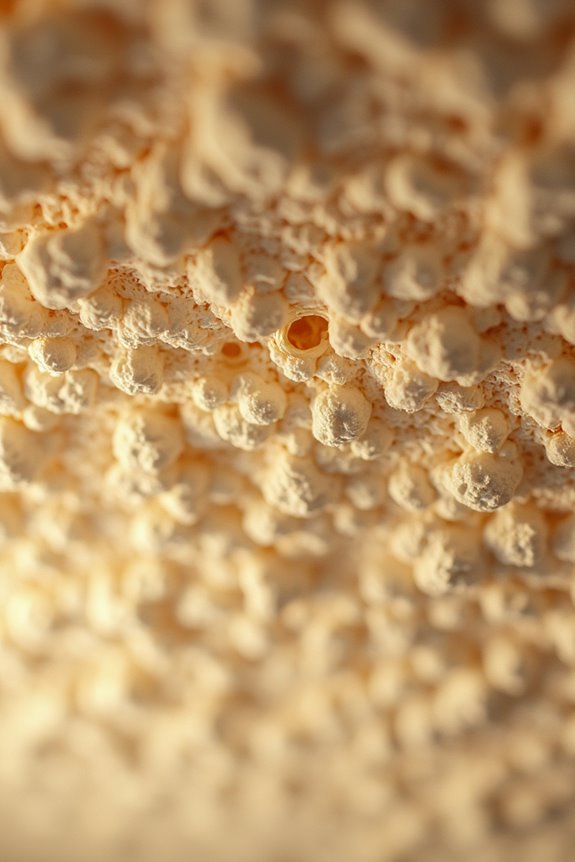
How’d you know if asbestos was hiding in your ceiling? You really can’t, honestly. Visual inspection won’t cut it here. Asbestos fibers are microscopic, meaning they’re way too tiny for your eyes to spot. Your popcorn ceiling might look perfectly fine, but danger could still be present inside. That’s why asbestos testing matters so much. Only lab analysis reveals what’s actually there. You might see texture and color, but microscopic fibers remain invisible. Professional testing is your only reliable option. It’s the real way to know for certain. Don’t guess about your family’s safety. Get those popcorn ceilings tested before renovating. It’s the responsible move every homeowner should make.
What Health Risks Come With Asbestos Exposure

I want you to understand the serious health consequences that come with asbestos exposure, which can develop years or even decades after you’ve breathed in the fibers. The diseases you might develop—like mesothelioma, asbestosis, lung cancer, and ovarian cancer—depend on factors such as how many fibers you inhaled and how long you were exposed to them. Here’s what makes this especially concerning: even a single exposure to asbestos fibers can increase your risk of developing these diseases, meaning there is no completely safe exposure level.
Serious Health Consequences
Why should you care about asbestos in popcorn ceilings? Because asbestos exposure poses serious health risks that can develop years later. When you inhale asbestos fibers, they lodge in your lungs and cause deadly diseases like mesothelioma and asbestosis. Even one exposure contributes to long-term problems. Your lung cancer risk increases markedly with disturbed asbestos. There is no safe exposure level. That’s why testing and removal matter for homes built before the mid-1980s. If you’re renovating or notice ceiling damage, address it promptly. Professional testing identifies asbestos presence reliably. Proper removal protects your family’s future health. Many homeowners share your concern about ceiling safety.
Exposure Risk Factors
When asbestos fibers get disturbed, they become truly dangerous. I want you to understand what actually puts you at risk. Here’s what matters most:
- Older homes (pre-1980s) have the highest asbestos risk
- Damaged ceilings release fibers into your breathing space
- Renovation disturbance dramatically increases fiber release
- Single exposures can raise disease probability
- Duration and amount of inhaled fibers determine severity
Asbestos exposure happens when materials break down. Renovation disturbance is particularly risky because it agitates settled fibers. Water damage or deteriorating areas make things worse. Good-condition ceilings pose less immediate danger, but you shouldn’t ignore them. The key is avoiding disturbance altogether. Monitor your ceiling regularly. If damage appears, don’t touch it yourself. Professional removal keeps your family safe from hidden dangers.
How to Assess Your Ceiling’s Condition and Risk Level
How can you tell if your popcorn ceiling’s actually a problem? Start with a visual inspection of your ceiling condition. Look for water stains, cracks, or peeling texture—these signs suggest potential fiber release. Check your home’s age too. Ceilings installed before the 1980s carry higher asbestos risk. Next, perform a risk assessment by examining whether your ceiling remains intact and undisturbed. Damaged areas need immediate attention. You can’t identify asbestos visually, though. Only professional asbestos testing confirms its presence definitively. If you notice deterioration or plan renovations, stop work immediately and hire certified professionals. They’ll safely test your ceiling and recommend encapsulation or removal. Monitoring your ceiling regularly helps you catch problems early before they worsen.
How Professional Testing Confirms Asbestos
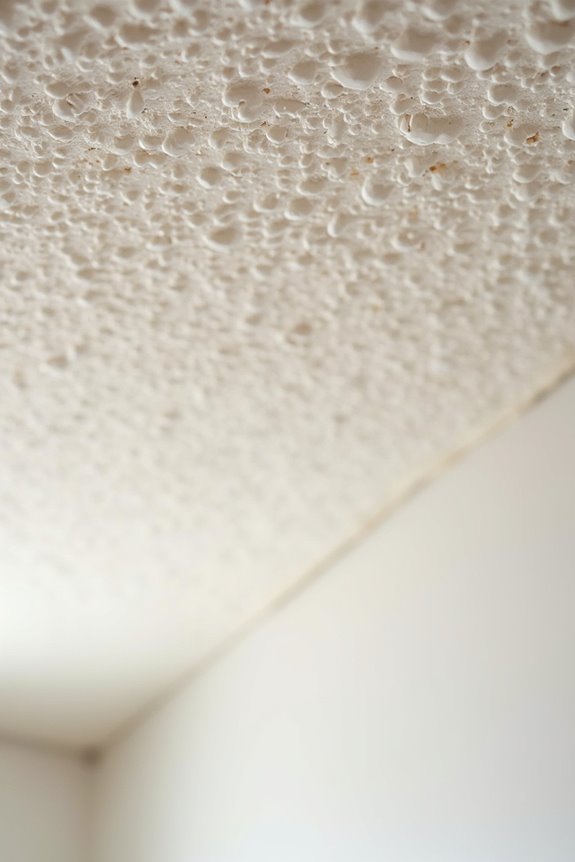
When you suspect asbestos in your popcorn ceiling, a certified inspector collects samples using proper safety protocols to prevent fiber release into your home. Once collected, these samples go to a professional lab where technicians use specialized microscopy and analysis methods to definitively identify asbestos presence, location, and concentration levels. This lab confirmation gives you the solid evidence you need to decide whether removal, encapsulation, or leaving your ceiling alone is the safest choice for your situation.
Professional Lab Analysis Methods
The only way to truly know if your popcorn ceiling contains asbestos is through professional lab testing. I’m going to walk you through how this process actually works.
Certified inspectors collect tiny ceiling samples using careful asbestos testing and sampling methods that minimize fiber release into your home. They follow strict safety protocols, wearing protective equipment the entire time. Here’s what happens next:
- Inspectors seal samples in secure containers immediately after collection
- Samples travel to accredited laboratories for analysis
- Lab technicians examine fibers under microscopes
- Tests identify asbestos type and concentration levels
- Results determine whether remediation is necessary
These accredited laboratories use specialized equipment to detect asbestos fibers. The analysis tells you exactly what you’re dealing with. You’ll receive a detailed report showing findings. This information guides your next steps forward. Knowledge is power here.
Certified Inspector Sample Collection
You can’t just look at a popcorn ceiling and know for certain if it contains asbestos. That’s where a certified inspector comes in. They’ll collect samples carefully from your ceiling using proper safety protocols. These professionals have credentials proving they know how to handle potentially dangerous materials without releasing harmful fibers into your home. The certified inspector documents everything: where they took samples, the ceiling’s condition, and how they tracked each sample. They follow a strict chain-of-custody process, meaning they record exactly who handled what sample and when. Your samples then go to an accredited laboratory for asbestos testing. This scientific approach beats guessing. The results from professional sample collection determine your next steps: encapsulation, removal, or monitoring.
When It’s Safe to Leave Asbestos Ceilings Alone
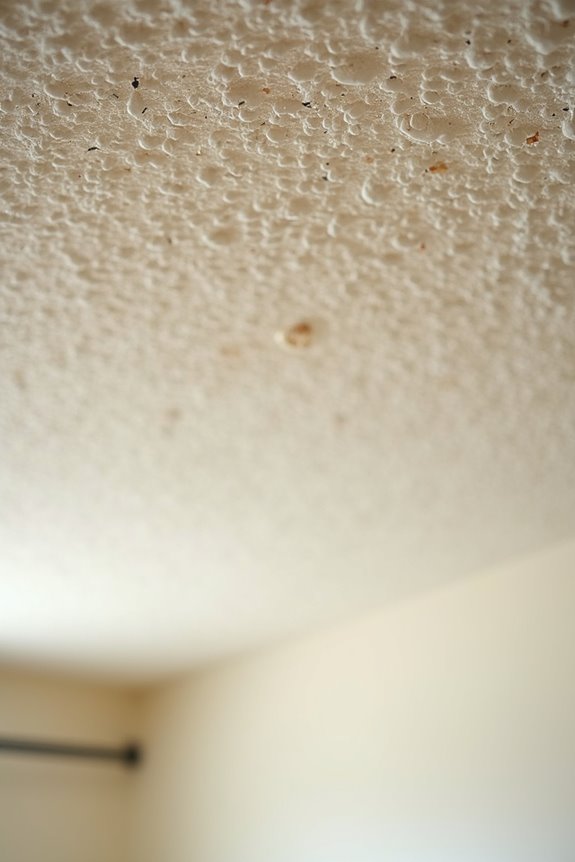
How do you know if leaving your popcorn ceiling alone is actually the safer choice?
If your ceiling’s in good shape, you’re probably fine keeping it undisturbed. Asbestos testing confirms whether fibers are actually present. Here’s when it’s safe to leave popcorn ceilings alone:
- The ceiling shows no visible damage or water stains
- No renovations or drilling are planned in that area
- You commit to regular inspections for changes
- The material stays completely undisturbed and sealed
- Professional monitoring happens annually or as needed
Leaving it alone beats the risk of releasing harmful fibers. Just avoid sanding, scraping, or poking holes into suspected asbestos materials. Think of your ceiling like a sleeping dog—better left alone. Regular check-ups keep everything safe without unnecessary disruption to your home.
What to Expect When Removing Asbestos Professionally
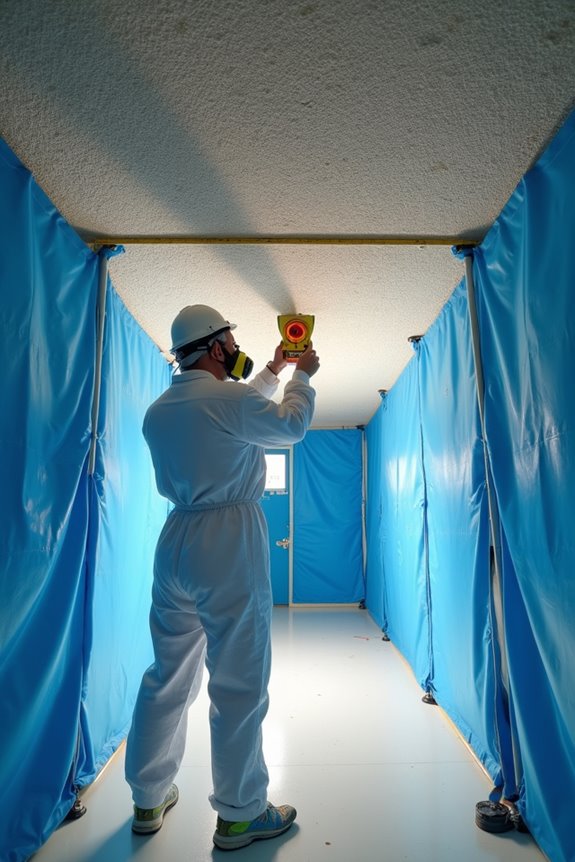
When it’s time to call in the professionals, you’re making the right call. Licensed abatement contractors follow strict EPA guidelines to keep your home safe. They’ll seal off your work area completely, turning off HVAC systems and covering light fixtures. This prevents asbestos fibers from spreading throughout your house.
| Step | What Happens |
|---|---|
| Preparation | Furniture moves, entry points seal |
| Protection | Workers wear respirators and protective equipment |
| Removal | Asbestos material gets carefully extracted |
| Containment | Sealed, labeled waste bags hold debris |
| Cleanup | HEPA vacuums clean every surface thoroughly |
Workers use protective equipment including respirators and disposable garments. They’ll place removed materials in sealed bags for disposal at licensed facilities. Professional asbestos removal protects your family’s health by following established safety protocols.
Legal Requirements and Hiring a Licensed Contractor
Professional removal protects your home, but understanding the laws protecting you matters just as much. Abatement regulations vary based on your property type. Here’s what matters for your situation:
- Single-family homeowners can legally handle DIY asbestos work in Illinois
- Multi-family, rental, and commercial properties require licensed contractors by law
- Asbestos testing must precede any removal decisions
- Noncompliance brings fines, contamination risks, and health hazards
- Licensed contractors follow EPA and local guidelines carefully
When I recommend hiring a licensed contractor, I’m prioritizing your safety. These professionals understand abatement regulations thoroughly. They’ll coordinate proper asbestos testing first, obtaining accurate results. Professional expertise prevents costly mistakes. Learning these requirements before acting is the responsible approach.