

A drop ceiling is a suspended grid system that hangs from your actual ceiling above. Metal runners and cross tees form the framework, creating a hidden space called the plenum where pipes and wires can be routed. Ceiling tiles drop into the grid openings, providing a finished appearance below. You can easily lift tiles for maintenance access without damaging the structure. The modular design allows for straightforward utility access and modifications.
What Is a Drop Ceiling and How Does It Work?

How does a ceiling get suspended in mid-air? I’ll explain how drop ceilings work. A suspended ceiling system uses a grid framework made of main runners and cross tees. These metal components hang from hanger wires attached to your building’s structural ceiling above. Think of it like a puzzle frame. Tiles drop into the grid openings, creating the finished look you see. Between the drop ceiling and the actual ceiling sits a plenum space, which is useful. This hidden area conceals wires, pipes, and ductwork that would otherwise look messy. You can easily remove tiles whenever you need maintenance access. Most tiles come in 2×2 or 2×4 feet sizes. Wall moldings secure the perimeter, finishing everything neatly. This modular design makes installation and repairs straightforward for everyone involved.
Drop Ceilings vs. Drywall: Why Make the Switch?

Why’d so many building managers swap drywall for drop ceilings? The answer’s simple: suspended ceilings beat drywall in almost every practical way. Need to access pipes or wires? Just lift a tile. With drywall, you’re demolishing sections and patching holes afterward. Drop ceilings offer easy access without the mess or expense.
Installation speed matters too. Grid systems go up faster than drywall, saving time and labor costs. Acoustic performance improves significantly with specialized tiles that absorb sound better than hard surfaces. Your spaces feel quieter and more professional.
The drywall comparison reveals another advantage: maintenance. Drop ceilings require no sledgehammers or repairs. You simply remove and reinstall tiles in minutes, making them ideal for offices, schools, and healthcare facilities where downtime costs money.
When Drop Ceilings Make Financial Sense

I want to show you why drop ceilings can actually save you money over time, even if the upfront cost seems high. Yes, you’ll pay more initially for materials and installation depending on your grid type and tile choices, but here’s the real advantage: those tiles give you quick access to pipes, wires, and ducts above, meaning repairs happen faster and cost less. Plus, the plenum space they create helps your HVAC system work more efficiently, which lowers your energy bills month after month.
Initial Installation Costs
Drop ceiling costs depend on several factors. Your budget shapes what you’ll choose for your suspended ceiling system. Standard grid designs cost less because they’re straightforward to install and materials are easy to find. Tile size matters too—2×2 or 2×4 options each have different price points.
Your material choice affects expenses significantly. Mineral fiber, PVC, and gypsum tiles come with varying costs and performance features. Concealed grids hide support structures but cost more than exposed grids.
Consider whether you’re doing DIY installation or hiring professionals. Simple exposed grid setups with larger tiles let non-professionals install them quickly, cutting labor costs dramatically. Edge details and acoustic ratings also influence your total expenses, so plan accordingly before purchasing materials.
Long-Term Maintenance Savings
When you’re looking at your building’s budget over many years, suspended ceilings actually save you money in ways that aren’t immediately obvious. Drop ceilings give you easy access to above-ceiling systems without tearing anything down. The modular grid design means you’ll spend less time and money on repairs. You can replace individual tiles quickly instead of redoing your entire ceiling. This accessibility cuts labor costs considerably over time.
| Maintenance Task | Traditional Ceiling | Drop Ceiling |
|---|---|---|
| System Access | Requires demolition | Easy tile removal |
| Repair Time | Days or weeks | Hours |
| Cost Efficiency | High expenses | Lower costs |
Energy efficiency improves too. The plenum space reduces conditioning costs throughout your building’s life. Specialty tiles resist fire and moisture, extending service life. You’re making a sound investment in long-term cost efficiency.
Key Components: Grid, Tiles, and Plenum Space
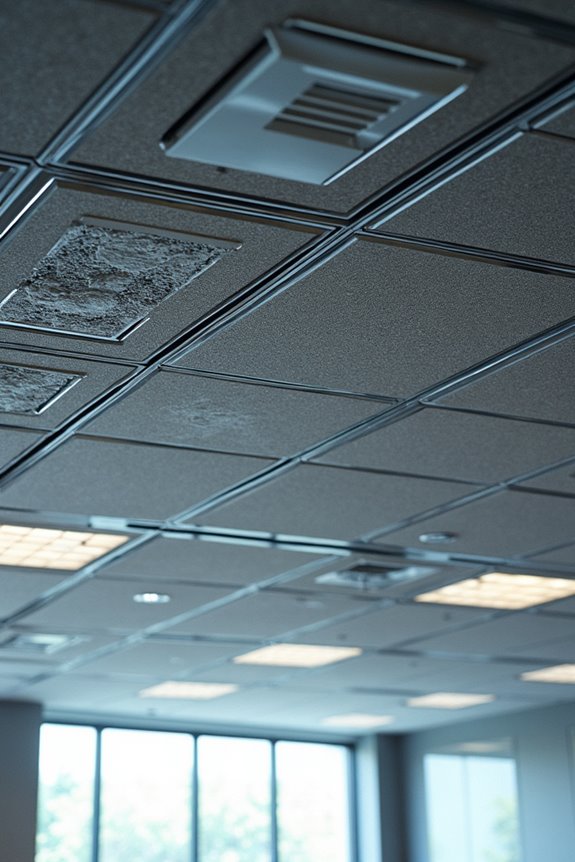
I’ll break down the three main parts that make a drop ceiling work: the grid framework that holds everything together, the tiles and panels that create your visible ceiling, and the plenum space hiding all the messy stuff above. Think of the grid as a skeleton made from lightweight runners and tees that snap together like building blocks, supporting your 2’x2′ or 2’x4′ ceiling tiles. Above those tiles sits the plenum—that hidden zone where wires, pipes, and ductwork live, giving you easy access whenever you need repairs or changes.
Grid Framework Architecture
How does a suspended ceiling actually work? I’ll walk you through the grid framework architecture that makes it all happen.
The grid framework is your suspended ceiling’s skeleton. Think of it like building blocks that snap together perfectly. Here’s what you’re working with:
- Main runners—the primary beams that run horizontally across your space
- Cross tees—perpendicular supports that connect to main runners, creating rectangular openings
- Hanger wires—metal cables suspending everything from your structural ceiling above
- Ceiling tiles—modular panels resting inside each grid cell
The main runners and cross tees snap together, forming a sturdy framework. Hanger wires pull this entire grid upward, creating that hidden plenum space underneath your structural ceiling. This design allows you to conceal wires, pipes, and ductwork while keeping everything accessible for maintenance.
Tiles, Panels, and Plenum
What’s actually resting in all those grid openings? Ceiling tiles and panels sit right in the suspended ceiling’s grid system, forming your visible ceiling surface. You’ll find common sizes like 2’x2′ or 2’x4′ tiles made from mineral fiber, fiberglass, or other materials. These tiles do important work—they hide messy wires, pipes, and ductwork above while looking neat below. Many tiles are acoustic, meaning they absorb sound and reduce noise in your space. Above the tiles sits the plenum, a hidden service area where HVAC systems, electrical wiring, and other utilities live. This design allows you to access everything from above without disrupting the room below. It’s basically a hidden highway for building systems that keeps your drop ceiling looking clean and professional.
Acoustic Performance: Choosing the Right Sound Absorption

When you’re standing in a noisy room, you’ve probably noticed how sound bounces around and creates echoes. That’s where acoustic performance in your suspended ceiling comes in. Understanding how to choose the right sound absorption for your space requires attention to several key factors.
Your acoustic performance depends on:
- Mineral fiber tiles absorb sound waves, reducing echoes and improving speech clarity
- NRC ratings (0.55 to 0.70 for offices) measure how much sound your tiles actually absorb
- CAC ratings (20 to 40) show how well tiles block sound between adjacent rooms
- Perforated panels and backing materials customize absorption for your specific room’s needs
Selecting the right combination of these elements creates an acoustic environment where you’ll feel comfortable and heard.
Drop Ceiling Materials: Fiber, PVC, Wood, and Fire-Rated Options
Once you’ve figured out your acoustic needs, the material you choose for your drop ceiling tiles becomes just as important. You’ll find several options that work well in suspension systems. Mineral fiber tiles are affordable and lightweight, making them popular in commercial spaces. Fiberglass tiles offer excellent moisture resistance and acoustic performance, ideal for damp areas. PVC tiles provide superior water resistance and come in various finishes, perfect for high-humidity environments. Wood or faux wood tiles create warmth but require more maintenance. Fire-rated tiles meet safety codes and integrate with sprinkler systems. Each material serves different purposes, so consider your space’s humidity levels, traffic, and safety requirements when selecting acoustic tiles for your suspended ceiling system.
Standard Grid vs. Concealed Grid: Which System Fits Your Space?

Now that you’ve picked your tile material, you’ll need to choose the framework that holds everything up—and that choice matters just as much. You’re basically deciding between standard grids and concealed grids for your suspended ceiling system.
Here’s what separates these grid ceilings:
- Standard grids show visible tees and cross tees forming an obvious framework pattern
- Concealed grids hide completely for seamless, modern-looking ceilings without visible grid lines
- Semi-concealed grids run in one direction, creating visual length while maintaining easier access
- Specialty grids include acoustical options combining tiles with supporting structure
Standard grids win on installation access and cost-effectiveness. Concealed grids demand more skill and expense but deliver attractive aesthetics. Your maintenance access and budget should guide this decision alongside your desired look for the space.
Drop Ceiling Advantage: Easy Access to Pipes, Wires, and Ducts
Why should you care about what’s hidden above your ceiling? Because that’s where your building’s essential systems live. A drop ceiling gives you easy access to everything up there. Think of it like this: your suspended ceiling creates a plenum space between the tiles and the actual structural ceiling above. This hidden area houses pipes, wires, and ducts that support your building’s operations.
Here’s the practical benefit. You can simply lift out individual tiles from your grid system whenever you need maintenance. No major demolition required. No mess. Just remove a tile, inspect or repair what’s above, then pop it back in place. Standard tile sizes, typically two-by-two or two-by-four feet, fit perfectly into the grid system. This modular design means targeted access for inspections and upgrades becomes straightforward and efficient.
Drop Out Ceilings: Fire Safety and Sprinkler Compliance

Drop out ceiling tiles are specially designed to melt or fall away when fire heats them, revealing the sprinklers hidden above. This explanation covers how these heat-sensitive tiles work with building codes and standards like NFPA 13 and UL to keep your fire protection system effective. Getting the installation right matters because painting them or installing them wrong can actually void their approval, so here’s what you need to know.
Heat-Sensitive Tile Design
How do you hide sprinklers while keeping them ready to work? Heat-sensitive tile design solves this puzzle. These special tiles sit beneath your fire sprinklers in drop ceiling systems, concealing them for aesthetics while maintaining fire safety.
I’ll explain the key features:
- Tiles melt or collapse when temperatures spike during fires
- Materials like vinyl or expanded polystyrene respond quickly to heat
- Falling tiles expose sprinklers for immediate activation and water discharge
- AHJ approval confirms your tile design meets FM Global, UL, and NFPA 13 standards
Your suspended ceiling installation must follow proper placement guidelines. Painting or incorrect setup voids approval. This tile design represents effective fire safety—keeping your space attractive without compromising protection. Many buildings use this approach to protect occupants effectively.
Standards and Code Compliance
When you’re installing drop-out ceiling tiles beneath fire sprinklers, you’ll need to follow strict building codes and standards that vary by location. In the United States, drop ceiling standards come from FM Global, UL, ICC-ES, and NFPA 13. These organizations set the rules for fire safety compliance and sprinkler compatibility. Your local AHJ approval is required before installation begins. The tiles you choose must have UL/FM listings proving they’ve passed rigorous listing and testing. Here’s the catch: painting your tiles can void their fire rating entirely. That’s why it’s important to select tiles designed specifically for drop-out performance. When properly installed, these heat-sensitive tiles drop reliably during fires, allowing sprinklers to function without obstruction.
Installation and Maintenance Requirements
Now that you’ve selected compliant tiles and understand the standards they must meet, the real work begins with proper installation and ongoing care. Follow these steps:
- Check your AHJ requirements first, as local authorities may demand specific fire-rated tiles or clip types for your building.
- Install tiles without restraints that’d prevent drop-out during fires, keeping FM Global and UL approvals valid.
- Keep the plenum space clear of unrated low-voltage cables and keep high-voltage equipment enclosed away from overhead areas.
- Avoid painting drop ceiling tiles, which can void manufacturer approvals and compromise fire performance.
Regular maintenance is required. Inspect tiles quarterly for damage, replace worn components promptly, and document all work. This protects your space and maintains code compliance.
Creating Your Look: Tiles, Colors, and Finishes

What makes a drop ceiling work well in your space? Your choice of ceiling tiles. You’ll find options in standard 2’x2′ and 2’x4′ sizes that fit your suspended ceiling systems perfectly. Materials range from mineral fiber to fiberglass and metal, each offering distinct aesthetics and performance benefits.
Colors and finishes vary widely. Think clean white, soft gray, or wood-look designs that match your space. Textures matter—smooth tiles look modern, while embossed patterns add visual interest.
Acoustic performance also matters. Different tiles control sound differently using NRC values, which measure how well they absorb noise. Decorative options like perforations and metallic coatings let you create personalized spaces that align with your design goals and make rooms feel complete and welcoming.
Easy Reconfiguration and Remodeling

Ever need to change your ceiling layout? Drop ceilings make remodeling simple. Your suspended ceiling’s grid system lets you lift tiles and reposition them without tearing everything down. Here’s what you can do:
Drop ceilings make remodeling simple with their grid system, letting you lift tiles and reposition without tearing everything down.
- Swap individual tiles to upgrade acoustics or lighting quickly
- Adjust hanger wires to change ceiling height during renovations
- Access plumbing, electrical, and HVAC systems above with minimal downtime
- Rework grid components instead of reconstructing the entire ceiling
You’ll appreciate how easy reconfiguration saves time and money. Wall moldings establish height references while you work. Whether you’re upgrading components or relocating utilities, above-ceiling access keeps disruptions minimal. This flexibility means your space evolves with your needs without major reconstruction challenges. Drop ceilings simplify remodeling projects.
Plenum Safety and Electrical Codes

When you’re installing a suspended ceiling, there’s a hidden space above it called the plenum that needs special attention. This area requires plenum-rated insulation with LSZH properties to prevent smoke and flames from spreading during fires. You’ll want cables meeting electrical codes and carrying UL/FM approvals for safety compliance. Building standards like NFPA 13 set strict requirements for fire safety and containment during fire events. High-voltage equipment must stay enclosed, away from the plenum space entirely. Tiles shouldn’t have clips restraining them, allowing proper drop-out during emergencies. In earthquake zones, diagonal wire stays and compression posts prevent ceiling collapse that could damage electrical installations. Following these guidelines protects your building and everyone inside it.
Choosing the Right Drop Ceiling: A Decision Framework

How do you pick the appropriate suspended ceiling for your space? I recommend evaluating five key factors that balance your needs with practical constraints.
- Grid type and tile size determine accessibility and aesthetics for your specific room
- Acoustics and fire-rated materials protect occupants while meeting local building codes
- Installation methods range from DIY-friendly surface-mount options to complex concealed grid systems
- Maintenance access and plenum space affect long-term functionality of MEP systems above
Start by evaluating your grid ceiling’s purpose. Healthcare and education spaces need superior fire performance and acoustics ratings. Consider tile size carefully—standard 2×2 ft or 2×4 ft options suit most projects. Evaluate installation complexity honestly; some systems demand professional expertise. Finally, balance upfront costs against maintenance demands and accessibility requirements for your particular environment.