

I’ve discovered bathroom urine smell hides everywhere—not just the toilet bowl. Check hinges, baseboards, and mats where moisture traps odor. Remove the toilet seat and scrub underneath thoroughly. Wipe surrounding surfaces daily with enzymatic cleaners that break down uric acid crystals. Wash bath mats regularly. Ventilate with open windows and exhaust fans during and after cleaning. When stubborn odors persist, professional-grade products like Odorcide work deeper. Establish a daily routine with surface wipe-downs and weekly enzymatic treatments. Each step serves a specific purpose in maintaining lasting freshness.
Locate Hidden Bathroom Urine Odor Sources
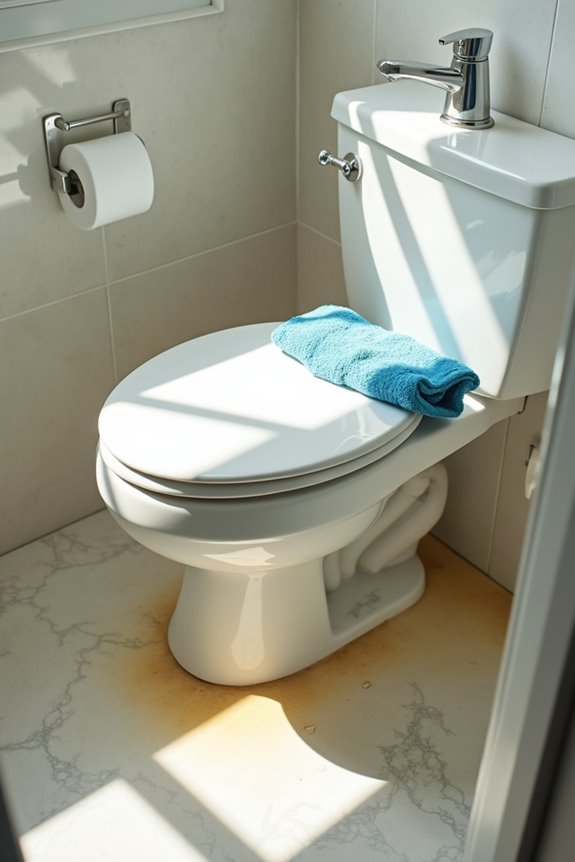
Where’s that stubborn smell coming from? I’ll help you track it down. Start by checking your toilet’s components carefully. Look at the lid, seat, hinge caps, and the area below the tank for urine residue. Don’t forget toilet accessories like bidet attachments and brushes that trap moisture.
Next, inspect nearby items. Rugs and mats around your toilet absorb odors easily. Check bath towels and decorative pieces too. I’d also examine storage containers, garbage cans, and toilet paper caddies for hidden contamination.
Finally, scan your bathroom surfaces beyond the toilet itself. Baseboards, walls, and shelves can absorb and re-emit urine odor. These odor sources often hide in plain sight, so being thorough matters. Once you’ve located them, you’re ready to eliminate the smell completely.
Deep Clean the Toilet, Seat, and Hinges
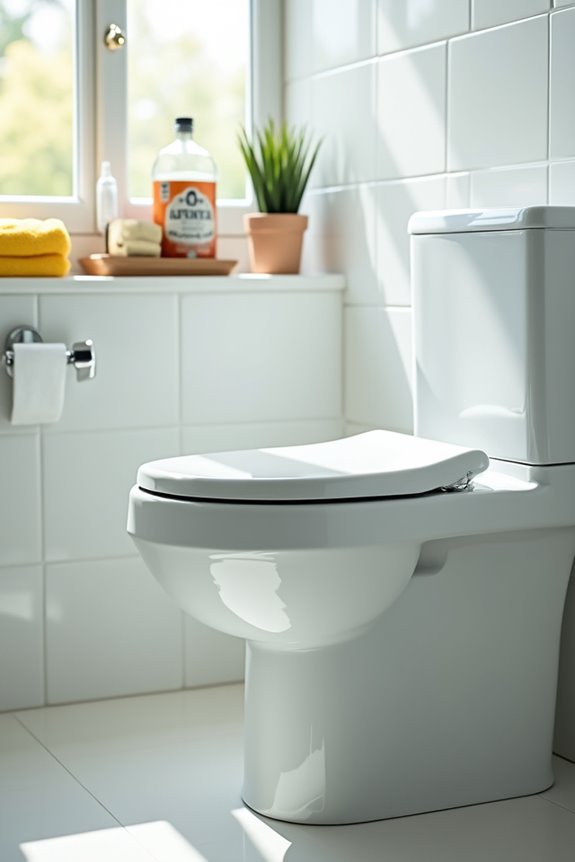
I’ll tackle the toilet itself first. You’ll want to use inside-toilet cleaner to scrub under the lip of the bowl where residues hide and trap odors, plus remove the toilet seat to access hinges and clean thoroughly underneath them. After scrubbing, wipe away soapy residue with a damp rag and sanitize all surfaces to finish the job.
Toilet Bowl Cleaning Methods
Three key areas need your attention when deep cleaning a toilet: the bowl itself, the seat, and the hinges underneath. I’ll start by removing the toilet seat to access those hidden hinges where urine smell loves to hide. Once exposed, I scrub everything thoroughly because these spots trap odors stubbornly.
For the toilet bowl, I use inside-toilet cleaner and scrub under the lip where uric acid residues accumulate. This is where the real bathroom cleaning happens. When using bleach, ventilation matters—I open windows to reduce fumes while the cleaner works.
After scrubbing, I wipe away soapy residue with a damp rag. This prevents residual smells from lingering. Finally, I sanitize all surfaces to eliminate remaining bacteria. These enzymatic cleaners break down urine smell at its source, leaving your bathroom fresh and clean.
Seat And Hinge Sanitization
The toilet seat and hinges are where urine odors like to hide, so they’ll need your focused attention. I recommend removing the seat first to access those tricky hinges and seat joints properly. Scrub thoroughly under the bowl’s lip where cleaning residues accumulate and cause recontamination. Use an inside-toilet cleaner to disinfect all interior surfaces, then wipe away soapy buildup with a damp rag. Don’t skip the surrounding hinge areas—they trap odor-causing bacteria. For powerful odor removal, open windows to ventilate fumes from bleach-based cleaners. Finally, sanitize everything by disinfecting exposed surfaces, hinges, and bolts completely. This comprehensive toilet sanitization prevents hidden odors from returning and keeps your bathroom fresh.
Eliminating Embedded Odor Sources
Where’re those stubborn urine odors actually hiding? I’ll tell you—they’re lurking under your toilet seat and inside the bowl’s lip. Here’s what I do to eliminate embedded odor sources effectively.
| Cleaning Step | What It Targets |
|---|---|
| Remove toilet seat | Access hinges and hidden areas |
| Scrub under bowl lip | Urine deposits and bacteria |
| Use enzymatic cleaners | Break down odor-causing compounds |
I start by removing the seat completely. Then I scrub thoroughly under the bowl’s lip where urine residue accumulates. I apply inside-toilet cleaner and work it in with a brush. Next, I open windows for ventilation since these cleaners are powerful. After scrubbing, I wipe away soapy residue with a damp rag. Finally, I sanitize everything to complete bathroom sanitation. This tackles embedded odor sources where odor-causing bacteria thrive.
Wipe Down Surrounding Surfaces, Mats, and Walls
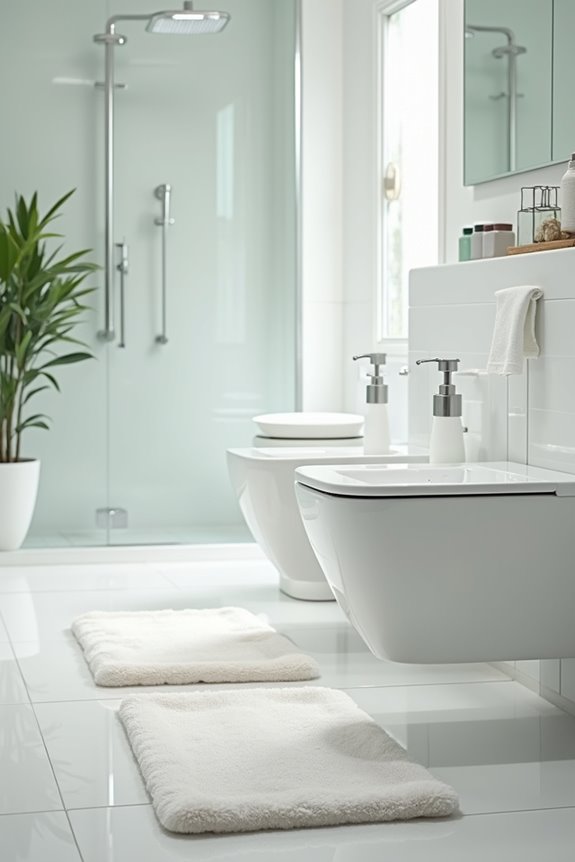
You’ll find urine residue hiding in places you might not expect. Walls around your toilet collect splashes and splatters that harbor odor-causing bacteria, while bathroom mats and grout absorb uric acid crystals that re-release smells after drying. By tackling these surrounding surfaces, you’re stopping the odor problem at its source instead of just masking it temporarily.
Identifying Hidden Urine Residue
Ever wonder why a bathroom still smells even after you’ve cleaned the toilet bowl? The culprit? Hidden urine residue lurking in unexpected places.
Bathroom odor doesn’t just vanish. It clings to surfaces you’d never suspect. Check your toilet’s lid, seat hinges, and the area above the seat. Don’t forget under the tank either.
| Hidden Source | Why It Matters | Action Needed |
|---|---|---|
| Toilet lid and hinges | Urine splashes accumulate | Wipe thoroughly |
| Bath mats and rugs | Absorb and trap odors | Wash regularly |
| Baseboards and walls | Airborne droplets settle | Clean with cleaner |
Your cleaning checklist should include nearby storage, garbage cans, and decorative items. Even shelves in surrounding rooms can harbor latent urine odors. Wipe down surfaces systematically to eliminate odor residues completely. Results will be noticeable.
Effective Surface Cleaning Techniques
What surfaces around your toilet are you missing? Effective surface cleaning goes beyond the bowl itself. Here’s what to tackle for complete odor elimination:
- Bathroom mats and rugs – Launder these separately using white vinegar or enzymatic cleaners to remove embedded urine odor
- Walls surrounding the toilet – Wipe down vertical surfaces with damp rags, since splashes settle higher than expected
- Adjacent fixtures and shelves – Clean nearby items that trap bacteria and contribute to lingering bathroom hygiene issues
Apply baking soda paste to stubborn spots before wiping. Then dry everything thoroughly. Moisture breeds mildew and causes odors to return. This all-encompassing surface cleaning approach eliminates hidden odor sources that casual cleaning misses, resulting in a fresher bathroom.
Preventing Odor Recontamination Issues
Cleaning the toilet bowl itself isn’t enough to win the battle against bathroom odors. You’ll want to wipe down all surrounding surfaces regularly. Mats, walls, and baseboards trap urine odor particles that cause recontamination. I recommend using enzymatic cleaners on these areas since they break down odor-causing compounds effectively.
Your bathroom surfaces need consistent attention. Launder mats frequently to prevent soaked odors from spreading back into the air. Don’t forget shelves, towels, and containers near the toilet either.
A solid cleaning routine prevents odor prevention failures. Schedule daily surface wipe-downs and monthly deep cleaning sessions. This approach tackles recalcitrant odor sources before they become stubborn problems.
Ventilate During and After Cleaning
Ventilate During and After Cleaning
Because urine odors cling to the air, you’ll want to get fresh oxygen flowing through your bathroom right away. Here’s how to tackle ventilation for effective odor elimination:
- Open windows immediately during bathroom cleaning to let chemical smells escape and fresh air circulate
- Keep airing out for several hours after you’ve finished, since lingering odors need time to fully disperse
- Pair ventilation with odor-neutralizing sprays to neutralize airborne molecules floating around
Fresh air works effectively for odor remediation. Continuous ventilation speeds up the process. Think of it like this: you’re replacing stale, odor-filled air with clean oxygen. This regular airing out also slows bacterial growth that causes persistent smells. Your bathroom cleaning efforts work best when combined with proper airflow. You’re not just removing odors—you’re creating an environment where they can’t stick around.
Use Enzymatic Cleaners on Bathroom Urine Stains
They’re not just surface cleaners. They actually destroy uric acid crystals by breaking them down completely. I’ve found that applying the enzymatic cleaner directly to urine stains works best. You’ll want to let it sit for the recommended time so the enzymes can do their job effectively. This sit time is important for breaking down those stubborn crystals. After waiting, scrub and rinse the area thoroughly. What makes these cleaners special is they also target odor-causing bacteria surrounding the urine. For very strong or old odors, reapplication might be necessary since deep-seated crystals can re-release smells. Enzymatic cleaners work across bathroom surfaces like tile, grout, and even soft materials. They’re your solution for comprehensive stain and odor elimination.
Apply Professional Products When Odor Persists
What happens when enzymatic cleaners alone don’t fully eliminate stubborn bathroom odors? Sometimes, we need stronger solutions. I’ve found that combining enzymatic cleaners with professional-grade products like Odorcide Original creates effective odor elimination that tackles uric acid crystals lingering in grout and tiles.
What I recommend trying:
- Apply Odorcide to saturated areas for comprehensive odor control beyond surface stains
- Mix enzymatic cleaners with baking soda and light scrubbing to disrupt embedded compounds
- Reapply products before areas dry if re-contamination occurs to maintain effectiveness
Professional-grade solutions target odor persistence where standard cleaners fall short. When facing old, stubborn smells, these stronger options penetrate deeper into bathroom surfaces. Invest in solutions that actually work rather than temporary fixes.
Create a Daily Routine to Prevent Bathroom Odors
Once you’ve addressed existing odors with professional products, maintaining a fresh bathroom requires consistent daily habits. A regular routine prevents toilet odor from returning. Wipe all bathroom surfaces daily, including the toilet rim and tank area. Run your exhaust fan during and after cleaning to increase ventilation and reduce moisture that feeds bacteria. Keep absorbent underpads nearby for quick cleanups, then dispose of them promptly.
| Task | Frequency | High-Odor Zones |
|---|---|---|
| Surface wipe-down | Daily | Toilet area |
| Deep enzymatic clean | Weekly | Grout, baseboards |
| Odor prevention check | Daily | Behind toilet |
| Ventilation | During/after cleaning | Entire bathroom |
| Underpad replacement | As needed | Problem areas |
This approach keeps your bathroom fresh and functional for regular use.