

Standard bathroom cabinet depth is 21 inches, which accommodates plumbing components like P-traps and supply lines while maintaining reasonable storage.
Your ideal depth depends on bathroom size: choose 12–16 inches for tight spaces, 18–20 inches for balanced storage and floor space, or 21–24 inches for maximum capacity in larger bathrooms.
Finished depth typically reaches 22 inches with countertop overhang.
Measure your space first, account for door swings and clearance, then match depth to your actual storage needs and traffic flow to avoid costly modifications and maximize functionality.
Why 21 Inches Is the Standard Depth
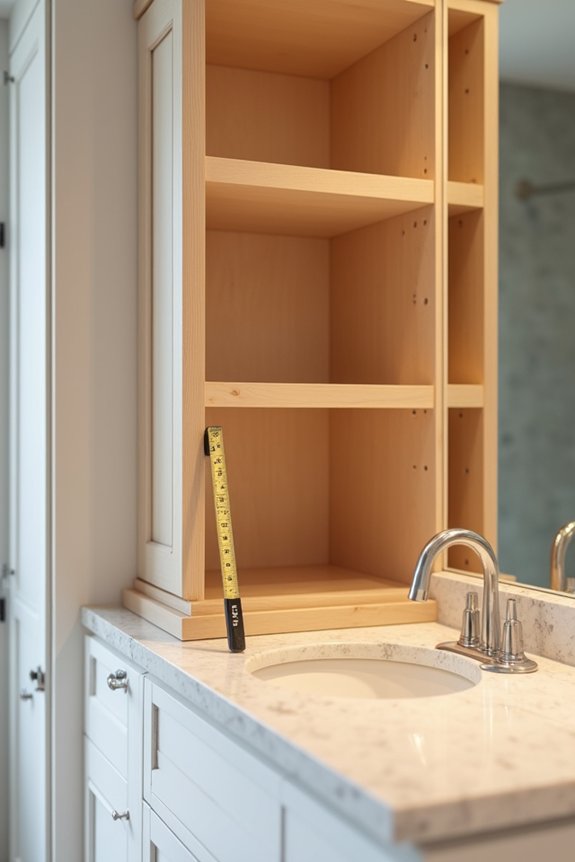
Why does your bathroom vanity need to be exactly 21 inches deep? The answer lies in several practical considerations that have made this the industry standard.
1. Plumbing Accommodation
The 21-inch cabinet depth provides sufficient space for drain assemblies, supply lines, and P-traps positioned behind your sink. This prevents cramped connections and eliminates maintenance problems down the road.
2. Balanced Design
This standard depth achieves an equilibrium between two competing needs. It offers functional countertop space for daily use while preventing vanity cabinets from protruding awkwardly into your bathroom. The measurement accommodates both storage capacity and movement through the space.
3. Real-World Measurements
When you add countertop overhang and backsplash, your vanity typically reaches around 22 inches total depth. This increase accounts for edge profiles and material thickness.
4. Universal Compatibility
Choosing this standard depth offers practical advantages. Plumbing fixtures and replacement parts are widely available at reasonable prices, reducing both expenses and installation delays. Non-standard depths create sourcing challenges that can complicate repairs or upgrades.
Quick Depth Guide: Find Your Range
Quick Depth Guide: Find Your Range
Now that you understand why 21 inches became standard, let’s explore what options actually work for your space.
1. Finding Your Perfect Fit
Vanity depth directly impacts your bathroom’s functionality and storage capacity. The table below organizes common depths to help you match your needs with available space.
| Vanity Depth | Best For |
|---|---|
| 12–16 inches | Compact bathrooms, tight corners |
| 18–20 inches | Balanced storage and footprint |
| 21+ inches | Maximum storage, larger bathrooms |
2. Planning Smart
Your space planning should account for finished depth, which includes countertop overhang. Shallower vanities save money and floor space. Deeper options maximize storage, reducing clutter. Consider your bathroom’s layout carefully. Standard depth works for most homes, offering reliable functionality without excessive waste or expense.
Shallow Cabinets (12–16 Inches): When Space Is Tight
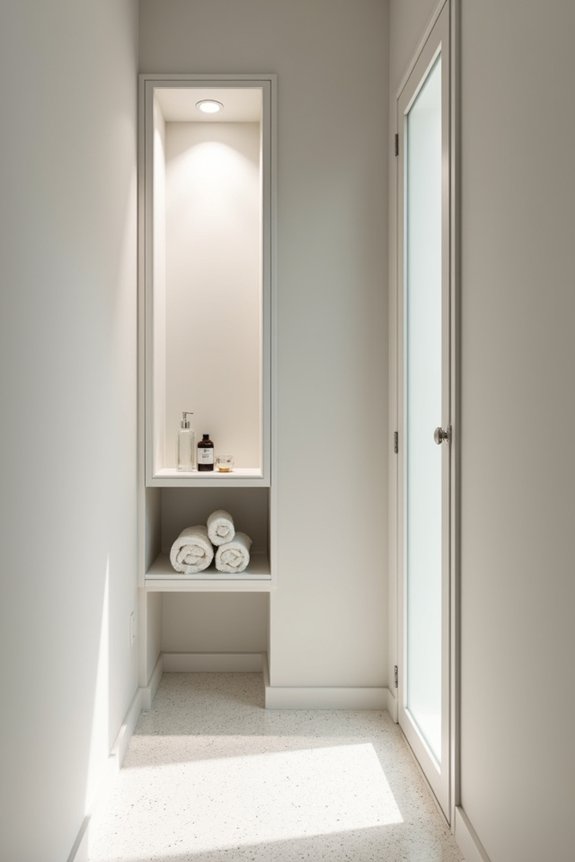
Shallow Cabinets (12–16 Inches): When Space Is Tight
When you’re working with a cramped bathroom, compact vanities deliver practical solutions without sacrificing function. Shallow cabinets measuring 12 to 16 inches in depth work well for tight bathrooms where space matters most.
1. Maximizing Your Layout
These depth options keep walkways open and doors unblocked. You’ll maintain that airy feeling while gaining practical storage space for everyday essentials.
2. What Fits Inside
Shallow cabinets work best for smaller items like toilet paper, hand towels, and cleaning supplies. You won’t fit bulkier objects, but most bathrooms don’t require large items taking up valuable real estate.
3. Smart Design Choice
Mid-Depth Options (18–20 Inches): The Versatile Sweet Spot
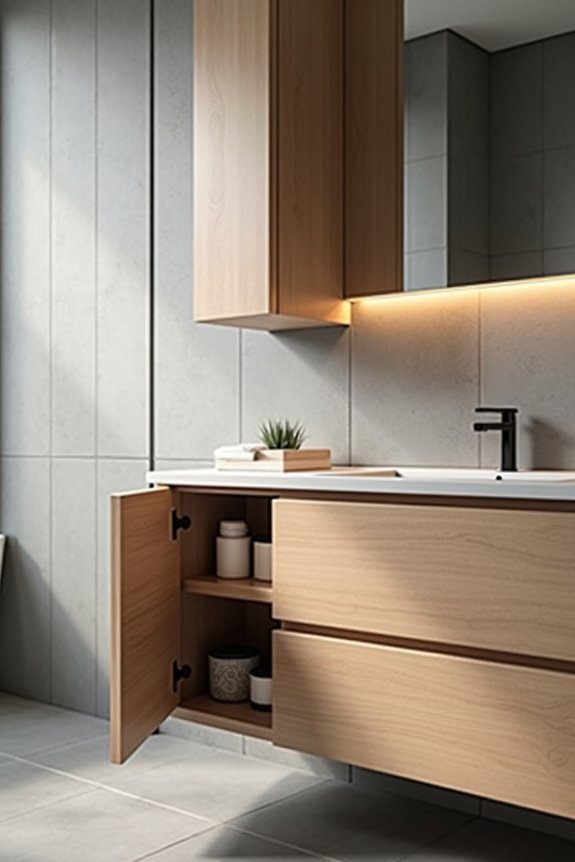
When you’re sizing up your bathroom vanity, an 18–20 inch depth gives you that goldilocks zone: not too shallow, not too deep. I’ll walk you through how this sweet spot balances the storage you need with the floor space you want to keep open. Let’s explore why mid-depth cabinets work so well for different bathrooms and how to make the most of what they offer.
Balancing Storage and Space
Why do 18–20 inch vanities work so well in most bathrooms? They’re the goldilocks solution; not too deep, not too shallow. At this depth, you get genuine storage without sacrificing precious floor space.
I’ve found that 18–20 inches gives you room for toiletries, towels, and cleaning supplies while keeping your bathroom feeling open. Your counter space remains functional for daily grooming tasks. Drawers open easily, and you’ll actually reach items without stretching awkwardly.
This depth also means easier installation. Plumbing clearances align better, and overhang complications decrease significantly. You’ll save money on installation hassles too.
Plus, your doorways stay clear. Traffic flows naturally through the room. You’re not cramping the space or limiting future flexibility. That balanced approach protects your investment long-term.
Ideal Bathroom Applications
Ideal Bathroom Applications
Now that you’ve found the right depth, let’s match it to your specific bathroom.
1. Guest Bathrooms and Powder Rooms
Mid-depth vanities at 18–20 inches work perfectly here. They provide essential storage capacity without overwhelming compact spaces. You’ll fit toiletries and cleaning supplies while keeping the room open and welcoming.
2. Small Bathrooms and Apartments
An 18–20 inch vanity depth strikes the ideal balance. Your footprint stays minimal, preventing door and fixture clashes. You get usable storage without sacrificing walkway access.
3. Compact Master Baths
This vanity depth solves layout constraints beautifully. You maintain counter accessibility while storing towels efficiently. Plumbing access behind the sink remains easier too.
Mid-depth options align perfectly with real-world bathroom needs.
Standard Depth (21–24 Inches): Balancing Storage and Comfort
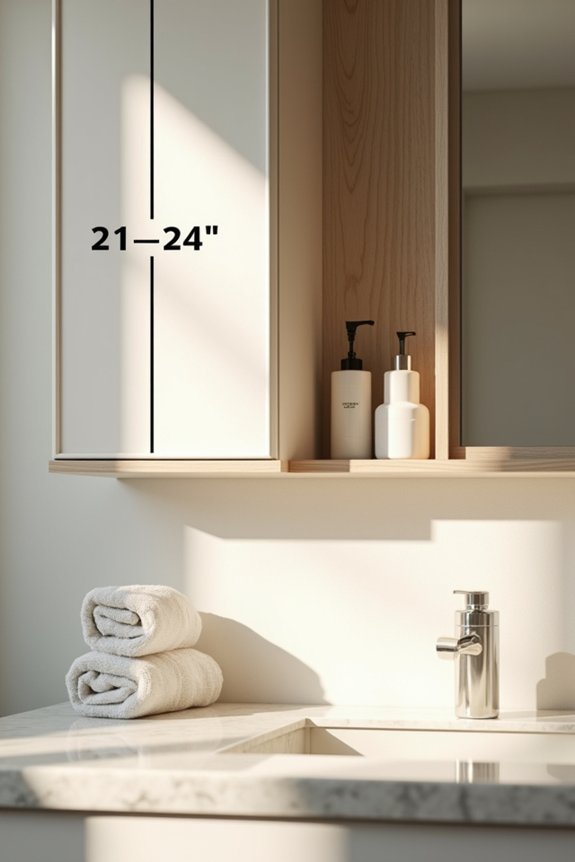
How deep should your bathroom cabinet be? I’d recommend the standard depth of 21 inches for most bathrooms. This measurement creates the ideal balance between storage capacity and daily comfort.
Standard 21-inch bathroom cabinet depth balances storage capacity with daily comfort and accessibility.
Here’s what makes 21 inches work so well:
- Accommodates plumbing: The depth houses pipes behind your sink without cluttering your countertop space
- Supports easy access: You’ll use drawers comfortably without leaning forward awkwardly during morning routines
- Maximizes circulation: The footprint doesn’t eat up valuable bathroom floor space
With countertop overhang, your finished depth reaches about 22.5 inches. If you need extra storage, 24-inch options exist for larger spaces. However, stick with the 21-inch standard unless you’ve got room to spare. You’ll appreciate the ergonomic design and cost-effective efficiency on a daily basis.
Deep Vanities (24+ Inches): Maximizing Counter and Storage Space
When you’re looking to maximize your bathroom’s storage and counter space, deep vanities measuring 24 inches or more offer practical solutions that work especially well in spacious primary bathrooms. Choosing a deeper vanity, however, requires thoughtful planning. You’ll need to consider custom countertop fabrication, faucet reach, and how plumbing lines fit into your layout. Getting these details right upfront saves you money and prevents costly adjustments later while keeping your bathroom functional and accessible.
Luxury Bathroom Storage Solutions
Deep vanities measuring 24 inches or more offer significant bathroom storage capacity. Cabinet depth combined with finished depth creates substantial countertop overhang. This generous design provides a sophisticated bathroom environment.
2. Smart Design Features
- Finished depth often exceeds 22 inches, providing substantial storage space while maintaining style
- Floating vanity options reduce visual bulk while preserving luxury appeal and accessibility
- Extra-deep configurations require careful faucet selection and countertop fabrication adjustments
3. Practical Considerations
Evaluate your bathroom layout carefully before selecting a deep vanity. Deeper cabinets need attention to door swings and traffic flow patterns. Verify that vanity height aligns with your household needs. Quality deep vanities provide durability and superior organization over time. These solutions deliver reliable value for homeowners who prioritize refined bathroom design.
Custom Countertop and Plumbing Considerations
When you’re choosing a deep vanity, you’re really deciding how much counter space and storage you’ll actually have. Here’s what happens: your cabinet depth and countertop overhang work together. The finished depth, what you see in your bathroom, often reaches 22 inches or more, not just the cabinet itself.
Planning for Real Measurements
Thicker countertops add extra depth. That matters when you’re positioning mirrors and wall features. Measuring your finished depth first helps you avoid costly mistakes.
Plumbing Clearance Counts
Deep vanities need smart plumbing clearance. Your drain placement and supply lines require careful positioning behind the sink. P-traps need adequate space underneath. You might need modifications, which costs less money when planned upfront rather than discovered later.
Installation Method: How Floating vs. Freestanding Changes Depth Function
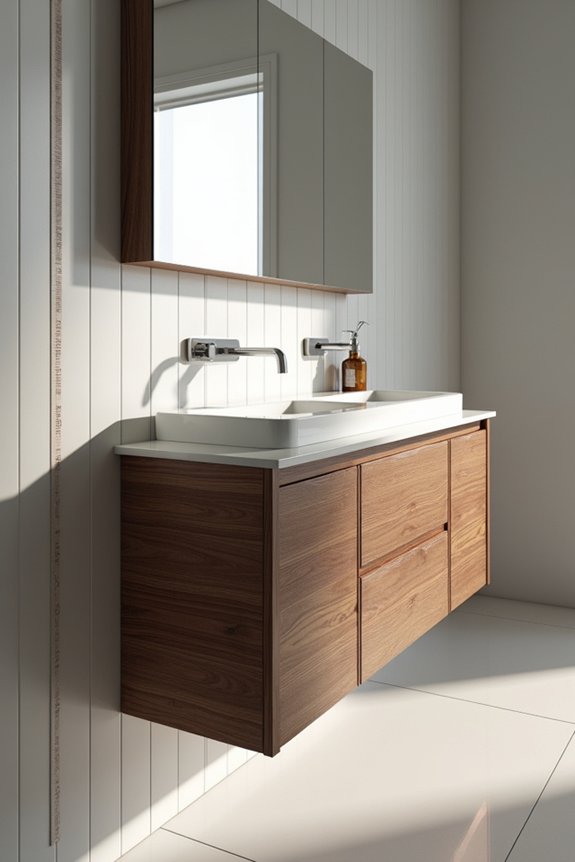
How you install your bathroom vanity, whether it floats on the wall or sits on the floor, actually changes how depth works for your space.
1. Visual and Functional Differences
Floating vanities require less perceived depth because they don’t rest on the floor, visually lightening your footprint while maintaining similar cabinet depth to standard freestanding units. Freestanding vanities show full cabinet depth to the floor, emphasizing deeper profiles around 21 inches or more for storage and plumbing access.
2. Key Installation Considerations
- Floating installations need wall blocking and secure anchoring to support deeper countertops without compromising stability.
- The finished depth gets influenced by countertop overhang and wall clearance, sometimes making the overall footprint feel shallower.
- Choosing depth requires considering your installation method, required knee clearance, and movement space around the vanity.
Evaluate These Constraints Before You Measure
1. Check Your Forward Clearance
You’ll want at least 30 inches of open space in front of your vanity. This maintains comfortable movement and prevents cramped feelings during daily routines.
Maintain at least 30 inches of open space in front of your vanity for comfortable movement and a spacious bathroom feel.
2. Assess Your Space Dimensions
Measure your bathroom’s width, depth, and height carefully. Note any doors, windows, or wall-mounted accessories that might interfere with cabinet placement.
3. Account for Plumbing Reality
Behind your sink, drain lines, supply lines, and P-traps occupy significant room. Standard 21-inch depth vanities accommodate this plumbing while preserving countertop space.
4. Factor in Countertop Overhang
Your finished depth reaches approximately 22 inches when you include countertop overhang and edge profiles. This affects your actual space constraints considerably.
How Plumbing Determines Your Cabinet Depth
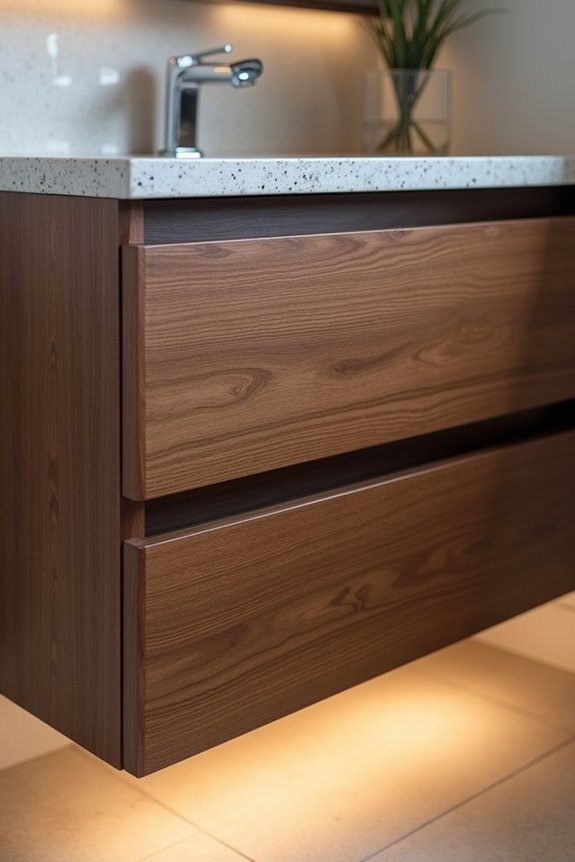
When you’re planning your bathroom cabinet, you’ll need to work around where your drain assembly sits and how your supply lines run underneath the sink. Understanding these two components helps you choose a cabinet depth that actually fits your plumbing without expensive modifications. Let’s break down how drain placement and supply line routing shape the cabinet dimensions you’ll need.
Drain Assembly Placement
Why does your bathroom vanity need to be a specific depth? Your plumbing rough-ins dictate everything about your cabinet design.
Here’s how drain positioning works:
- Drain centerline alignment. Your drain centerline must match your vanity interior cutouts precisely. Measure from the nearest side wall to locate this critical point for accurate sink placement.
- Assembly components. Drain assemblies, P-traps, and supply lines need adequate space behind your countertop overhang. Standard depths of 21 inches accommodate these components comfortably.
- Height considerations. Drain heights typically sit 16 to 20 inches above finished floors, guiding your interior cutout placement and storage layouts.
Getting these measurements right saves you money on plumbing adjustments and maximizes your usable storage space.
Supply Line Configuration
Supply Line Configuration
1. Planning Around Water Connections
Supply lines running behind your sink require adequate space. Standard cabinet depth of 21 inches accommodates both hot and cold water lines comfortably. These lines connect to your faucet above the vanity countertop overhang, which typically adds 1.5 inches of projection.
2. Coordinating with Drain Placement
The drain centerline location directly influences your plumbing layout decisions. When supply lines and drain assemblies align properly, you avoid costly cabinet modifications. Misalignment can force you into deeper or shallower designs, increasing expenses unnecessarily.
3. Maintaining Usable Space
Proper supply line configuration protects your knee clearance underneath. This balance between plumbing access and user comfort determines your final cabinet depth choice, supporting both functionality and accessibility for your bathroom space.
Door Swings and Clearance: Avoiding Functional Conflicts
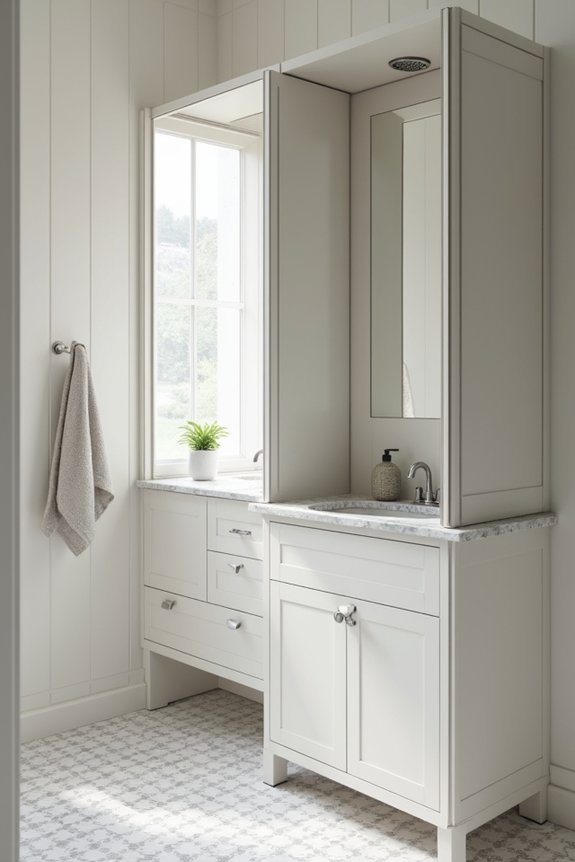
Door Swings and Clearance: Avoiding Functional Conflicts
How you position your bathroom cabinet directly impacts how well doors open and close. Accounting for door swings prevents frustrating functional conflicts in tight spaces.
Proper vanity positioning directly impacts door operation and prevents functional conflicts in compact bathrooms.
Key considerations for your layout:
- Maintain at least 30 inches of forward clearance in front of your vanity for comfortable movement
- Map out your door arc relative to nearby fixtures to avoid clashes when doors swing fully open
- Choose curved-front or clipped-corner vanity designs to increase passage space and reduce collision risk
Planning your vanity depth requires attention to how door swings interact with adjacent walls and openings. Deeper vanities demand extra consideration to maintain accessible entry. Analyzing these clearance zones before installation prevents expensive repositioning later and keeps your bathroom functioning smoothly for everyone who uses it.
Match Depth to What You Actually Need to Store
The right cabinet depth isn’t about picking the biggest option; it’s about choosing what fits your actual storage needs and your bathroom layout.
1. Assess Your Storage Reality
Consider what you’ll actually store. Do you need space for toilet paper, hand towels, and cleaning supplies? Shallow 12 to 16 inch cabinets work perfectly. Want more room for hair tools and medications? Mid-depth 18 to 20 inch vanities offer better balance without wasting space.
2. Consider Plumbing and Countertop Space
The 21 inch standard depth maximizes plumbing clearance while providing functional countertop space and easy drawer access. Deeper 24 inch options suit spacious bathrooms, offering maximum storage and countertop area.
3. Plan Strategically
Match your depth choice to your bathroom size, storage goals, and plumbing layout. This approach prevents overcrowding, saves money on unnecessary cabinetry, and provides comfortable movement around your vanity.
The Five Measurements Every Homeowner Should Take
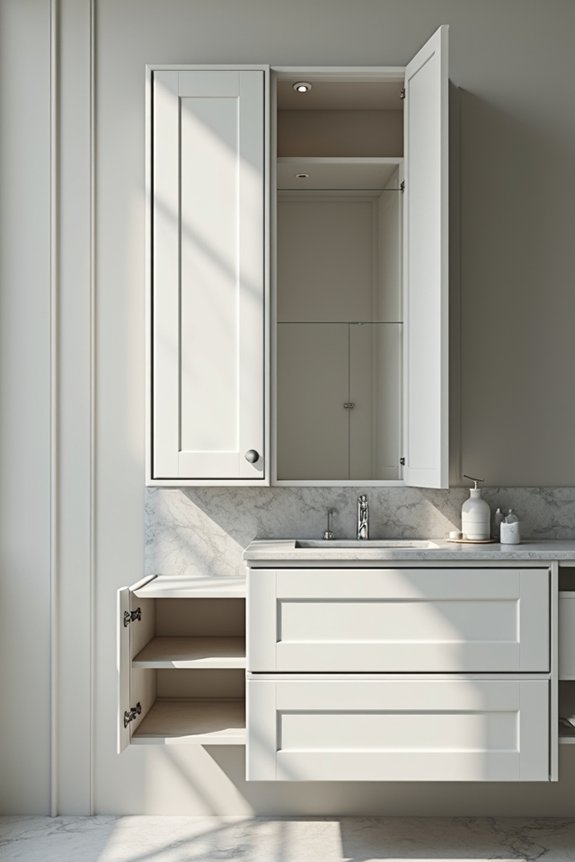
Before you buy a bathroom cabinet, you’ll need to take five key measurements.
Before purchasing a bathroom cabinet, take five key measurements to save money and prevent costly mistakes.
Getting these measurements right saves you money and prevents costly mistakes. I’ll walk you through each one so you can confidently select the perfect vanity for your space.
The Five Essential Measurements:
- Width and depth: Measure usable wall width minus trim and baseboards. Mark both dimensions on your floor with painter’s tape to visualize your floor plan before purchasing.
- Clearance zones: Verify door swing and drawer movement. Confirm the sink centerline maintains at least 15 inches from the nearest side wall for comfortable use.
- Plumbing rough-ins: Locate supply lines and the drain. Confirm vanity interior cutouts align precisely with your existing plumbing rough-ins to avoid expensive relocations.
These five measurements create your complete sizing picture.
Choose Your Depth: A Decision Framework for Every Bathroom Type
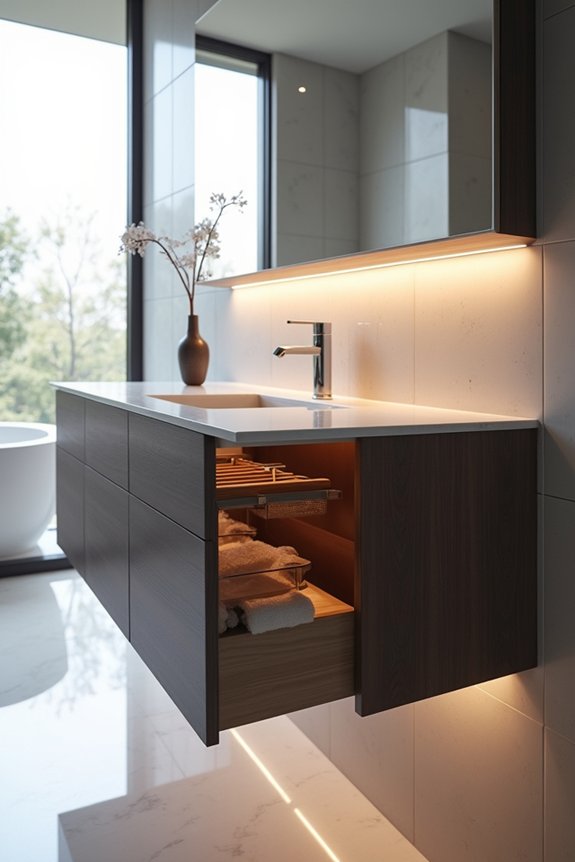
Choose Your Depth: A Decision Framework for Every Bathroom Type
Once you’ve confirmed your wall space and plumbing locations, you’re ready to pick your cabinet’s depth. This choice matters more than you might think.
1. Tight Spaces Need Shallow Solutions
Shallow vanities at 12 to 16 inches work perfectly for narrow powder rooms. You’ll get essential storage without sacrificing precious floor space.
2. Mid-Depth Offers Balance
At 18 to 20 inches, mid-depth cabinets balance storage and compact footprint. They’re common in apartments and guest bathrooms for good reason.
3. Standard Depth Fits Most Homes
The standard depth of 21 inches accommodates plumbing while preserving countertop usability. It’s the reliable choice for circulation and function.
4. Deeper Cabinets Maximize Storage
Vanities at 24 inches and up maximize countertop space. They suit spacious primary baths but require careful door-swing planning.
5. Account for Countertop Overhang
Remember that countertop overhang typically brings finished depth to 22 inches. Plan accordingly to avoid layout conflicts and wasted investment.