

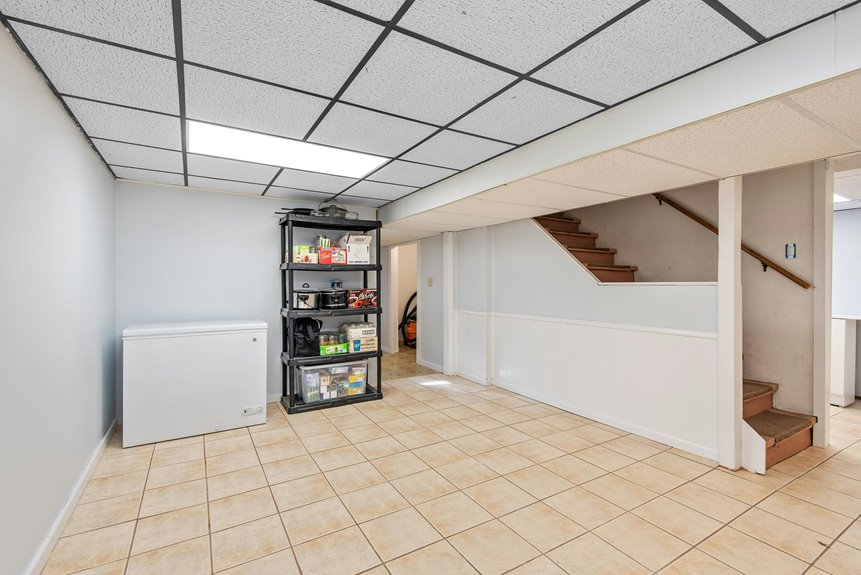
First, identify whether your tiles have square or tegular edges; square edges sit flush with the grid, while tegular edges create a shadow line. Clear your workspace and wear gloves for safety. Mark your cut line precisely, about one-eighth inch shorter than your measurement. Score the tile with a sharp utility knife using multiple passes. For square edges, snap along the score line gently. Tegular tiles require cutting halfway through and removing the top half. Finally, test-fit tiles into the grid and check for gaps. Keep reading to master each technique.
Step 1: Identify Your Ceiling Tile’s Edge Type
How can you tell if your ceiling tiles will fit properly? You’ll need to identify your tile’s edge type first. There are two main kinds: square edges and tegular edges.
Square edges are flush with the grid. They’re identifiable by a visible grid line running along them. Tegular edges sit lower than the grid and create a shadow line effect.
The key difference between these types is this: tegular tiles have a lip that sits into the grid opening, while square tiles fit snugly against the gridwork itself.
Before you cut anything, examine your tiles carefully. Run your finger along the edge to determine whether it sits flush or dips down. This simple check determines your cutting approach. Understanding your tile type prevents mistakes and ensures proper installation. Taking this first step sets you up for a successful project.
Step 2: Clear Your Work Area and Protect Your Hands

Step 2: Clear Your Work Area and Protect Your Hands
Before you make your first cut, set up a safe workspace. Preparation matters when handling sharp tools and materials.
Before making your first cut, set up a safe workspace. Preparation matters when handling sharp tools and materials.
Clear your work area by:
- Removing all trip hazards, clutter, and distractions from your cutting area
- Keeping people and pets away from your workspace during the project
- Checking overhead for loose objects that could fall and cause injury
- Verifying your safety gear is available and working properly
Protect your hands next. Ceiling tiles have rough edges that cut easily. Wear work gloves that fit snugly without restricting movement. Safety gear is not optional. It’s necessary. Taking these steps lets you focus on making clean, accurate cuts without worrying about accidents occurring around you.
Step 3: Mark Your Ceiling Tile Before Cutting

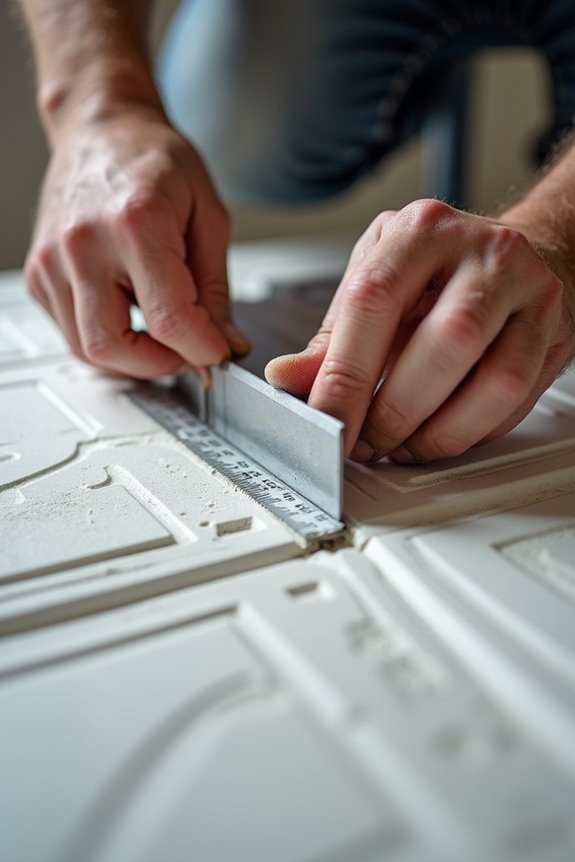
Mark your tile accurately by measuring twice and using a pencil to draw a clear line where you’ll cut. This line should be parallel to the tile’s edges. Use a straightedge for precision, positioning your line about an eighth inch shorter than your measurement. This marking technique will set you up for a clean, professional-looking cut.
Measure and Mark Accurately
Why does marking matter so much? Accurate marks mean clean cuts and a professional finish. Here’s how to get it right.
My Marking Strategy
- Measure your space carefully, then subtract 0.125 inches from that measurement for a precise fit
- Mark both the start and end points clearly using a straight edge or grid alignment
- Identify whether your tile has a square/lay-in edge or tegular edge before planning shadow lines
- Keep your workspace dry and debris-free to maintain marking accuracy
When scoring marked lines with a sharp utility knife, multiple shallow passes work better than one deep cut. Clean references on the tile’s top and bottom keep everything visible and aligned properly.
Use Proper Marking Tools
How do you mark a ceiling tile so your cuts come out straight and clean? Using the right tools makes a significant difference. Grab a framing square or T-square to keep your marks perfectly aligned along the tile’s edges. This ensures accuracy every time.
I use a light pencil to draw my width measurements on the tile. The marks should be visible on both faces; this dual visibility guides you through scoring and cutting. For tegular edges, plan a shadow line slightly inward from the visible edge. This placement lets the top lip sit properly into the grid afterward.
Consistent marks across multiple tiles create uniform borders. Always verify your marks align with the existing ceiling grid before you start cutting.
Score Line Placement Technique
Once you’ve marked your tile, the real precision work begins. Scoring correctly ensures your cuts separate cleanly. Follow these steps:
- Measure twice, mark once with your pencil line
- Plan your score about 0.125 inches shorter than measured
- Determine if you’re cutting square or tegular edges first
- For tegular tiles, mark the shadow line before scoring
Grab your sharp utility knife and press firmly along that pencil line. Make your initial pass with steady pressure, but don’t cut too deep yet. You’re creating a guide, not slicing through immediately.
Make deeper passes as needed, letting the knife do the work. Keep consistent pressure throughout. Your goal is full separation on the final pass. This technique keeps edges aligned with your grid perfectly.
Step 4: Score Your Ceiling Tile With a Utility Knife
Position your blade perpendicular to the tile surface. Start with a shallow pass along the pencil line, then make several additional passes to gradually deepen the cut while keeping your blade aligned with the guideline each time. This layered approach creates a straight, consistent score without rushing through or accidentally veering off course.
Proper Blade Positioning Technique
Before you start cutting, position your utility knife blade to align with your pencil score line. Holding the knife at a shallow angle works best for creating that initial groove.
- Keep the blade perpendicular to the tile surface to prevent wandering
- Hold a shallow angle initially to avoid gouging too deeply
- Apply steady, even pressure throughout your cut
- Replace dull blades promptly for clean edges
Make your first light pass to establish a shallow groove. Then progressively deepen it with multiple passes until the tile separates. Avoid sudden jerky motions that could crack the tile.
Sharp, clean blades are essential for this work. A dull blade will skip across the surface and produce ragged edges, while a sharp blade cuts smoothly and predictably. Replace your blade as soon as you notice it dragging or requiring extra pressure to score the surface. The quality of your cut depends directly on blade condition.
Multiple Passes For Depth
The real process happens when you make multiple passes with your utility knife rather than trying to cut through the tile in one aggressive stroke. Patience pays off here. Start with light pressure on your first pass to create a shallow guiding groove along your pencil line. Then increase pressure gradually with each subsequent pass, letting your utility knife do the work progressively. Don’t yank pieces apart yet; keep scoring. Make as many passes as needed until the tile fully separates from the sheet. Each pass should follow your original pencil line carefully for straight, clean divisions. This methodical approach prevents tiles from cracking or splintering, giving you professional-looking results that will build your confidence about your ceiling project.
Maintaining A Straight Score Line
How do you keep your score line perfectly straight when working with a utility knife? Precision matters significantly for clean breaks when scoring tile. Here’s the method:
- Mark your pencil line 0.125 inches shorter than your measured size
- Use a straightedge or metal ruler as your guide while scoring
- Ensure the line is clearly visible on both the top and bottom edges
- Apply consistent, moderate pressure throughout your entire scoring motion
Position yourself comfortably before starting. This setup prevents your hand from wavering mid-stroke. A steady guide keeps everything aligned properly. When you score the tile with controlled passes, you’re not rushing through it. Taking your time here produces straight, clean edges every time.
Step 5: Cut Square-Edge Ceiling Tiles
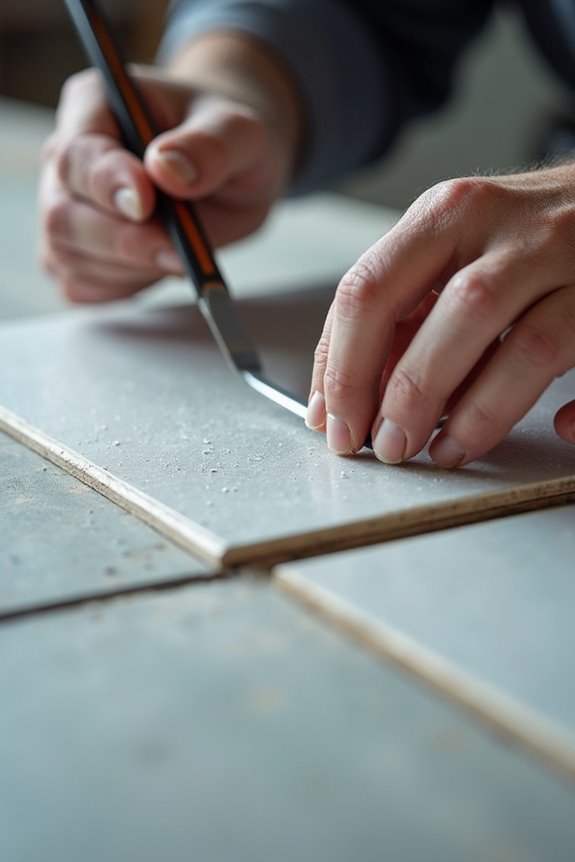
Square-edge tiles demand more precision than beveled tiles because they fit more snugly in the grid system. I’ve found that marking your cut line about 0.125 inches shorter than your actual measurement prevents awkward binding later. This small gap allows the tile to seat properly without forcing.
For cutting, use a sharp utility knife and make one or two initial scoring passes. Then apply deeper passes gradually until the tile separates cleanly. This controlled technique prevents sudden breaks that compromise the material.
Align the tile edge with a straightedge guide and snap gently along the score line without pulling pieces apart prematurely. A clean, sharp blade makes a significant difference in cut quality.
Before fitting the tile into place, verify that the top surface remains intact. The cut edge should be smooth and straight. This visual inspection serves as your quality check to confirm the tile is ready for installation.
Step 6: Cut Tegular Ceiling Tiles Correctly

Tegular edges create that recessed effect where some ceiling tiles sit lower than others in the grid. Here’s how to cut them correctly yourself.
Process for cutting tegular edges:
- Mark the shadow line where the tile’s edge will sit lower than the grid.
- Remove the tile and cut halfway through, then slice the side to remove the top half.
- Repeat this tegular edge cutting process for each side needing it.
- Paint visible border edges facing your room for a finished appearance.
The top half of your edge fits snugly into the grid, creating that signature shadow line. Consistent tegular cuts across all tiles result in a uniform appearance throughout your ceiling. This method produces a polished installation that looks professionally installed.
Step 7: Fit Your Tiles Into the Grid and Check for Gaps
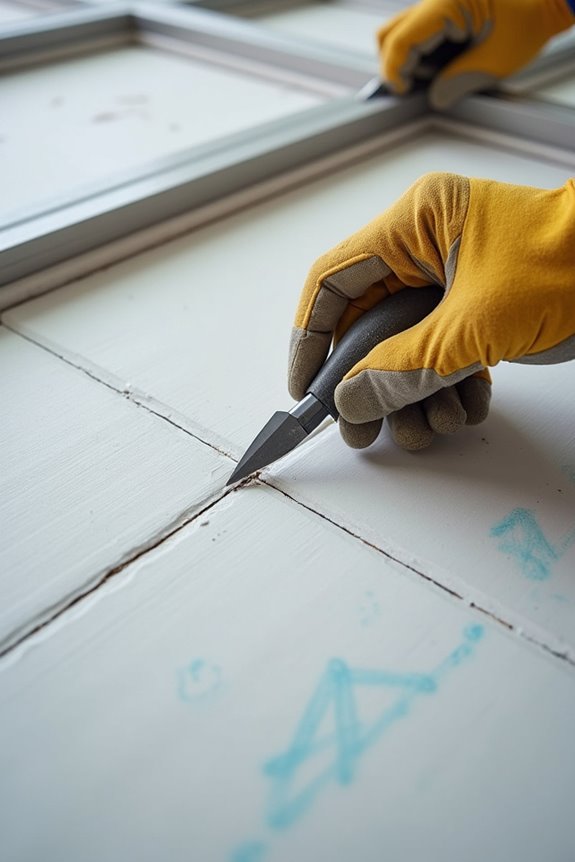
Now it’s time to test-fit each tile you’ve cut into the grid before permanently placing it. Position cut tiles carefully, checking for gaps around edges and corners. This step prevents surprises later on.
Verify that shadow lines align properly with neighboring tiles, so everything looks uniform across your ceiling. The top half of tegular edges should sit snugly into the grid itself. Confirm border faces are painted and visible as planned.
| Checking Step | What I Look For |
|---|---|
| Edge Alignment | Gaps around perimeter edges |
| Shadow Lines | Consistent appearance with neighbors |
| Tegular Fit | Top edges seated in grid |
| Border Faces | Paint visible and clean |
If grid shifts occur after cutting, re-measure and adjust tiles accordingly. Finally, confirm all cut edges align with room perimeters for clean, professional finishes.