

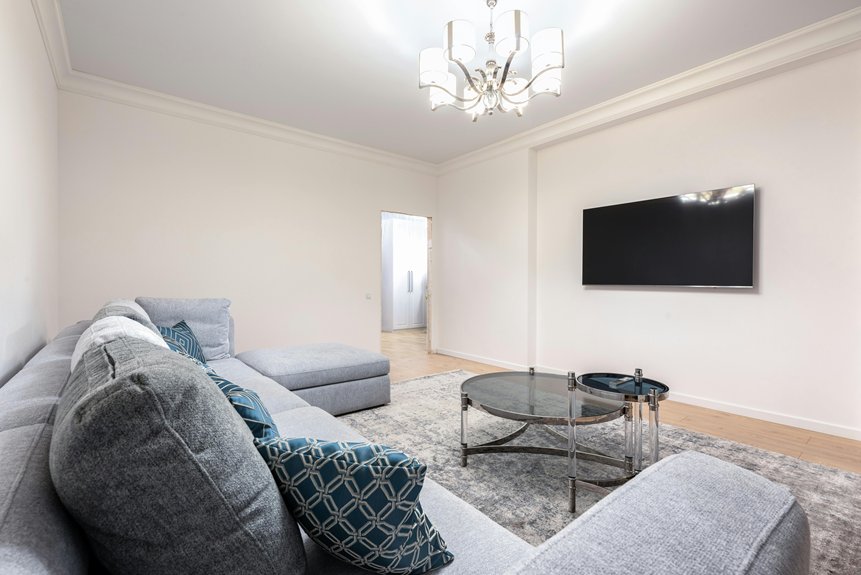
1. Mount at 60–72 inches. Center sconces 60 inches from the floor in standard rooms, adjusting upward for vaulted ceilings.
2. Space them properly. Keep sconces 6–10 feet apart, avoiding doors and windows.
3. Test first. Temporarily mount fixtures to check for glare and balanced light from seating areas.
4. Layer with ceiling lights. Coordinate sconces with existing fixtures to reduce overhead reliance, lower energy costs, and create inviting ambiance.
The specifics of placement strategy reveal how to maximize both aesthetics and savings.
Determine the Right Height to Hang Sconces
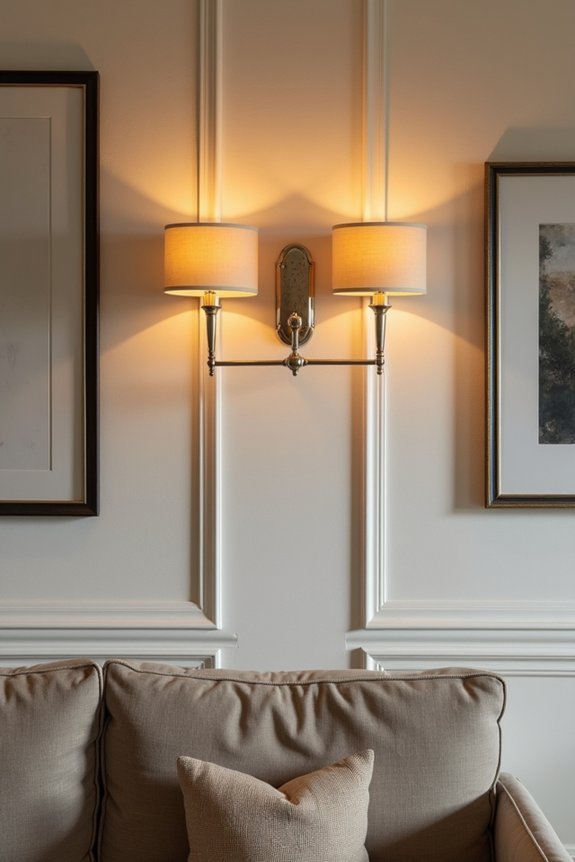
How high should you actually hang your wall sconces? I’d recommend positioning them between 60 and 72 inches from the floor. This mounting height keeps light sources slightly above eye level, which prevents glare while creating comfortable ambient lighting.
1. Standard Living Rooms
For typical spaces, aim for 60–66 inches. This centers your wall sconces near eye level, ensuring balanced illumination without harsh shadows on faces.
2. Vaulted Ceilings
Higher ceilings call for 66–72 inches. Placing fixtures higher complements your space’s architecture while maintaining effective ambient lighting throughout the room.
3. Visual Balance
Position sconces to flank seating areas or artwork. Proper mounting height creates layered lighting that enhances focal points and saves energy by distributing light efficiently.
Space Living Room Sconces for Visual Balance
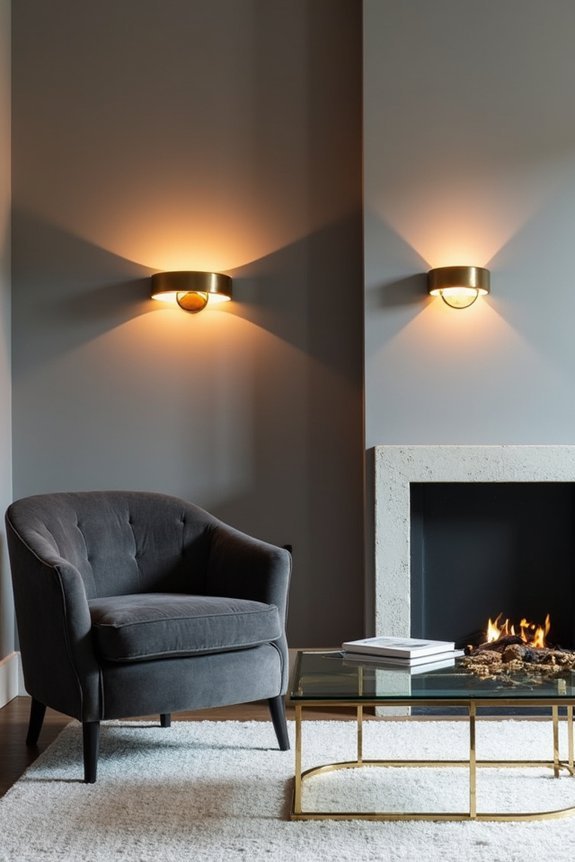
Where should you actually place multiple sconces in your living room?
1. Maintain Proper Spacing
Space sconces at least 6 inches apart, or 8 to 10 inches in larger rooms. This prevents crowding and creates balanced lighting layers throughout your space. Avoid placing sconces directly near doors or windows, where they’ll compete with natural light.
2. Create Even Lighting Layers
Multiple sconces working together produce even illumination without relying solely on ceiling fixtures. This layered approach reduces energy costs while highlighting your room’s best features and faces. Position sconces to work alongside other lights like table lamps or pendants for flexible control.
3. Test Before Installing
Always test your planned placement first. This confirms visual balance and verifies that each sconce contributes meaningfully to your overall lighting design.
Test Sconce Heights Before Final Placement
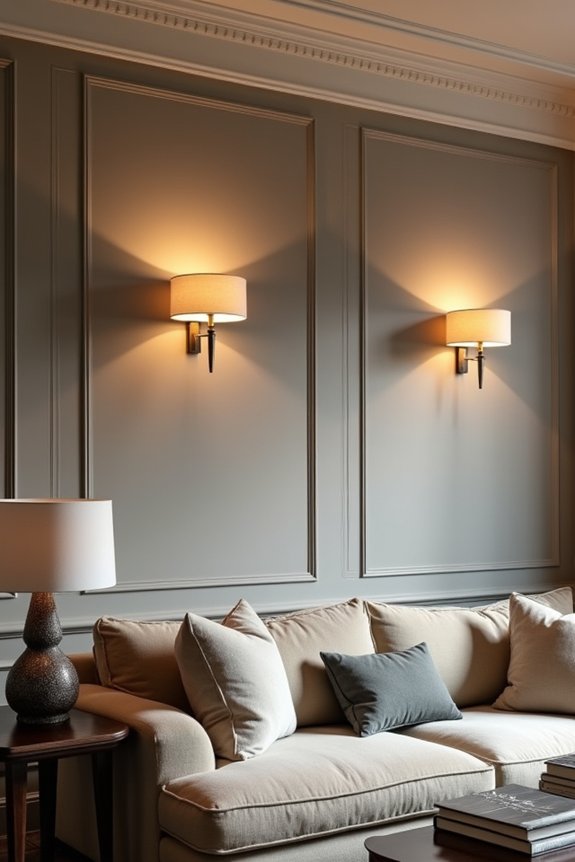
Test Sconce Heights Before Final Placement
I recommend testing sconce heights before permanent installation. Your light source should sit slightly above eye level. This positioning prevents glare and keeps the bulb out of direct view. It also creates comfortable illumination throughout your space.
Center Around 60 Inches
I place fixture centers approximately 60 inches from the floor. This height works well for most living rooms. You’ll achieve even illumination across walls and seating areas. Adjust upward for vaulted ceilings or window heights.
Conduct a Lighting Test
Before finalizing placement, I perform a complete lighting test. This verifies glare reduction and checks visual balance with furniture. Testing also confirms the fixtures complement your artwork and décor. This approach saves money by preventing costly mistakes and confirms energy-efficient placement.
Position Sconces Above Furniture and Architectural Features
Position Sconces Above Furniture and Architectural Features
Once you’ve confirmed your sconce heights work well in your space, you’ll want to position them strategically around key furniture and architectural features.
1. Finding the Right Height
I mount sconces 60 to 66 inches from the floor to create eye-level illumination. This positioning provides flattering visibility without harsh shadows on faces or furniture below.
2. Flanking Furniture
Position sconces on either side of sofas, chairs, or console tables. This focal lighting approach creates balanced symmetry and reduces the need for multiple overhead fixtures, saving energy costs.
3. Framing Architectural Details
Place sconces beside fireplaces, mirrors, and artwork. Positioning them 6 to 12 inches from the mantel edge or frame prevents glare while highlighting these important features effectively.
Integrate Sconces With Your Existing Ceiling Light
How do you balance wall sconces with the overhead lighting you’ve already got?
1. Create Layered Lighting
Combine your ceiling light with wall sconces for layered lighting. This approach gives you flexibility. You’ll use ambient ceiling light for general brightness, then add wall sconces at eye level for focused illumination.
2. Achieve Balanced Illumination
Layered lighting reduces glare and shadows. Your ceiling light handles overall brightness while wall sconces highlight specific areas. This balanced illumination saves energy because you won’t need your ceiling light running constantly.
3. Install Strategically
Position sconces about 60 to 72 inches from the floor. Space them 6 inches apart in smaller rooms and 8 to 10 inches in larger spaces. This creates even glow without crowding.
4. Test Before Installing
Adjust placement based on your room’s layout. You’ll appreciate how these fixtures work together to create comfortable, welcoming light throughout your space.
Prevent Glare by Positioning Fixtures Correctly
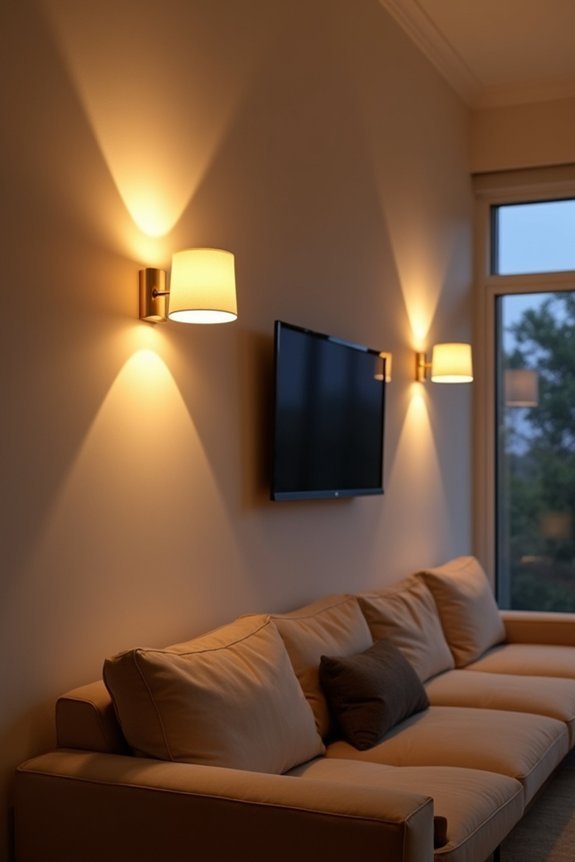
I’ll position my sconces thoughtfully to eliminate glare and create comfortable lighting in my living room. The key is mounting them slightly above eye level, typically 60 to 72 inches from the floor to the fixture’s center, so light reaches my face and artwork without causing uncomfortable brightness. By spacing fixtures at least 6 inches apart and keeping the light source hidden above my direct sightline, I’ll enjoy flattering illumination that reduces harsh shadows.
Eye Level Light Placement
Where you mount your wall sconces affects comfort and functionality. Position your wall sconces at eye level, roughly 60 inches from the floor. This placement reduces glare and creates flattering lighting levels for your space.
1. Standard Height Guidelines
Start at 60 inches as your baseline for living rooms and hallways. This height works well for both seated and standing positions.
2. Spacing Considerations
Space multiple sconces at least 8 to 10 inches apart in larger spaces. This distance maintains even, eye-level illumination without crowding fixtures.
3. Testing Before Installation
Temporarily mount sconces first and observe from your typical seating positions. This step confirms glare-free, comfortable lighting before making permanent decisions.
Fixture Height and Balance
The right positioning of your wall sconces prevents glare and creates even lighting throughout your living room.
1. Center Height Matters
Install sconces with their center height at 60–72 inches from the floor. For vaulted ceilings, aim toward 66–72 inches. This placement positions the light source slightly above eye level, delivering balanced illumination without harsh glare.
2. Sconces Spacing Guidelines
| Ceiling Type | Recommended Height | Minimum Spacing | Maximum Spacing |
|---|---|---|---|
| Standard | 60–66 inches | 6 inches | 8 inches |
| Vaulted | 66–72 inches | 8 inches | 10 inches |
| High | 70–72 inches | 10 inches | 12 inches |
3. Avoiding Glare
Position fixtures so you won’t see the bare bulb. Direct the light toward face-level angles rather than overhead-only positioning. Test placements before final installation to achieve balanced visual distribution throughout your space.
Choose Sconces That Match Your Living Room Style
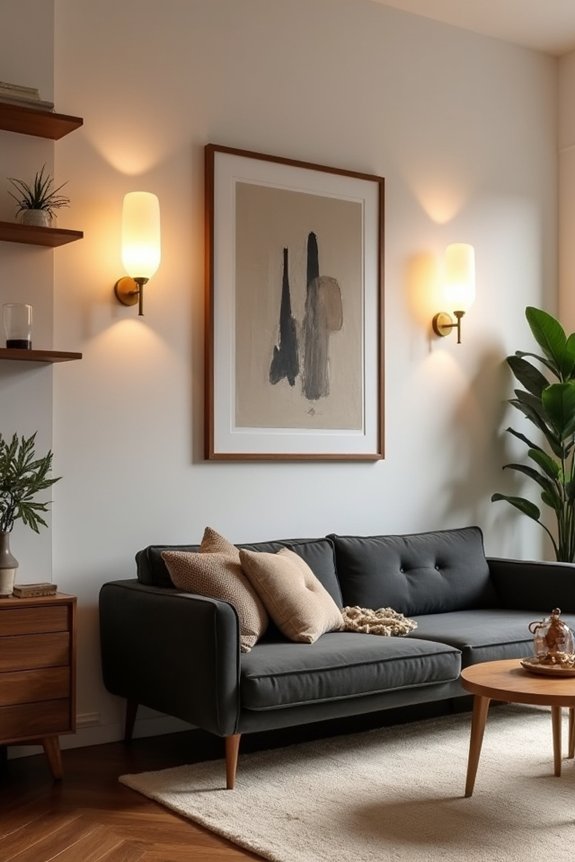
How do you choose wall sconces that actually fit your living room? The key is matching your sconces style with your existing décor while creating a unified look. I recommend using a layered lighting approach that combines sconces with other fixtures like pendants or table lamps.
1. Assess Your Design
Look at your furniture, colors, and overall aesthetic. Do you prefer modern, traditional, or eclectic styles? Your sconces should complement these choices well.
Your sconces should complement your furniture, colors, and aesthetic—whether modern, traditional, or eclectic.
2. Position for Impact
Place sconces at eye level to create flattering illumination. This strategic placement improves your ambiance lighting while highlighting architectural features or artwork you want to showcase.
3. Balance Multiple Fixtures
Coordinate your sconces with existing lighting. This unified approach saves energy and creates inviting spaces that feel purposefully designed rather than randomly lit.