
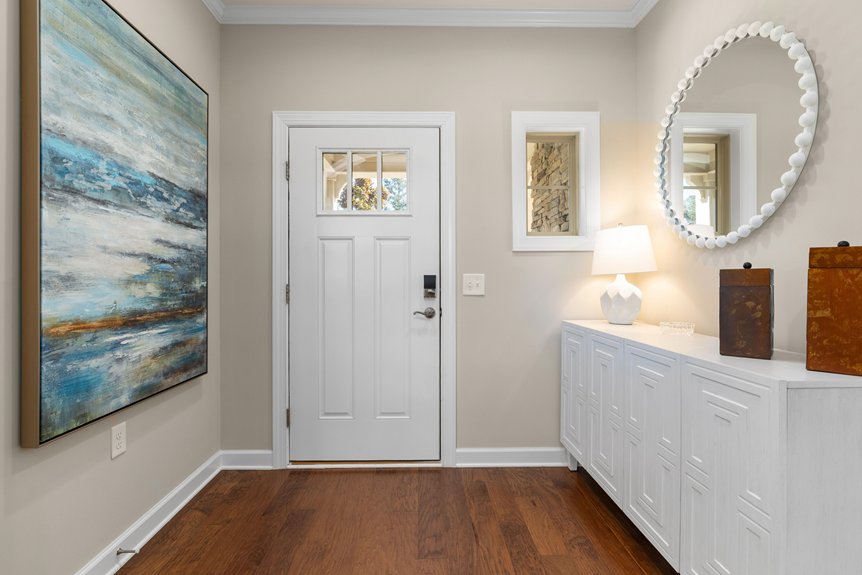
Define Your Space Strategically. You can create a distinct foyer in an open living room by measuring your available wall space and identifying fixtures like closets.
Choose Multipurpose Furniture. Select a storage bench, wall-mounted hooks, and a mirror that match your living room’s style and color palette.
Anchor with a Rug. Place a rectangular rug about one foot from the door to visually separate your entry.
These foundational steps establish function and flow; implementing them properly reveals additional refinements that improve your entryway’s impact.
Assess Your Open-Plan Space First
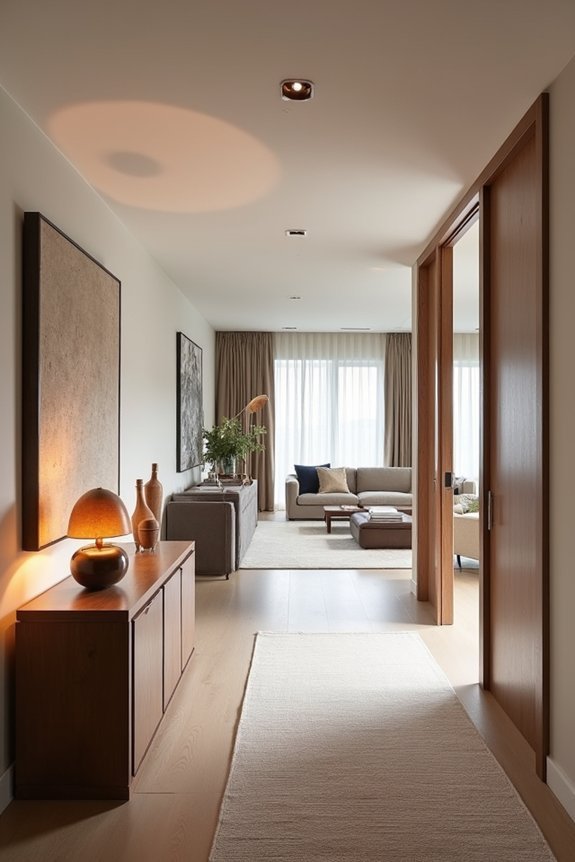
When you’re creating a foyer in an open living room, you’ll need to understand your space’s unique constraints before you choose any furniture.
1. Measure Your Available Wall Space
Start by measuring every inch of your entry space. You might discover you’ve got just 23 inches of usable wall, like many open-plan homes. This limited wall space shapes everything you’ll do next.
2. Identify What’s Taking Up Room
Look around your entry space carefully. Closets, AC units, and other fixtures claim valuable real estate. Understanding what’s already there helps you work with your layout instead of against it.
3. Consider Your Living Room Connection
Your foyer isn’t separate; it flows directly into your living room. Strategic furniture placement can define this entry space while keeping everything feeling open and connected.
Map Your Foyer Layout
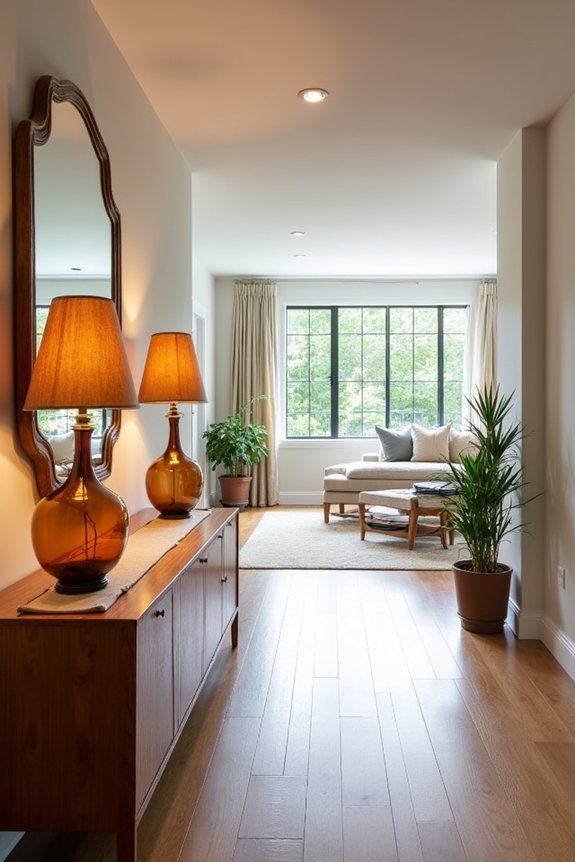
How do you transform a cramped 23-inch niche into a functional entry space? Start by sketching your entryway layout on paper. Mark where your door swings and note the two closets nearby.
1. Prioritize Essential Elements
You’ll need a mirror, key drop, bench with shoe storage, and hooks. List these in order of importance for your daily routine.
2. Measure Twice, Plan Once
Your narrow wall demands precision. Measure the exact width, height, and depth available. Account for door clearance so nothing blocks movement.
3. Visualize Your Setup
Imagine walking through your entry. Where do you naturally set keys down? Where does your jacket go? This mental walk-through reveals your layout’s flow.
A thoughtful plan prevents costly mistakes and wasted space.
Choose Foyer Furniture and Storage
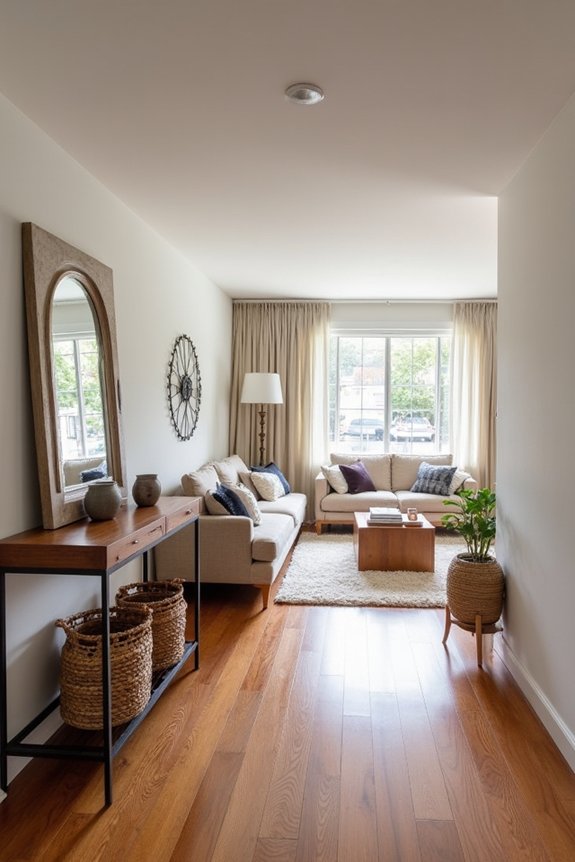
Now that you’ve mapped your foyer layout, it’s time to select furniture that works hard in a small space. Choose pieces that serve multiple purposes, such as benches with built-in storage. Strategic mirrors reflect light and create the illusion of additional room. This approach keeps your entryway organized and functional without overwhelming your open living area. By reducing clutter and limiting unnecessary furniture, you’ll save money while maintaining a practical entry space.
Dual-Function Bench Solutions
What’s the secret to maximizing a tiny entryway without sacrificing style or function? A dual-function bench.
1. Built-In Storage Magic
A bench with hidden shoe storage solves two problems at once. You get comfortable seating for putting on shoes while keeping footwear organized and hidden away. This smart design reduces clutter and saves money by eliminating the need for separate furniture pieces.
2. Easy Maintenance
I recommend choosing a bench with a removable cushion cover. This feature makes cleaning simple and keeps your foyer looking fresh. It’s also practical for long-term durability.
3. Design Cohesion
Position your bench near the entry wall. Match its material and color to your wall-mounted shelf and hooks. This creates a polished look that welcomes guests while keeping your open living room organized and inviting.
Strategic Mirror And Storage
Strategic Mirror And Storage
1. Mirror Placement
A well-positioned mirror serves double duty. It lets you check your outfit quickly before leaving. It also visually expands your compact entry space, making everything feel larger and more welcoming. Hang your mirror at eye level for maximum effectiveness.
2. Cohesive Storage Solutions
Install wall-mounted hooks and shelves that match your existing décor. This unified approach keeps visual clutter minimal while maintaining flow into adjacent living areas. Matching finishes, whether wood tones or metal accents, create seamless connections throughout your open plan.
3. Smart Spacing
Position storage strategically near your door without blocking pathways. This thoughtful arrangement keeps your entry functional and your living room accessible.
Pick a Rug and Light for Your Entry
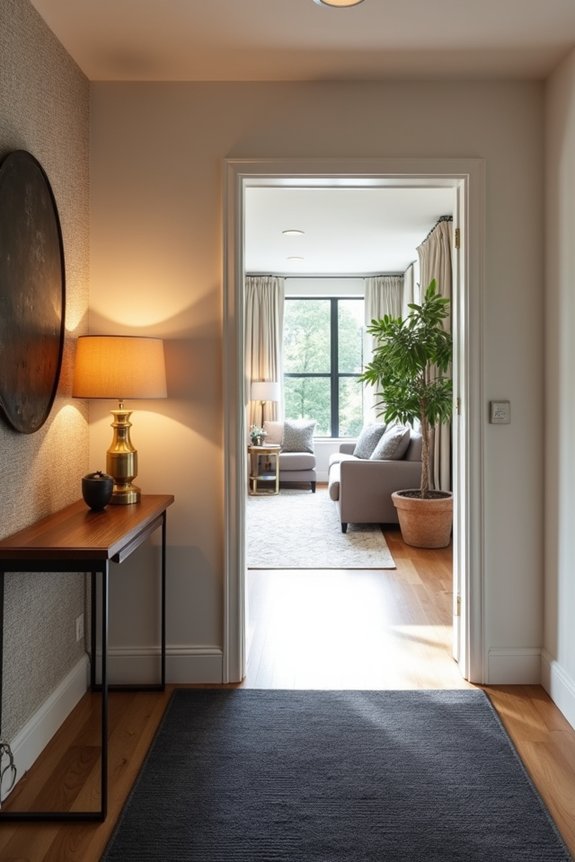
How do you define an entryway in a space that flows openly into your living room? A well-chosen rug and strategic lighting create the boundary you need.
1. Select Your Rug
Place a rectangular rug about one foot from walls, just inside your door. This grounds the entry and signals where guests should step. Choose durable materials that withstand daily foot traffic. Patterned rugs hide wear better than solid colors, saving money long-term. Size it proportionately; runners work well for narrow entries. Coordinate colors with your living area to reinforce cohesion throughout your home.
2. Add Purposeful Lighting
Position lights to highlight a console or vignette without clashing with closet doors. Good lighting welcomes visitors and defines your foyer’s distinct purpose within the open layout.
Style Your Entry Table Display
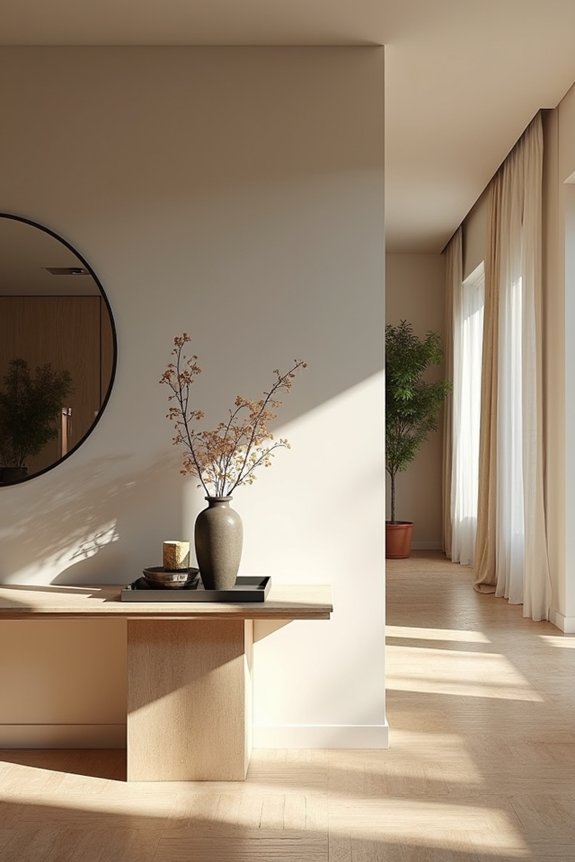
Now that you’ve anchored your entry with lighting and a rug, it’s time to build a focal point that distinguishes your foyer.
Your entry table serves as the heart of this space. Position it 90 degrees off your front door wall for maximum impact. The ideal dimensions are 36 to 42 inches long, about 14 inches deep, and roughly 30 inches high.
Style it with these elements:
- Place a lamp on top for task lighting and ambient warmth
- Stack decorative books to add height and visual interest
- Arrange mirrors, artwork, vases, and candles for a cohesive display
- Coordinate colors with nearby furniture, such as echoing blue tones from chairs
Consider adding a bench underneath for functional seating. This layered approach creates a welcoming, intentional entry that reflects your home’s personality and sets the tone for what follows.
Mount Hooks and Storage Hardware
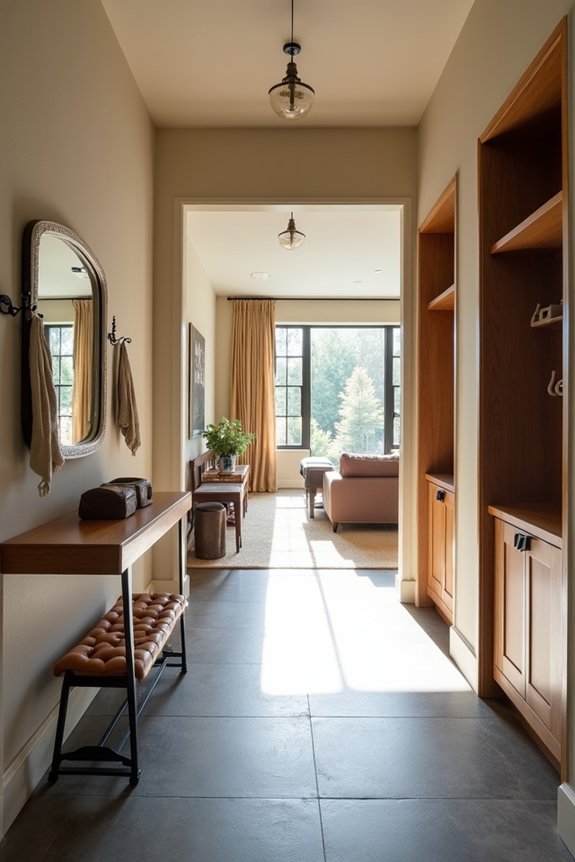
I’m ready to install hooks and storage hardware that will anchor my foyer’s functionality and style. Strategic placement keeps everything accessible while maintaining the organized look I’ve created with my entry table. Let me explore the best ways to mount these pieces securely and organize my space efficiently.
Strategic Hook Placement
Where should you place hooks in your foyer to maximize organization and style?
1. Height and Alignment
Position hooks at eye level, roughly 60-70 inches from the floor. This creates an inviting focal point that matches your shelf height, keeping everything visually balanced.
2. Strategic Placement Considerations
Hook placement matters for both function and aesthetics. Consider these placement tips:
- Install hooks near your entry door for immediate access to coats and bags
- Space hooks 12-16 inches apart to prevent crowding
- Align hooks horizontally with your shelf for a unified appearance
- Choose wall space away from high-traffic pathways to minimize accidents
3. Design Coordination
Match your hook finish with existing entryway elements. This coordinated approach creates a welcoming space that feels organized and intentional, helping you maintain a clutter-free foyer.
Storage Hardware Installation
Storage Hardware Installation
Once you’ve identified the perfect spots for your hooks, it’s time to get them installed securely on your wall.
1. Match Your Hardware
Choose hooks that match your shelf material and color. This creates a cohesive appearance throughout your entryway. Matching hardware unifies the space visually.
2. Install Your Hook
Mount the hook firmly using appropriate wall anchors. Secure installation prevents shifting and door-slam damage. Double-check that it holds your weight comfortably.
3. Position Your Bench
Place a modern bench with built-in shoe storage below your hook. This completes your functional entry setup. Verify the bench arrives assembled for quick placement.
4. Align Everything
Maintain balanced alignment between hook height, shelf position, and bench placement. This creates proper flow within your open-entry layout, maximizing both function and aesthetics.
Functional Organization Solutions
Organizing an Empty Entryway Wall
Creating a functional entryway requires practical solutions that work together. The right combination of storage and fixtures prevents clutter while maintaining accessibility.
1. Strategic Hook Installation
Install wall hooks that match your shelf material for visual consistency. Choose hooks rated to securely hold keys and small bags, keeping these items off surfaces where they accumulate.
2. Smart Storage Solutions
Consider these options:
- Add a bench with built-in shoe storage and removable cushion covers
- Place a compact mirror at optimal height to reflect light and expand the perceived space
- Install a small shelf near the entrance for keys and glasses
- Secure decorative elements with sticky tack to prevent shifting
Why This Works
These solutions address both function and aesthetics. A bench provides seating and storage without taking up much floor space. A mirror bounces light around the room and makes the area feel larger. A dedicated shelf keeps everyday items accessible but contained. When you organize items by category and provide a specific home for each, you avoid visual chaos and reduce impulse purchases.
The result is an entryway that serves its purpose: a place to drop keys, store shoes, and check your appearance before leaving home.
Tie Your Foyer to Your Living Room’s Style
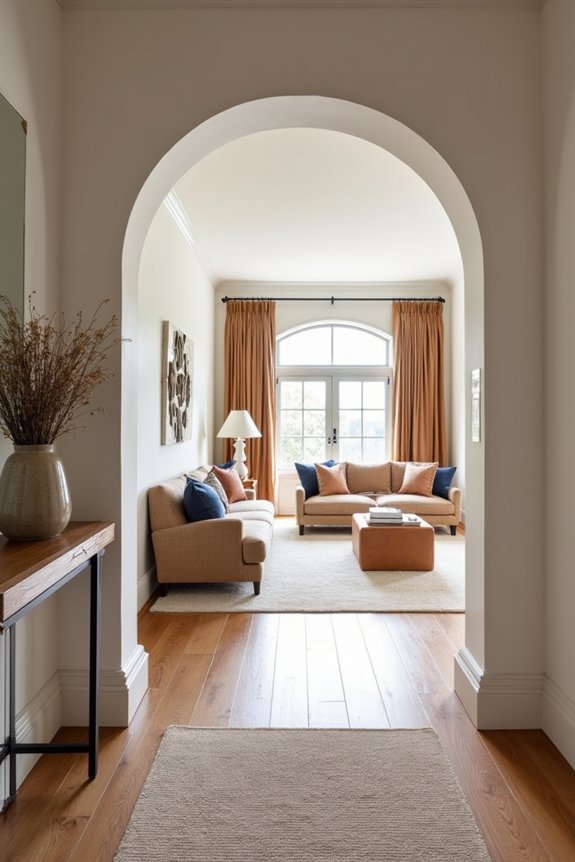
Tie Your Foyer to Your Living Room’s Style
Your foyer and living room share the same space, so they deserve a unified design story. Why settle for disconnected areas when you can create one cohesive environment?
1. Echo Your Color Palette
Repeat the blue tones from your living room’s chairs and rug in your foyer’s wallpaper or accessories. This creates visual continuity that makes the entire open area feel deliberate and connected. The color repetition signals to visitors that these spaces work together by design.
2. Match Furniture and Finishes
Choose low-profile pieces like benches with built-in storage and slender consoles. These maintain open flow while coordinating with your living room’s style. When your hardware finishes and wall colors align, the transitions between spaces feel natural rather than jarring.
3. Ground with a Unifying Rug
Select entry rugs with neutral bases and subtle blue-green accents. This ties your palette together while defining the foyer within the open layout. The rug acts as a visual anchor that connects both areas without disrupting the sense of spaciousness.