
1) Choose Your Strategy – Decide whether to highlight your slanted ceiling as a focal point or downplay it for balance.
2) Position Furniture Wisely – Place tall pieces where ceilings peak and low-profile furniture in angled areas to maximize usable space.
3) Create Storage Solutions – Convert dead zones into built-in storage, reading nooks, or display areas.
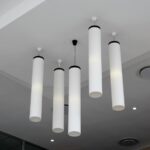
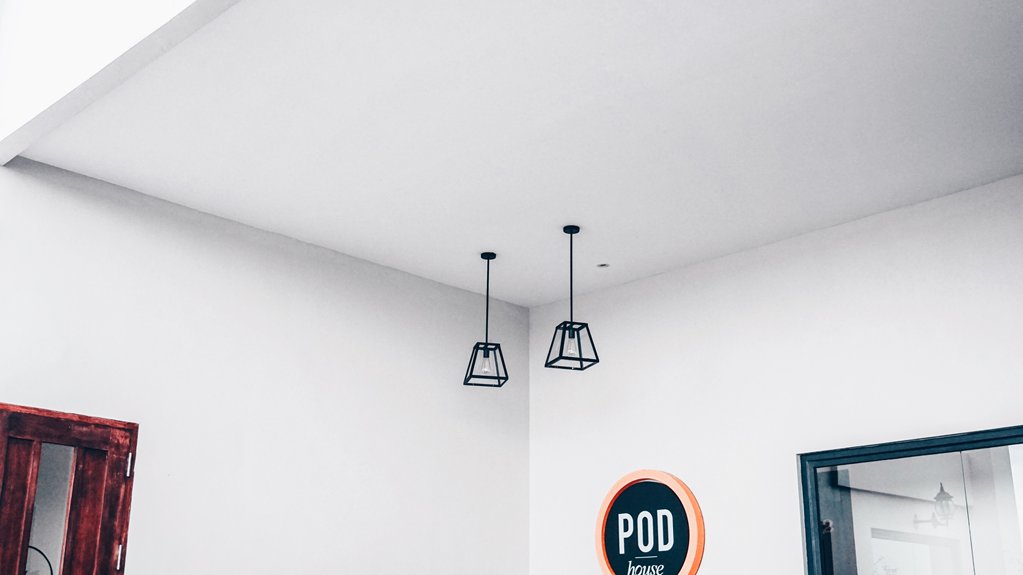
4) Layer Your Lighting – Use recessed, track, and task lighting along slopes for balanced illumination.
5) Add Custom Built-Ins – Install wall-mounted rails and shelves that follow ceiling angles, saving floor space while keeping your belongings organized. Each solution offers practical benefits worth exploring further.
Should You Highlight or Hide Your Slanted Ceiling?
How do you make the most of a slanted ceiling without making your room feel cramped?
1. Choose Your Strategy
Decide whether you’ll showcase or downplay your slanted wall. Highlighting one wall as a focal point draws the eye there intentionally. Hiding other angles keeps your space feeling open and balanced.
2. Create Visual Balance
When you highlight, place your bed headboard or media storage against the tallest wall. This utilizes your natural ceiling variation effectively. For remaining angles, use neutral finishes and built-ins that follow the slope.
3. Layer Your Lighting
Ambient lighting matters greatly. Recessed lights along the roofline follow angles without competing with them. Dimmers let you adjust mood while controlling what you emphasize or hide.
Position Low-Profile Furniture Under Your Slanted Ceiling
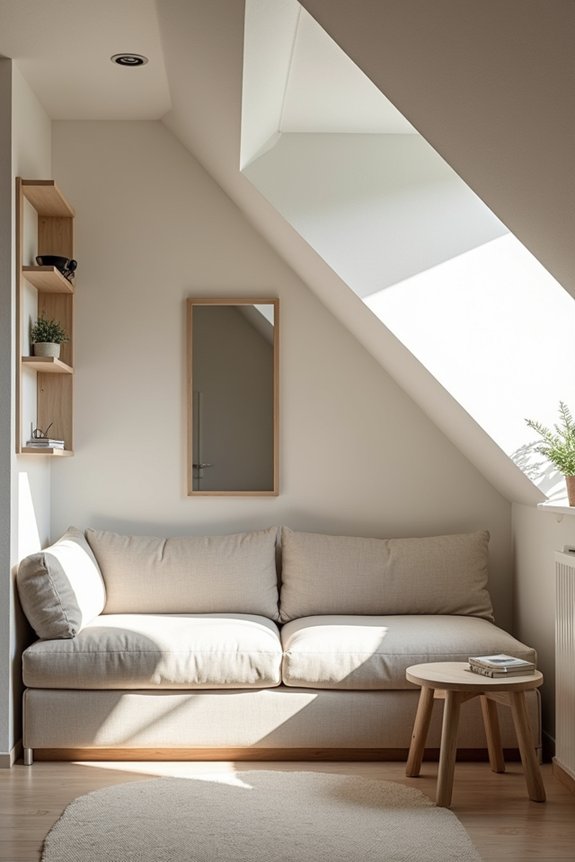
Position Low-Profile Furniture Under Your Slanted Ceiling
Where should your furniture go in a room with uneven heights? Place tall pieces where ceilings peak and save low-profile furniture for slanted areas. This approach maximizes your headroom and keeps sightlines clean throughout awkward spaces.
Choose the Right Furniture
Platform beds and dressers around 30 inches tall work well in these conditions. These pieces fit naturally under slanted ceilings without crowding your room. Built-in benches follow wall angles beautifully, minimizing visual disruption while maximizing usable space.
Smart Flexibility
Consider folding or Murphy-style furniture for adaptable living. You can store chairs and desks when not needed, preventing clutter under low ceilings. This saves money over time and reduces unnecessary purchases.
Measure Carefully
Verify exact furniture dimensions before buying. Compatibility with your room’s distinct ceiling heights ensures successful, frustration-free decorating.
Turn Dead Zones Into Storage or Reading Nooks
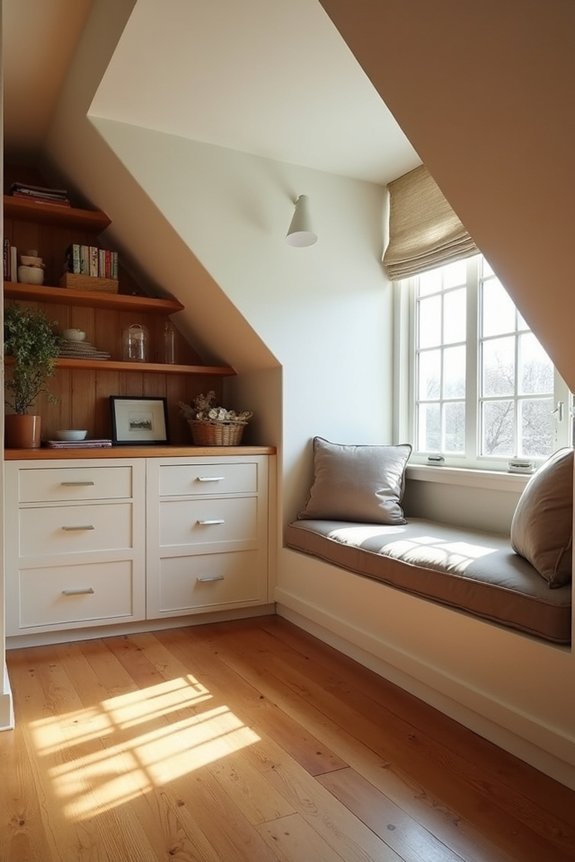
What’s hiding under your slanted ceiling that you’re not using?
1. Identify Your Dead Zones
Measure and sketch your room to find spaces too low to stand in. These dead zones exist between the floor and slanted ceiling. They’re larger than closets but awkward to use.
2. Create Built-In Storage
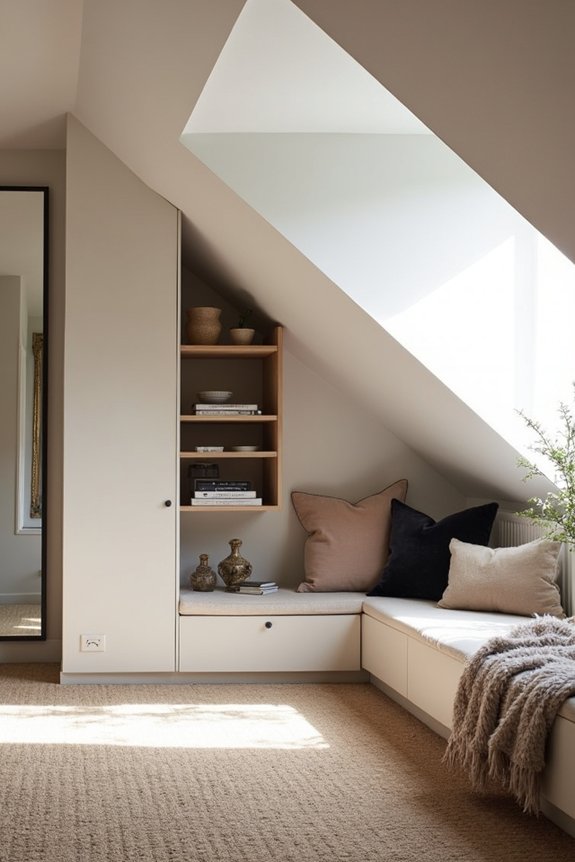
Install pullout bins and hidden compartments under eaves. This approach maximizes wasted space into practical storage solutions without blocking movement. Built-in storage saves money by using what you already have.
3. Design Reading Nooks
Add cushions and lighting to create cozy reading nooks. This makes dead zones functional and inviting. Plants and cohesive color connect low spaces to your room’s overall design.
4. Visual Integration
Use eye-level displays and targeted lighting to integrate slanted ceilings into your space. These simple additions make every corner feel purposeful and connected.
Light Your Slopes: Recessed, Track, and Task Options
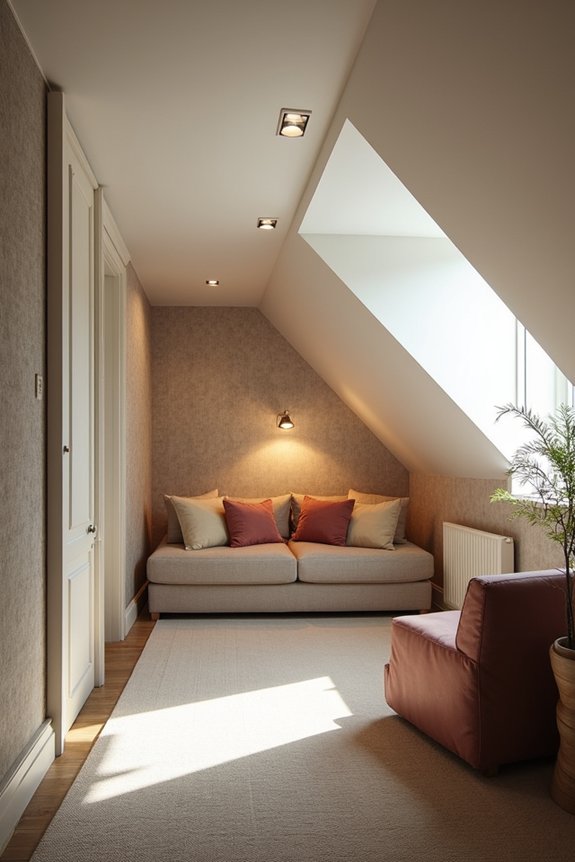
Light Your Slopes: Recessed, Track, and Task Options
Slanted ceilings create unique lighting challenges that standard fixtures can’t always solve. Three lighting types work together to address these needs effectively.
1. Recessed Lighting
Recessed lights installed along the roofline follow your ceiling’s slope. They provide soft, even illumination without blocking views or wasting energy.
2. Track Lighting
Track lights aim to highlight beams and angles throughout your space. As your needs change, these flexible fixtures adjust easily to new requirements.
3. Task Lighting
Task lights placed where you sit or work fight shadows effectively. Install them under higher walls and near built-ins for maximum benefit.
Layering It All Together
Combining all three lighting types creates balanced illumination. Ambient lighting sets the mood for your space. Task lighting handles specific work needs and reading areas. Accent lighting with dimmers showcases your room’s architectural features while controlling both costs and energy consumption.
Add Custom Built-Ins and Clothes Rails
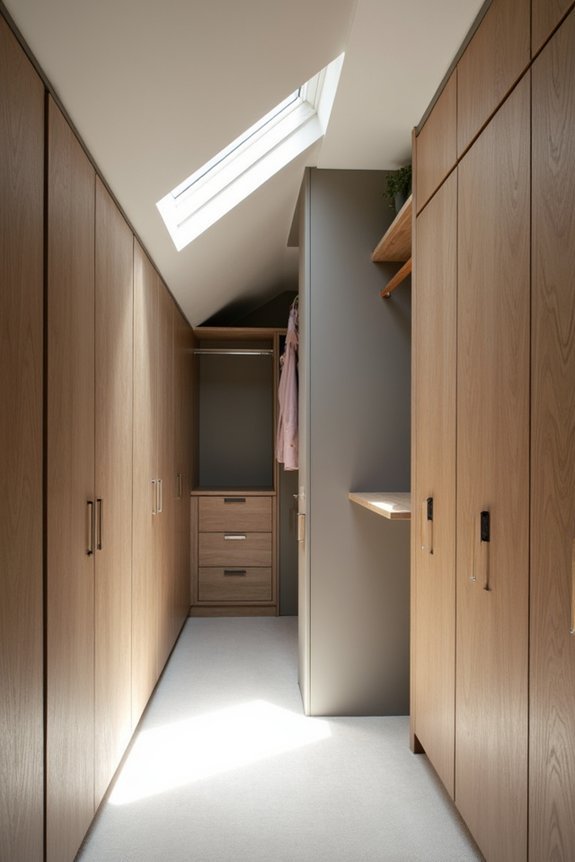
Once you’ve got your lighting sorted, it’s time to tackle storage in those hard-to-use spaces. Custom built-ins and clothes rails turn awkward spaces into functional storage solutions.
1. Wall-Mounted Rails for Display
RackBuddy Joey wall-mounted clothes rails fit slanted ceilings perfectly. You can customize the rail depth to match your ceiling angle, freeing up floor space while displaying outfits beautifully.
2. Built-In Storage Options
| Storage Type | Best Use |
|---|---|
| Under-stair closets | Hanging clothes, shoes |
| Sloped wall shelves | Folded items, accessories |
| Integrated drawers | Seasonal clothing |
| Shoe display areas | Visible organization |
| Combination systems | Maximum efficiency |
3. Maximizing Your Space
Combining built-ins with clothes rails uses vertical space efficiently. You can align storage with your ceiling contours, creating cohesive solutions that don’t waste resources or money.