
Best Floor Lamp Spots
Position tall lamps behind your sofa, 60 to 70 inches high, for task lighting without TV glare.
Place reading lamps beside chairs, angled 12 to 18 inches to the side for page illumination.
Brighten dark corners with arc lamps to bounce light effectively.
Skip areas near windows, doorways, and reflective surfaces where glare occurs.
Use one lamp per 100 square feet as your baseline.
Dimmers let you adjust brightness and save up to 75% on energy costs.
Test placements during day and night to find your ideal setup.
Assess Your Room Size and Existing Lighting
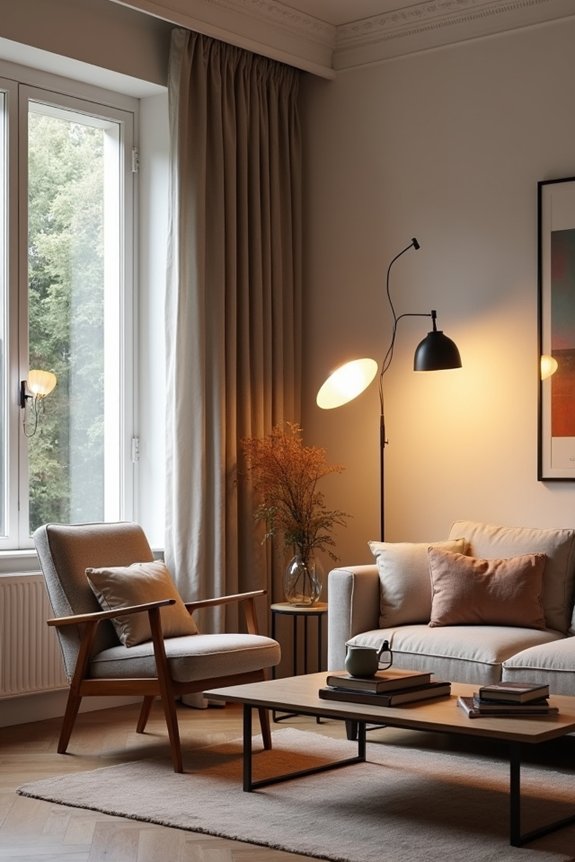
How do you know where your living room really needs more light? Start by measuring your space’s length, width, and height to calculate square footage. This number guides your lighting plan and prevents wasting energy on over-illumination.
Measure your room’s square footage to guide your lighting plan and prevent wasting energy on unnecessary over-illumination.
1. Measure Your Room Size
Accurate measurements help you determine how much light you actually need, saving money and reducing unnecessary energy use.
2. Evaluate Existing Lighting
Next, inventory your current fixtures. Identify what ambient illumination and task lighting you already have. This prevents duplicating light sources.
3. Check Natural Light Sources
Observe how sunlight enters through windows and doors throughout the day. This knowledge helps you supplement lighting strategically, filling real gaps rather than creating excess brightness that wastes resources.
Determine How Many Floor Lamps You Actually Need
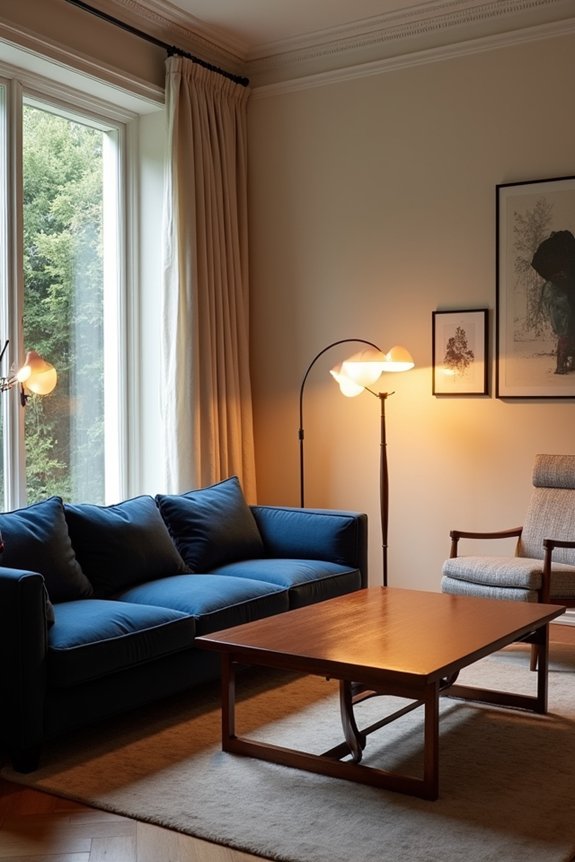
Determine How Many Floor Lamps You Actually Need
Now that you’ve assessed your room’s dimensions and existing lighting, you’re ready to figure out the right number of floor lamps for your space.
1. Calculate Based on Room Scale
Use one floor lamp per roughly 100 square feet as your baseline. This guideline helps you achieve balanced lighting coverage without wasting energy. A 200-square-foot living room needs about two lamps, while a 400-square-foot space benefits from four.
2. Account for Dark Spots
Beyond basic calculations, place lamps strategically in dark corners and beside seating areas. You need adequate lighting coverage where you actually spend time reading or relaxing.
3. Avoid Over-Lighting
Adding more lamps doesn’t necessarily improve your lighting. Focus on quality placement rather than quantity so you can keep utility bills manageable while creating comfortable, well-lit zones throughout your room.
Choose the Right Lamp Type: Arcs, Torchieres, and Task Lamps
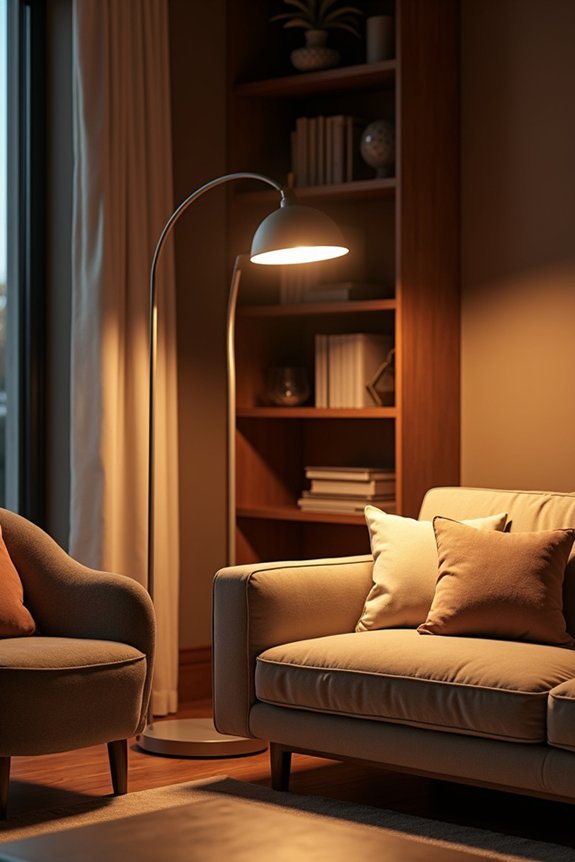
Once you’ve figured out how many lamps you need, it’s time to pick the right styles for your space.
1. Arc Lamps
Arc lamps curve over seating areas, delivering overhead ambient light without glare. They work well for highlighting focal points like sofas or coffee tables while keeping your ceiling bright.
2. Torchieres
Torchieres cast upward glow that spreads ceiling illumination throughout your room. Place them in corners or behind furniture where they serve as both functional lighting and decorative accents.
3. Task Lamps
Task lamps feature adjustable heads for directing light exactly where you need it. Position them near reading nooks or desks for concentrated illumination during work or study sessions.
Combining Styles
Layer one hanging arc or torchiere with one or two adjustable task lamps. This balanced approach covers both ambient and localized lighting needs effectively.
Place a Tall Lamp Behind Your Sofa for Task Light and Balance
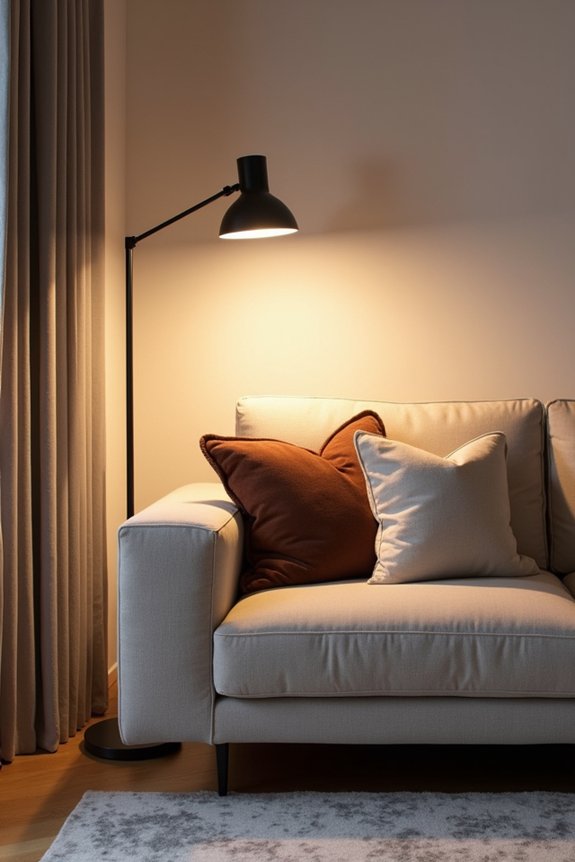
I’ll place a tall floor lamp behind my sofa to create soft task lighting that won’t glare on my TV or seating area. By positioning it slightly behind or to the side, I can wash light across the wall and build balanced ambient lighting throughout the room. Getting the height right, around 60 to 70 inches tall, ensures the shade sits near eye level when seated, making reading comfortable and efficient.
Optimal Height and Placement
Optimal Height and Placement
Where should you position a floor lamp for maximum benefit? Aim for 64 to 80 inches tall. This places the lampshade roughly at eye level when you’re standing. You’ll avoid blocking sightlines and keep your space feeling open and welcoming.
Strategic Placement Behind Your Sofa
Position the lamp slightly behind or to the side of your sofa. Light overflows onto walls and ceilings, creating soft diffusion without direct glare in your eyes. This placement behind the sofa setup balances ambient lighting throughout your room.
Safety and Clearance
Keep at least 6 to 12 inches between the lamp’s base and your sofa. This prevents tipping hazards and ensures safe walking paths. You can also use dimmable shades for adjusting between task light and a relaxing atmosphere as daylight changes.
Creating Ambient Room Balance
Creating Ambient Room Balance
Now that you’ve positioned your lamp at the right height and cleared the space around your sofa, you’re ready to use it effectively.
1. Distributing Light Evenly
A behind-sofa lamp creates ambient lighting that bounces off walls and ceilings. This diffuse glow fills your entire room without harsh shadows. The space will feel larger and more welcoming.
2. Strategic Lamp Placement
Position your behind-sofa lamp slightly behind or to the side of seating. This placement prevents glare on your TV screen and avoids blocking pathways. The light spreads naturally throughout your living area.
3. Adjusting Brightness
Choose a dimmable behind-sofa lamp for flexibility. Lower settings work well for relaxing evenings. Higher settings suit entertaining guests. This versatility saves energy while maintaining comfort and balance in your room.
Add a Reading Lamp Next to Your Chair for Focused Light
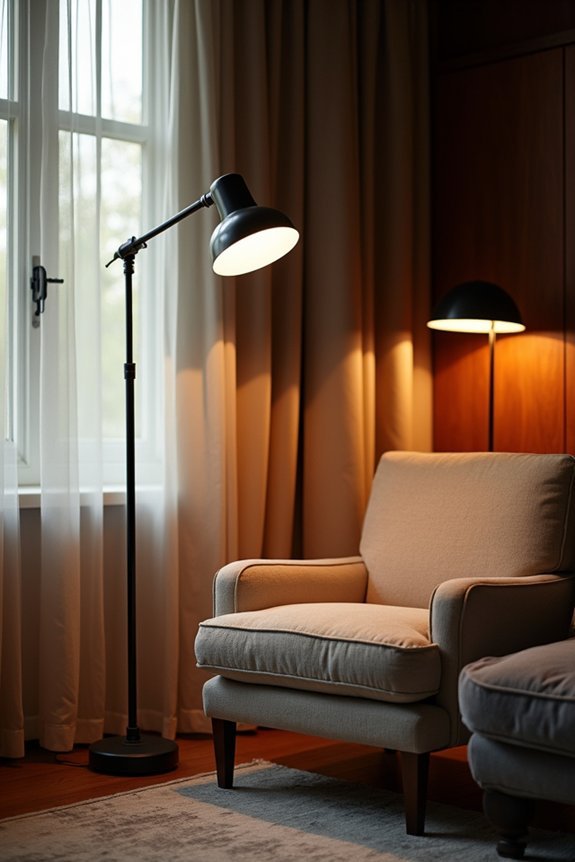
A lamp positioned right beside your seating provides task lighting for books, tablets, and writing while keeping glare off your screen. The right lamp and proper positioning make a significant difference in comfort and efficiency.
Choosing Your Lamp
Select a lamp with an adjustable arm or head so you can direct light exactly where you need it. Look for bulbs between 40 and 60 watts; this range provides sufficient brightness without creating harsh shadows. LED bulbs work well here, offering longevity and lower heat output than traditional options.
The lamp base should feel stable on your side table or floor. A weighted base prevents tipping if you accidentally brush against it while reading or moving in your chair.
Positioning for Comfort
Place the lamp at a 45-degree angle from your seating. This angle delivers light across your lap and reading material without shining directly in your eyes. The top of the lampshade should sit slightly above eye level when you’re seated.
Leave at least 12 inches between the lamp and your chair arm. This spacing keeps the fixture out of your way while maintaining effective lighting coverage.
Avoiding Common Issues
Position the lamp behind your shoulder rather than in front of it. Front placement creates glare on screens and reflects off glossy pages. A lamp placed to the side or slightly behind ensures light falls on your material without bouncing back toward your face.
Test the setup during different times of day. Natural light from windows changes throughout the afternoon, so verify that your lamp works well in both bright and dimmer conditions.
Task Lighting for Reading
How can you read comfortably without straining your eyes? The right task lighting setup makes all the difference.
1. Position Your Floor Lamp Wisely
Place your floor lamp slightly behind or beside your chair. This positioning prevents shadows on your reading material and keeps walkways clear for safety.
2. Get the Height Right
Position your lamp at eye level when seated, around 50 to 60 inches from the floor. This angle provides comfortable light alignment without glare.
3. Choose the Right Shade
Select a shade that directs light downward onto your book or paper. This concentrates light where you need it and reduces distractions for others nearby.
4. Ensure Easy Access
Keep your lamp’s switch within arm’s reach so you can adjust lighting without leaving your seat.
Optimal Lamp Positioning Techniques
1. Strategic Floor Lamp Placement
Position your floor lamp slightly behind or beside your chair. This placement minimizes shadows on your pages and keeps pathways clear. You’ll avoid the glare that comes from direct front positioning.
2. Height and Lighting Levels
Adjust your lamp arm to direct light over your shoulder onto the page. For low ceilings, aim for 50–60 inches; high ceilings work best at 65–80 inches. This keeps light at eye level without creating harsh spots.
3. Safety and Accessibility
Keep your lamp’s base close enough to prevent tipping when you lean forward. Position it within arm’s reach for easy brightness adjustments. A translucent shade provides focused, bright illumination while reducing energy waste.
Shade and Brightness Selection
When you’re picking a reading lamp, the shade matters just as much as the bulb itself. Translucent or semi-opaque shades work best; they balance task lighting with room ambiance while reducing glare that strains your eyes.
For brightness levels, aim for 450-800 lumens depending on room size. Smaller spaces need less; larger rooms benefit from more light. LED bulbs rated 2700-3000K provide warm, comfortable reading that fits naturally into living room settings.
| Feature | Why It Matters | Recommendation |
|---|---|---|
| Shade Material | Prevents harsh glare | Semi-opaque fabric |
| Brightness Range | Supports comfortable reading | 450-800 lumens |
| Color Temperature | Creates cozy atmosphere | 2700-3000K LED |
Position your floor lamp about 12-18 inches to the side and slightly behind your chair. This placement lets light fall directly onto pages without hitting your eyes.
Brighten Dark Corners With Strategically Positioned Lamps
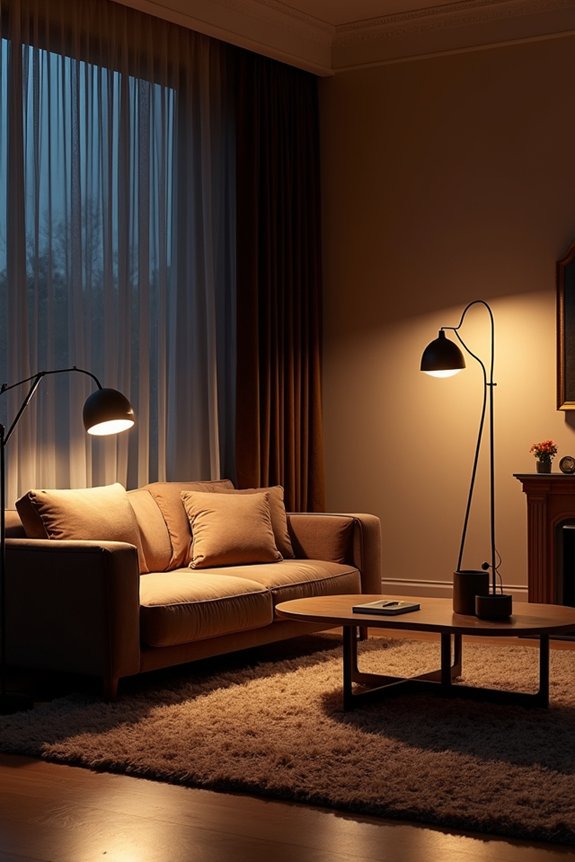
Dark corners in your living room don’t have to stay dim. Strategic corner lighting brings those shadowy spaces into focus as welcoming areas. Here’s how to brighten them:
- Place floor lamps in dark corners to bounce light off adjacent walls
- Use wide-shade or multiple-bulb tripod lamps to maximize light dispersion
- Position lamps behind seating to eliminate glare on screens
- Aim arc lamps toward artwork to create visual depth
Layered illumination works best when you combine corner lamps with overhead lighting and table lamps. This balanced approach eliminates harsh shadows while creating ambient brightness throughout the room. Your space will feel more open and inviting as a result. Strategic placement also reduces your reliance on overhead lights, lowering energy costs while achieving the comfortable atmosphere you want in your home.
Create Symmetrical Floor Lamp Arrangements for Visual Balance
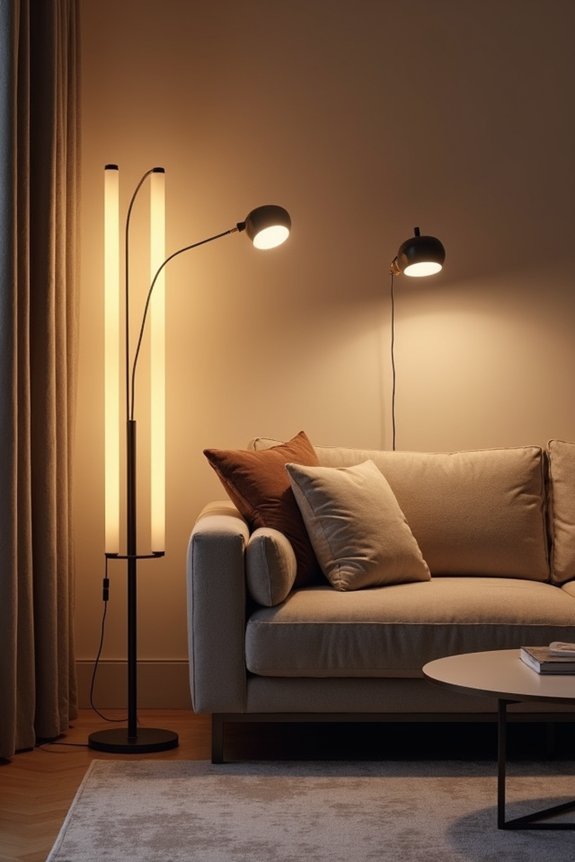
Create Symmetrical Floor Lamp Arrangements for Visual Balance
While strategic corner lighting brings balance to shadowy spaces, you can enhance your room’s visual harmony with symmetrical floor lamp arrangements.
1. Position Your Symmetrical Pair
Place two identical lamps on either side of your focal point, such as a sofa or fireplace. This mirror-image setup creates immediate visual balance. Match lamp heights (65–80 inches works well) and shade styles for a cohesive appearance.
2. Achieve a Balanced Silhouette
When lamps match in design and size, they reinforce unity throughout your room. This consistency helps everything feel deliberate and connected.
3. Smart Placement Tips
Position lamps slightly behind seating so light bounces off walls rather than directly hitting your eyes. Space them equally from your focal point. This approach defines zones while keeping pathways clear in open-plan layouts, making your room feel both organized and welcoming.
Position Lamps Behind the TV to Reduce Eye Strain
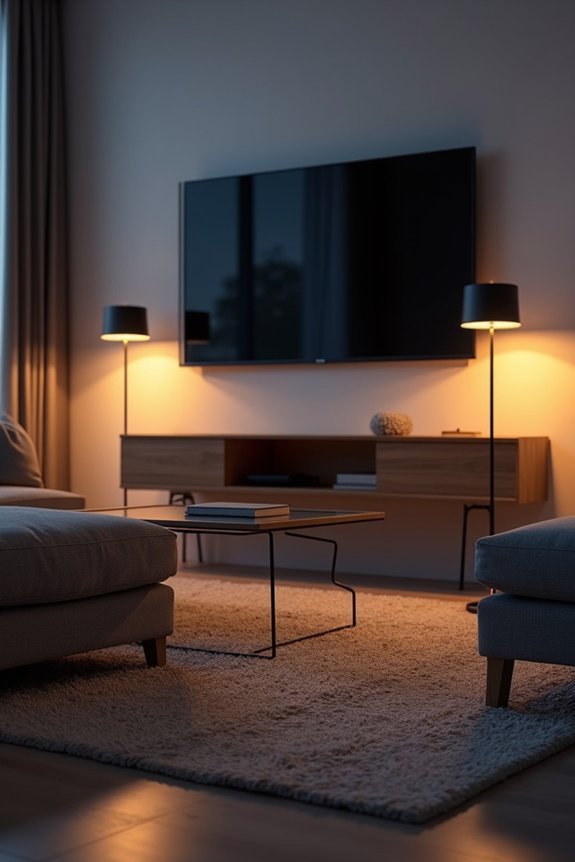
Positioning a floor lamp behind your TV reduces the glare that strains your eyes during long viewing sessions. This backlighting creates balanced lighting around your screen, so your eyes don’t work as hard to adjust between the bright display and dark surroundings.
Choose a slim lamp with a dimmable feature and warm LED bulbs (2700K–3000K) positioned several feet behind your seating area. This placement avoids reflecting light directly onto the screen while providing the ambient light your eyes need for comfortable viewing.
Backlighting Reduces Screen Glare
Most of us spend evenings watching TV, and here’s a simple truth: bright screens can tire your eyes.
Why Backlighting Works
Backlighting reduces screen glare considerably. When you place a floor lamp behind your seating area, it creates ambient lighting that softens the contrast between your bright screen and dark walls. This glare reduction happens because your eyes adjust to balanced light levels instead of fighting harsh brightness.
Here’s what makes backlighting effective:
- Directs light upward toward the ceiling for diffuse, bounce-back illumination
- Positions lamps a few feet behind seating, angled slightly toward walls
- Uses translucent shades to prevent hotspots and direct reflection
- Pairs with additional soft ambient sources for depth perception
The result is less eye fatigue during viewing sessions. This smart ambient lighting approach protects your vision while saving energy over time.
Balanced Lighting for Viewing
Balanced Lighting for Viewing
Ever notice how your eyes feel tired after watching TV? That happens when your room is too dark and the screen becomes the only bright thing you’re looking at. Your eyes work overtime adjusting to that contrast. Balanced lighting really helps prevent this problem.
Using Arc Floor Lamps Effectively
Arc floor lamps work well for this purpose. Position yours behind your seating area, angling the shade toward walls and ceiling. This creates soft, diffuse light that fills the room without reflecting on your screen.
Adjusting for Comfort
Use dimmable LEDs to adjust brightness depending on what you’re watching. Movies require dimmer light, while daytime viewing needs brighter settings. This simple adjustment reduces eye strain and saves energy.
Lamp Placement Behind Display
Why does the glow from your TV sometimes make everything else in the room disappear?
That harsh contrast strains your eyes. Placing a floor lamp behind your TV creates indirect lighting that balances the brightness. Here’s how to do it right:
- Position the lamp 1 to 2 feet behind and slightly to the side of your screen
- Choose a slim lamp with a soft, diffused shade to avoid screen reflections
- Install dimmable LED bulbs for flexible brightness control throughout the day
- Keep cords away from seating paths and TV access points
This method reduces eye strain by bouncing light off adjacent walls, creating even illumination across the room. The indirect approach uses less energy than overhead lights while protecting your vision. You’ll notice the difference during evening viewing.
Combine Floor Lamps With Ceiling and Table Lights for Balanced Illumination
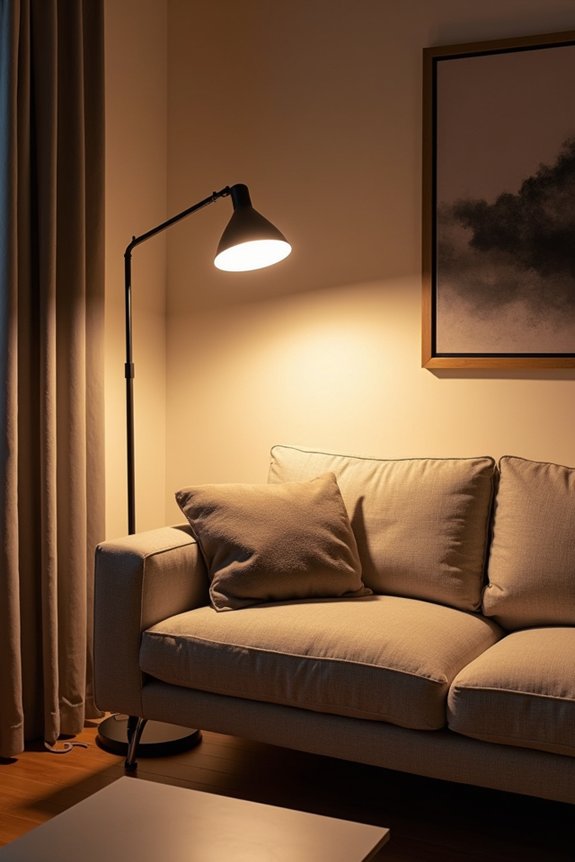
How do you create lighting that’s both functional and comfortable? Layered lighting works best. Here’s my approach:
1. Combine Your Light Sources
Floor lamps, ceiling fixtures, and table lights work together effectively. This combination eliminates dark spots and reduces glare. Each light source handles a different job, creating balanced ambient illumination throughout your space.
2. Balance Your Brightness
A ceiling light provides broad coverage for the whole room. Floor lamps fill corners and anchor seating areas. Table lamps add focused light where you need it most. This strategy saves energy because you’re not overusing one fixture.
3. Adjust for Different Needs
Adjustable floor lamps paired with dimmable ceiling lights offer flexibility. You can switch between task lighting for reading and softer mood lighting for relaxation. It’s practical and cost-effective.
Choose Lamp Heights and Styles That Match Your Furniture Scale
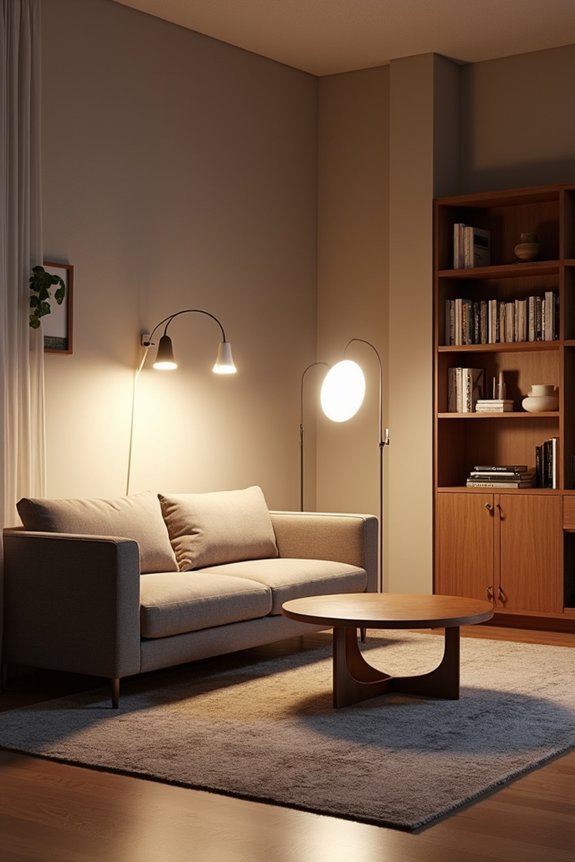
Now that you’ve layered your lights, the next step is picking floor lamps that actually fit your space. Matching lamp height and furniture scale prevents your room from feeling cramped or unbalanced.
1. Match lamp height to your ceiling
Tall rooms with high ceilings work best with 65 to 80 inch lamps. Shorter ceilings need 50 to 60 inch lamps for proper proportion.
2. Scale the lamp base to your furniture
A bulky lamp overwhelms a small sofa. A tiny lamp disappears next to a large coffee table.
3. Align finishes with existing pieces
Pair wood lamp bases with wood tables. Match metal accents with modern furniture.
4. Use adjustable features
Swivel heads direct light exactly where you need it. You’ll save energy by focusing light on seating areas instead of wasting it elsewhere.
Prevent Glare and Obstruction: Where Not to Place Floor Lamps
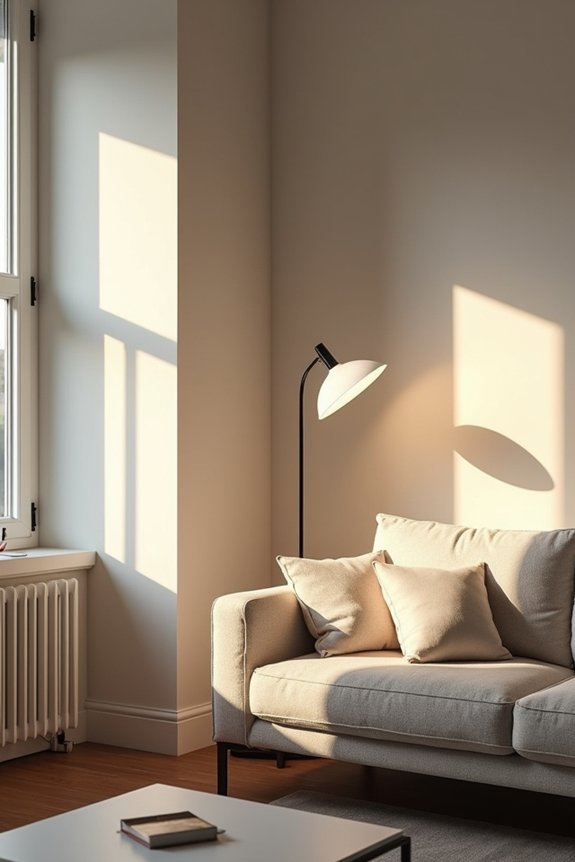
You’ve got the right lamp now; placement matters just as much.
1. Avoid Screen Glare
Don’t place lamps where light bounces directly onto televisions, computer monitors, or glossy artwork. This glare creates annoying reflections that strain your eyes and waste energy fighting against natural light patterns.
2. Keep Pathways Clear
Never position lamps in doorways or high-traffic areas. They become tripping hazards and obstruct movement through your living room, making the space feel cramped and uncomfortable.
3. Don’t Block Sightlines
Refrain from placing lamps behind seating where they cast shadows on faces or create obstruction while you’re watching television or reading. Your comfort depends on smart placement.
4. Stay Away From Windows
Keep lamps distant from windows to avoid competing with daylight and unnecessary glare during daytime hours.
Work With Sunlight: When to Add (Or Skip) Artificial Lamps
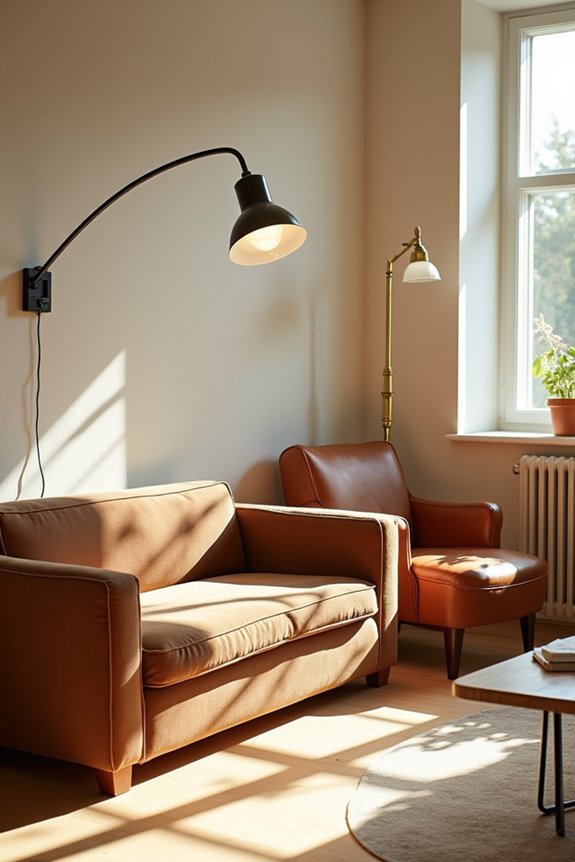
Once you’ve figured out where not to place lamps, the next step is deciding whether you need them at all.
Working with sunlight saves money and energy. Here’s when to add or skip artificial lighting:
- Skip lamps in evenly lit spaces during daytime hours
- Add lamps to reading nooks where sunlight doesn’t reach consistently
- Place lamps in shaded areas to balance harsh window glare
- Test different times of day before buying additional fixtures
During bright daytime lighting hours, I rely on windows as my primary source. When afternoon shadows appear or sunlight fades, I add adjustable lamps strategically. I avoid over-lighting rooms that already have good natural light and overhead fixtures.
Testing your space at various times helps you discover where artificial lighting truly matters. This approach reduces unnecessary purchases while keeping your living room properly lit.
Control Mood and Brightness With Dimmers and Adjustable Heads
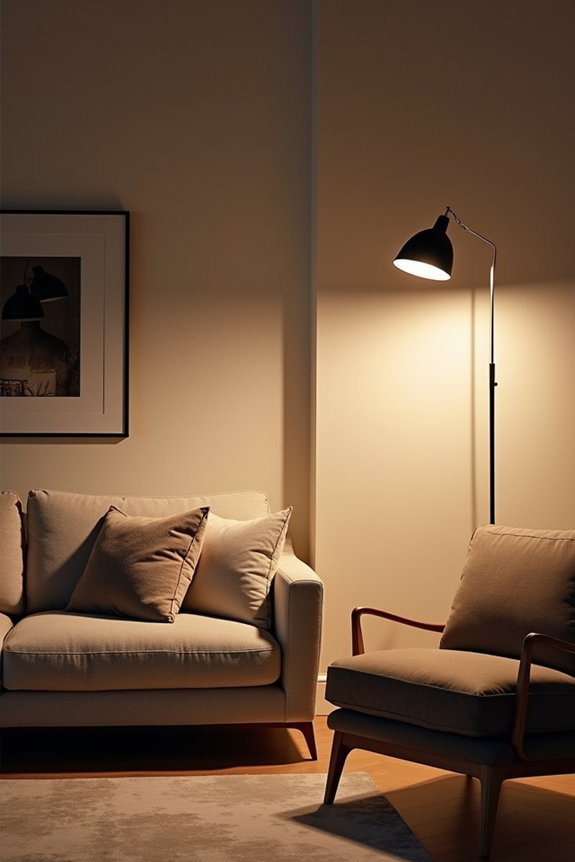
Why settle for one brightness level when you can adjust your lighting to match any moment?
1. Dimmers Give You Control
Install dimmers on your floor lamps to reduce energy use by 40-75%, cutting your electricity bills significantly. Dimmers eliminate glare and let you create the perfect ambiance for any time of day or activity.
Dimmers reduce energy use by 40-75% while eliminating glare and letting you create the perfect ambiance for any moment.
2. Adjustable Heads Direct Light Where You Need It
Look for lamps with adjustable heads or arms. These let you point light exactly where you’re reading, crafting, or highlighting artwork. Concentrated lumens improve visibility for detailed tasks without lighting your entire room.
3. Layer Your Lighting
Pair dimmable lamps with ambient and accent lights to create smooth transitions from bright daytime to cozy evenings. Position dimmers near seating areas for easy brightness adjustments without switching fixtures.
Test Your Layout in Different Lighting Conditions
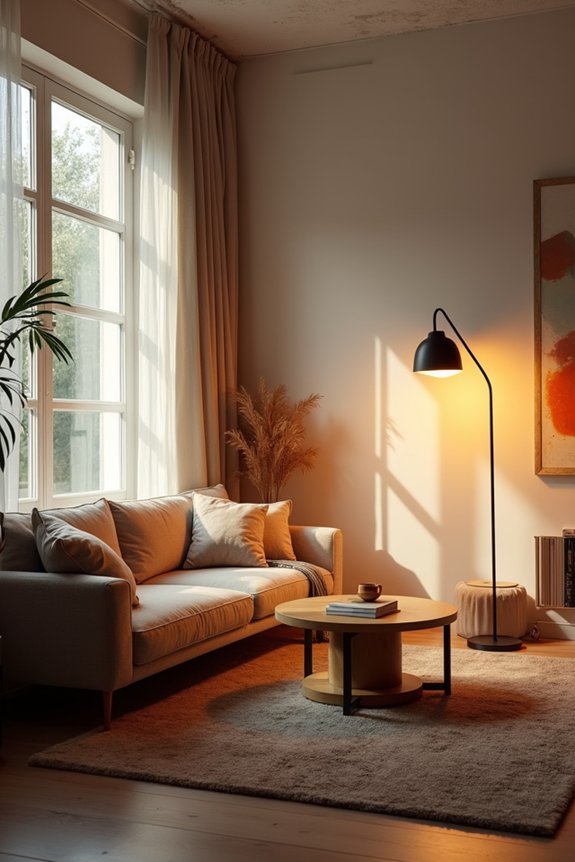
Before finalizing where your floor lamps go, observe how they actually perform throughout the day.
1. Test During Different Times
Observe your living room under natural daytime light and evening artificial light. Shadows shift, and glare patterns change as the sun moves across the space.
2. Check For Problem Areas
Notice how floor lamps interact with your seating and screens. Verify that light reaches reading spaces without creating unwanted glare on reflective surfaces.
3. Try Multiple Positions
Test several layout configurations:
- Beside the sofa
- In room corners
- Behind sectionals
- Near favorite chairs
4. Document Your Results
Note coverage, focal points, and dark corners for each setup. Compare perceived brightness and ambiance carefully between different placements.
This approach to layering light helps you achieve balanced, comfortable illumination. You save money and energy by choosing the most effective placement before committing to a final configuration.