
1) Assess Your Space — Measure your room’s length and width. Note doorways, windows, and outlets to understand traffic flow. 2) Plan Your Layout — Use graph paper to map furniture placement, keeping three-foot walkways clear. 3) Establish Your Palette — Choose wall colors first, then coordinate furniture finishes for cohesion. 4) Select Your Sofa — Pick your room’s focal point, then match your coffee table’s style. 5) Layer Secondary Seating — Add ottomans and benches with smart, stain-resistant fabrics. These steps prevent expensive mistakes while maximizing your space’s potential.
1) Assess Your Space. Measure your room’s length and width. Take note of doorways, windows, and outlets; this helps you understand traffic flow. 2) Plan Your Layout. Use graph paper to map furniture placement and keep three-foot walkways clear. 3) Establish Your Palette. Choose wall colors first, then coordinate furniture finishes for a cohesive look. 4) Select Your Sofa. Pick your room’s focal point, then match your coffee table’s style accordingly. 5) Layer Secondary Seating. Add ottomans and benches using smart, stain-resistant fabrics. Following these steps prevents expensive mistakes and maximizes your space’s potential.
Assess Your Space, Activities, and Constraints
How do you choose furniture that’ll actually fit your living room and work for your lifestyle?
1. Measure Your Space
Measure your living room’s length and width precisely. Write these measurements down to prevent costly mistakes. Accurate space planning ensures furniture fits properly and saves money.
2. Check Entry Points
Assess doorways and windows to understand traffic flow. This reveals how you’ll move furniture in and arrange pieces without blocking natural light or pathways.
3. Identify Fixed Features
Locate outlets, built-ins, and cable access points. Finding these features helps you plan discreet cord management while keeping power sources accessible.
4. Plan Your Activities
Identify how you’ll use the space: sitting, chatting, or working. Understanding these activities helps you create zones for different purposes, maximizing your room’s functionality and comfort.
Measure Your Room and Plan Your Layout
Why does getting measurements right matter so much? Accurate room dimensions prevent costly furniture mistakes and wasted resources. I start by measuring my living room’s length and width, noting exact numbers on paper for quick reference.
Next, I map important features:
- Doorways and windows that affect traffic flow
- Architectural features like fireplaces or built-ins
- Wall outlets and HVAC vents
I then plan my living room layout using graph paper or design software. This visualization helps me verify that pieces fit properly without blocking movement. I maintain a minimum walkway of three feet throughout the room for comfortable passage. For my space planning, smaller rooms need loveseats; larger ones accommodate full sofa sets with coordinating chairs. Smart furniture placement saves money and maximizes comfort for everyone.
Establish Your Color and Style Palette
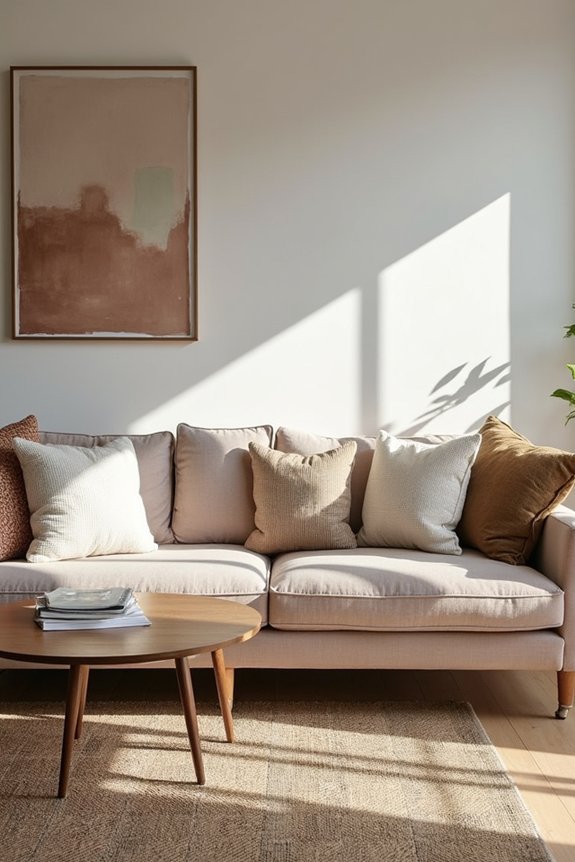
Once you’ve mapped out your room’s layout, it’s time to pick colors and styles that tie everything together.
1. Start with Your Wall Color
Choose your wall color first, or pick furniture colors and select complementary paint later. Your wall color guides everything else in the room.
2. Use a Color Wheel
Try a palette generator like coolors.co to experiment with complementary color schemes. This tool helps you find colors that work well together without guessing.
3. Create a Cohesive Theme
Establish a unifying theme through a consistent color palette or matching wood finishes. This approach saves money by reducing unnecessary replacements and creates visual harmony.
4. Mix Styles Smartly
Blend antique, contemporary, and mid-century pieces together when they share the same finish and color palette.
5. Consider Flow
In open floor plans, ensure your color palette transitions smoothly between adjoining spaces for seamless design.
Choose Your Sofa and Coffee Table
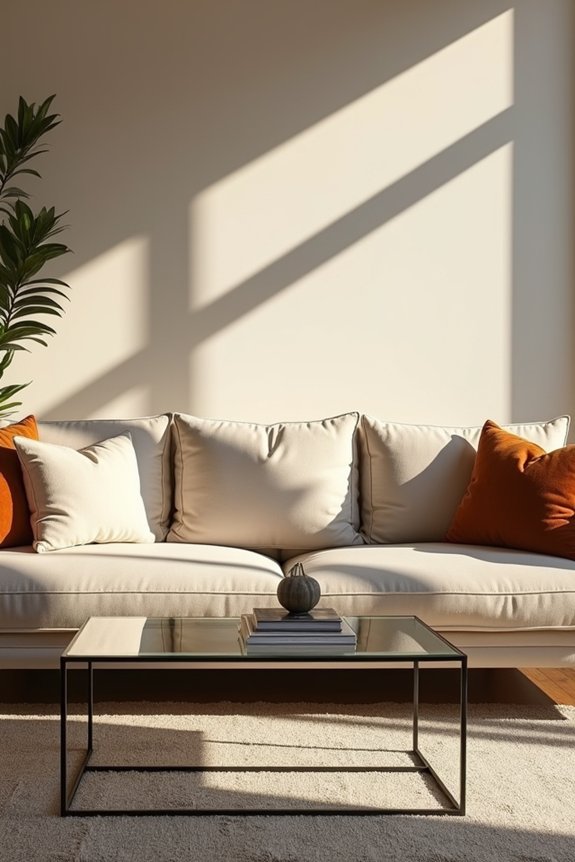
Your sofa is the star of your living room. I’ll help you select pieces that work together beautifully and function well for your space.
Your sofa is the star of your living room. Select pieces that work together beautifully and function well for your space.
When choosing your sofa, match its style to your color palette. Then, pick a coffee table that flows with it. Consider these factors:
- Storage options: Select a coffee table with built-in storage to maximize space and reduce clutter
- Seating layout: Arrange furniture to encourage conversation while maintaining clear pathways
- Electronics placement: Plan where cords and devices go before buying pieces
Use measurements to ensure your sofa and coffee table fit comfortably. Leave about three feet of aisle space for easy movement. This balanced room layout creates an inviting space everyone enjoys.
Layer in Secondary Seating and Finishing Accents
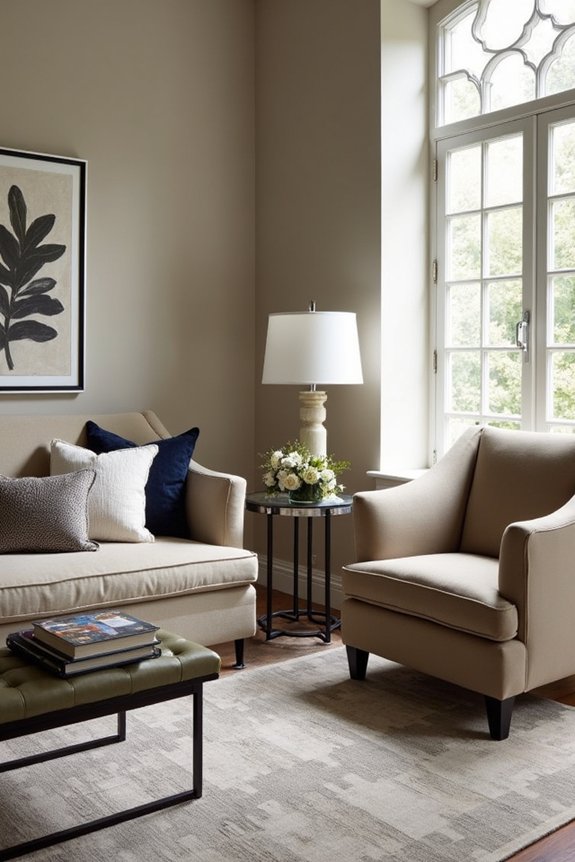
Layer in Secondary Seating and Finishing Accents
How do you create a living room that’s comfortable for everyone? Layer in secondary seating beyond your sofa.
1. Add Varied Seating Options
Choose benches, stools, recliners, and ottomans. These pieces support different activities and guest numbers while maintaining good sightlines around the room.
2. Select Smart Fabrics
Prioritize stain-resistant, washable fabrics. This choice protects your investment, especially with kids or pets. Quality fabrics last longer and save money over time.
3. Choose Storage Ottomans
Pick ottomans that double as storage and extra seating. They coordinate with your coffee table for a cohesive layout.
4. Preserve Traffic Flow
Arrange seating to maintain clear traffic paths. Pieces should complement your focal point while allowing easy movement throughout the space.