


Install bedroom smoke detectors on your ceiling near the room’s center, at least 10 feet from the kitchen to prevent false alarms.
Choose dual-sensor detectors to catch both fast-flaming and slow-smoldering fires.
Interconnect same-manufacturer alarms so they alert together throughout your home.
Test monthly by holding the test button until it sounds, and replace batteries immediately when beeping occurs.
Plan full unit replacement every ten years.
Your home’s fire safety depends on understanding how these components work together as a complete system.
Why Smoke Detectors in Bedrooms Save Lives
Fires spread faster today than ever before. Modern furniture burns quickly, giving you precious little time to escape. Smoke alarms in your sleeping area provide early warning when you’re most vulnerable. You’re unconscious during sleep, so you can’t smell danger coming. A detector wakes you up fast.
2. NFPA Guidance Supports Bedroom Placement
Fire safety experts recommend placing smoke alarms inside each bedroom. NFPA guidance emphasizes that proper placement saves lives. Combined with alarms outside sleeping areas and on every level, you create a safety network throughout your home. Dual-sensor alarms detect both flaming and smoldering fires effectively.
3. Keeping Your System Working
Monthly testing ensures your detectors function when needed. Proper maintenance takes minutes but provides invaluable protection for you and your family.
Choose the Right Smoke Detector Type for Your Home
How do you know which smoke detector works best for your bedroom?
1. Understanding Your Options
The main types serve different purposes. Ionization alarms detect fast flaming fires. Photoelectric alarms catch slow smoldering fires. Dual-sensor combination detectors cover both fire types and offer the most comprehensive protection.
| Detector Type | Best For | Sensitivity |
|---|---|---|
| Ionization | Flaming fires | High to flames |
| Photoelectric | Smoldering fires | High to smoke |
| Dual-sensor | Both fire types | Balanced coverage |
| Wired interconnected | Multiple rooms | NFPA 72 compliant |
| Wireless interconnected | Flexible placement | Same manufacturer needed |
2. Making Your Choice
Combination detectors are the most effective choice for bedrooms. They reduce false alarms while protecting against all fire types. Interconnecting units following NFPA 72 guidance allows them to alert simultaneously throughout your home. Select units from one manufacturer to maintain compatibility. This investment provides long-term savings and better protection for your family.
Where to Install Your Bedroom Alarm (and Why Placement Matters)
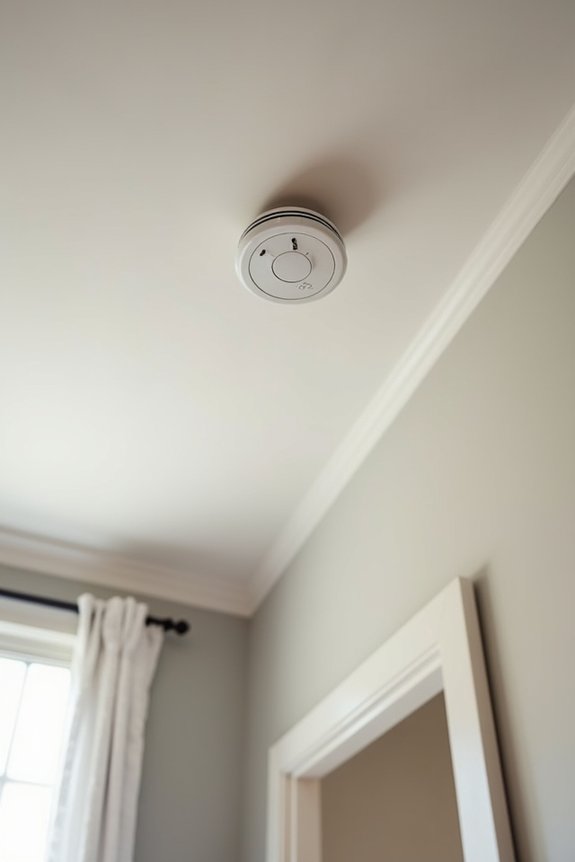
I’ve found that where you place your smoke detector significantly impacts bedroom safety. Install it on the ceiling or high on the wall, keeping it away from corners where dead air spaces (pockets of still air that smoke cannot reach quickly) might delay detection. Proper placement allows you to catch a fire faster and reduce false alarms from your kitchen.
Optimal Bedroom Placement Locations
Optimal Bedroom Placement Locations
Where you mount your bedroom smoke detector can make the difference between a life-saving alert and a missed warning. The following guidance walks through the best spots for maximum protection.
1. Ceiling Mounting
Install ceiling-mounted alarms near the room’s center, avoiding pitched ceiling peaks where smoke may not reach effectively. This placement follows NFPA recommendations for thorough coverage.
2. Wall-Mount Spacing
If you’re using wall-mount options, position them 4 to 12 inches below the ceiling on interior walls. This avoids drafts that could interfere with detection.
3. Distance from Hazards
Keep bedroom alarms at least 10 feet from cooking appliances. This false alarm prevention strategy protects your sleep without sacrificing safety.
4. Interconnected Alarms
Connect same-manufacturer alarms throughout your home. This coordinated approach ensures you’ll hear warnings from any sleeping area.
Avoiding Dead Air Spaces
Avoiding Dead Air Spaces
Smoke doesn’t travel uniformly through your bedroom, so understanding how dead air spaces create dangerous blind spots in your smoke detection system is important.
1. Center Ceiling Mounting
Place alarms at the center of your ceiling. This positioning minimizes stagnation zones where smoke gets trapped without triggering detection.
2. Avoiding Problem Areas
Don’t install alarms in top corners or near walls. Also avoid placing them directly over doors, windows, or ducts, as drafts cause false alarms and delayed responses.
3. Pitched Ceiling Placement
For peaked ceilings, position the alarm within three feet horizontally from the apex. Never place it at the peak itself.
4. Maintenance
Test monthly and follow NFPA guidance. Proper ceiling mounting and wall mounting four to twelve inches below the ceiling prevents detection failures.
Install Your Bedroom Smoke Detector: Step-by-Step
Now that you’ve chosen your bedroom’s best location, I’ll walk you through the actual installation. This covers whether you should mount on the ceiling or wall, how far to keep it from your kitchen, and why testing matters. Following these straightforward steps takes just minutes and gives you the confidence that your detector will catch smoke when you need it most. Let’s tackle each decision so your bedroom stays as safe as possible.
Ceiling Vs. Wall Mounting
Ceiling Vs. Wall Mounting
Should you mount your bedroom smoke detector on the ceiling or the wall? The right placement directly impacts your home’s safety.
1. Ceiling Mounting (Preferred)
Ceiling mounting catches smoke faster and is the recommended option. Position your detector as close to the room’s center as possible. For pitched ceilings, install it within 3 feet of the apex, but avoid placing it directly at the peak.
2. Wall Mounting (Alternative)
If ceiling mounting isn’t feasible, wall mounting works as a backup solution. Install it 4 to 12 inches from the ceiling to prevent dead air space where smoke fails to reach the sensor.
3. Locations to Avoid
Never place detectors directly over windows, doors, or ducts. Air drafts interfere with proper operation. Keep detectors at least 10 feet away from cooking appliances to reduce false alarms triggered by cooking smoke and steam.
4. Testing and Maintenance
Test your detector monthly using the test button. Replace batteries promptly when they run low to maintain consistent protection.
Distance From Appliances
Distance From Appliances
Where you position your bedroom smoke detector matters just as much as how you mount it. Keep your detector at least 10 feet away from cooking appliances. This distance prevents false alarms that waste your time and money.
1. Why Distance Matters
Cooking creates steam and smoke that can trigger your detector unnecessarily. When false alarms happen repeatedly, you might disable it entirely, defeating its purpose.
2. Placement Strategy
Whether you’re ceiling placing or wall mounting your bedroom detector, measure carefully from kitchen areas. Position it in a central location where it’ll catch real dangers.
3. Test and Maintenance
Check your detector monthly using the test button. Follow manufacturer instructions for upkeep. This keeps it ready when you need it most.
Testing Your Bedroom Alarm
Once you’ve positioned your detector safely away from appliances, it’s time to verify that it actually works. Regular smoke alarm testing keeps your family protected and catches malfunctions early, which can save money.
- Press and hold the test button for several seconds until you hear the alarm sound
- Check that interconnected alarms from the same manufacturer activate together for coordinated alerting
- Document your monthly test date to track proper operation and manufacturer guidelines compliance
- Replace batteries if the alarm doesn’t sound, confirming that mounting height doesn’t affect battery performance
Test your alarm at the same time each month. This routine prevents false alarms while confirming your bedroom alarm functions correctly. When your detector works properly, you gain the safety and peace of mind that comes from knowing your home is protected.
Test and Maintain Your Detector: Monthly and Beyond
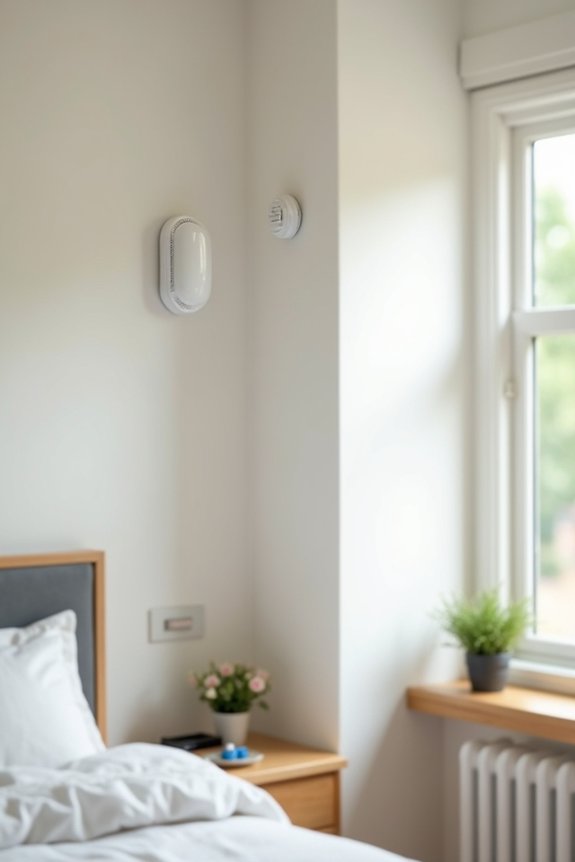
How often do you check your smoke detectors? I test mine monthly by pressing and holding the test button for several seconds. This simple habit confirms my detectors work when I need them most.
1. Monthly Testing
I’ve made monthly testing part of my routine. Pressing the test button verifies proper function and familiarizes me with the alarm sounds.
2. Battery Replacement
When I hear beeping, I replace the battery immediately using the manufacturer’s instructions. This prevents false alarms while maintaining homeowner safety.
3. Long-Term Maintenance
My 10-year batteries eventually need replacement. I replace the entire unit after ten years so I can count on reliable protection and avoid unexpected failures.
4. Professional Support
I also schedule professional checks periodically. This maintenance confirms correct placement and optimal performance throughout my home.
Link Your Alarms So They Alert Together Across Your Home

Installing interconnected smoke detectors creates a unified network for your home’s safety system. I’ll help you connect your bedroom smoke alarm with others throughout your house.
Why Interconnection Matters
When one detector senses smoke, they all sound simultaneously. This unified alert reaches everyone faster, giving you precious evacuation seconds.
Steps for Successful Alarm Interconnection
- Choose wireless interconnected or wired systems from the same manufacturer for compatibility
- Install bedroom smoke detectors alongside units on every level and outside sleeping areas
- Test each unit’s button monthly to confirm simultaneous alarm operation
- Position your bedroom smoke alarm on the ceiling or high on walls
Your Safety Network
Manufacturer compatibility keeps reliable sound across all devices. This home safety investment protects what matters most: your family’s quick escape during emergencies.