

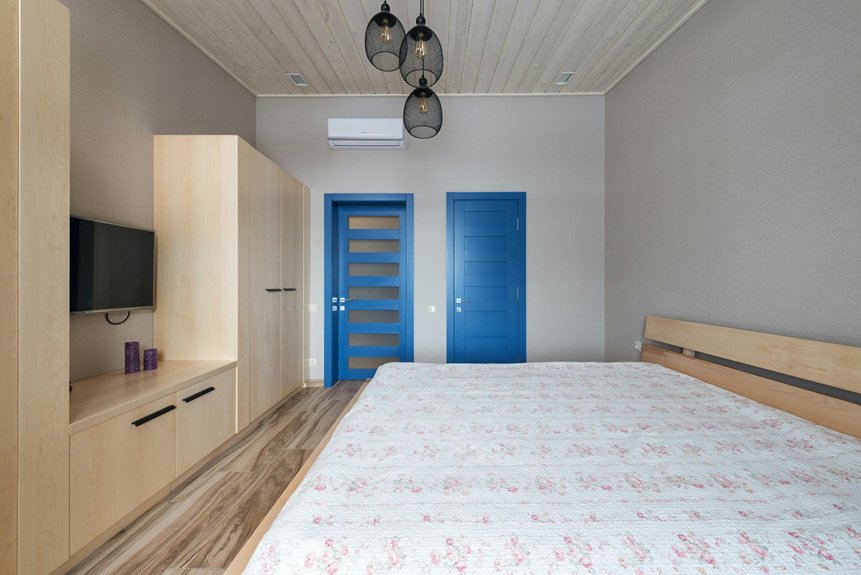
The average bedroom in the US spans about 132 square feet, roughly 11 feet by 12 feet.
Master bedrooms are substantially larger at 224 square feet (14 by 16 feet), while urban apartments tend toward 80–100 square feet due to land costs.
Building codes require a minimum of 70 square feet with at least 7 feet of clearance.
Standard bedrooms accommodate queen beds comfortably, whereas master suites fit king beds with proper spacing.
Understanding these dimensions helps you plan layouts efficiently and maximize your home’s value and livability.
What Is the Average Bedroom Size?
What Is the Average Bedroom Size?
Ever wondered how big your bedroom really is compared to others? Here’s what’s typical in American homes.
1. Average Bedroom Size
The average bedroom size in the US is about 132 square feet, typically 11 feet by 12 feet. This provides enough room for a bed, dresser, and comfortable movement.
2. Master Bedroom
Master bedrooms are significantly larger, averaging around 224 square feet or 14 by 16 feet. You’ll find more space for furniture and relaxation in this primary bedroom.
3. Standard Bedroom
Standard bedrooms measure about 120 square feet, or 10 by 12 feet. Most people find this size practical for everyday use.
4. Minimum Size
Many experts suggest 70 square feet as a minimum practical bedroom size. You’ll want additional circulation space for moving around comfortably.
How Bedroom Size Varies by Home Type and Location?
I’ve noticed that where you live and what type of home you own really shape bedroom sizes. Urban apartments tend to have smaller bedrooms because space is limited and expensive, while suburban and luxury homes offer much larger layouts. Understanding these differences helps you know what to expect when shopping for a home or planning renovations in your area.
Urban vs. Suburban Spaces
Urban vs. Suburban Spaces
Where you live significantly influences bedroom size. Urban bedrooms tend to be smaller due to expensive land costs. Suburban bedrooms offer more generous space. This difference affects how families organize their homes and manage their budgets.
Comparing Urban and Suburban Spaces
| Feature | Urban Bedrooms | Suburban Bedrooms |
|---|---|---|
| Average Size | 8 x 10 feet | 14 x 16 feet |
| Master Bedroom | Compact layouts | Spacious suites |
| Square Feet | 80-100 sq ft | 224+ sq ft |
| Floor Plan Type | Efficient, compact | Generous layouts |
| Cost Impact | Higher per sq ft | Lower per sq ft |
Space Efficiency Benefits
Urban bedrooms emphasize smart storage solutions and efficient floor plans. This approach reduces costs for heating and maintenance. Suburban master bedrooms prioritize comfort and relaxation space. Both options serve different lifestyles and financial situations effectively.
Home Type Influence Patterns
How much space you get in a bedroom depends largely on what type of home you’re living in and where it’s located.
1. Master Bedroom Size Variations
Your master bedroom size shifts based on your home type. Larger homes exceeding 2,500 square feet offer spacious master suites up to 16′ × 19′. Smaller homes feature compact master bedrooms around 14′ × 16′. Standard secondary bedrooms typically measure 11′ × 12′.
2. Floor Plan Impact
Your floor plan type matters significantly. Ranch-style and compact plans generally have smaller master bedrooms. Modern apartments and premium projects commonly provide larger master suites instead.
3. Location Considerations
Urban and suburban homes differ substantially. Urban locations yield smaller bedrooms to maximize efficiency. Suburban and luxury homes offer expanded space for master bedrooms, walk-in closets, and attached bathrooms that support your lifestyle needs effectively.
Legal Minimums and Building Code Requirements
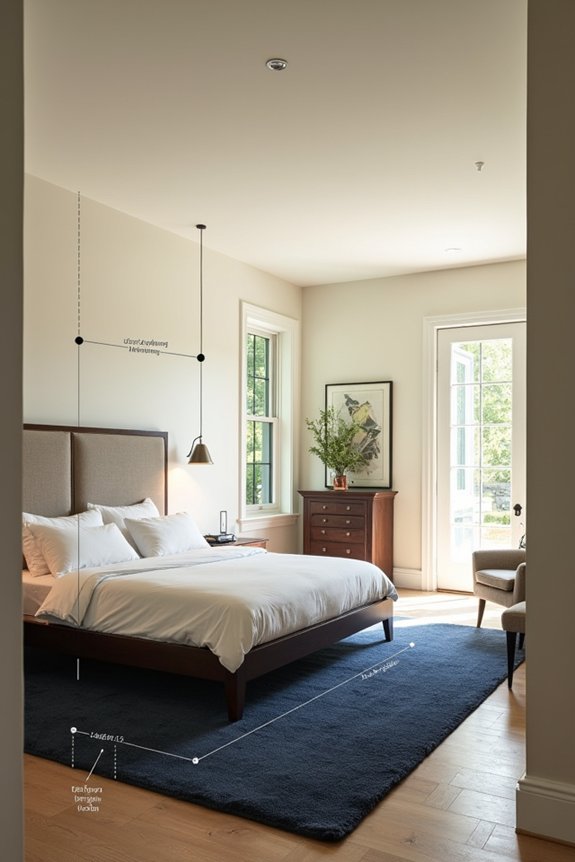
When you’re building or renovating a bedroom, you’ll need to follow specific legal rules that vary by location. This guide covers the minimum square footage requirements, essential window and egress (exit) rules, and how building codes differ across regions so you can understand what’s required where you live. These standards exist to protect your safety and meet basic livability needs.
State Minimum Square Footage
What’s the smallest bedroom that’s actually legal?
1. Standard Legal Minimums
Most U.S. states require a minimum bedroom size of around 70 square feet. Your bedroom also needs at least 7 feet of clearance in any horizontal direction. This clearance requirement ensures you can move safely and use the space functionally.
2. Practical Sizing Standards
A 10×10 minimum is what many builders use as a practical baseline. This gives you roughly 100 square feet; enough for a single occupant with essential furniture. For two people, you’d want closer to 120 square feet.
3. Planning Your Home
Many floor plans follow a rule where bedrooms represent about 10% of your finished square footage. This balance helps you allocate space efficiently while keeping construction costs reasonable. Master bedroom sizes typically exceed these minimums by a significant margin.
Window and Egress Requirements
Beyond square footage, there’s another critical component that makes a bedroom legally qualify as a bedroom: windows.
1. Window Requirements
Every bedroom needs at least one window. This window must be large enough for emergency egress, meaning you can safely exit during a fire or other crisis. Windows provide natural light, which reduces your electricity costs and supports your well-being.
2. Egress and Exit Requirements
Building codes require a clear path from your bed to an exit. You’ll need adequate clearance (typically 2 to 3 feet around furniture) to move safely through your bedroom. This minimum square feet standard ensures you can reach doors and windows without obstacles. Proper access to exits protects your family and meets legal requirements. These egress standards work together with bedroom size to create safe, functional spaces your family can depend on.
Local Code Variations Across Regions
Understanding Regional Variations
Building codes aren’t one-size-fits-all. Your location determines minimum bedroom size requirements. Local codes vary substantially across regions, affecting what’s legally acceptable in your home.
Square Footage Differences
Some urban areas permit smaller rooms, around 70 square feet. Rural regions often enforce larger minimums. These regional variations reflect population density and housing needs in different communities.
Window and Egress Requirements
Most states require at least one window for habitability. However, requirements differ by region. Some areas demand larger windows; others specify egress dimensions for emergency exits.
Clearance Space Standards
Local codes consider furniture clearance space beyond square footage. Regulations address bed placement, accessibility, and movement around rooms. This attention to safety and livability applies regardless of total room size.
Standard Bedroom Dimensions for Different Room Types
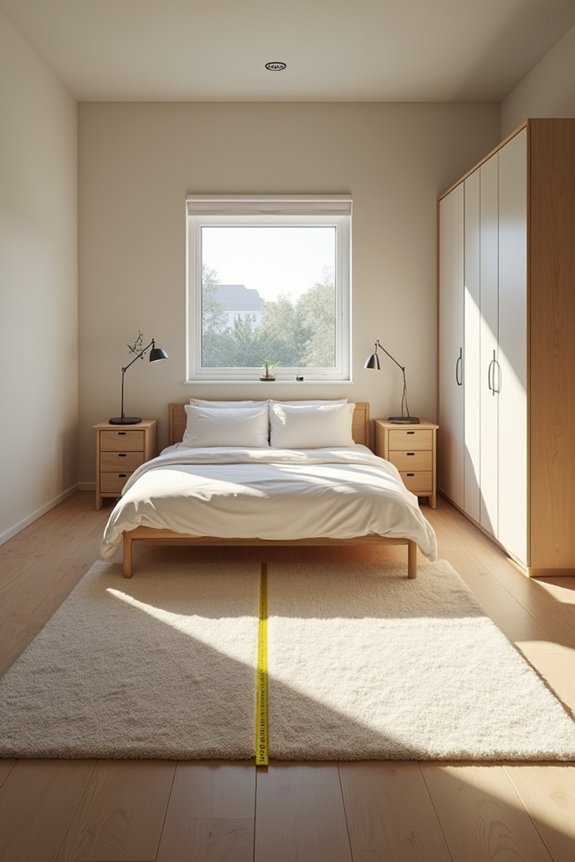
Standard Bedroom Dimensions for Different Room Types
Bedroom sizes vary considerably depending on their intended purpose and role within your home. The following breakdown covers the standard dimensions you’ll encounter.
Bedroom dimensions depend on purpose and function—understanding standard sizes helps optimize your home’s layout and usability.
1. Standard Bedrooms
Standard bedrooms typically measure 120 square feet, roughly 10 by 12 feet. They work well for guests, children, or multipurpose spaces, offering practical functionality without excessive square footage.
2. Master Bedrooms
Master bedrooms are significantly larger, averaging 224 square feet or about 14 by 16 feet. This size provides comfortable space for furniture and movement.
3. Layout Considerations
When planning your room layout and floor plan, allow 24 inches of clearance around your bed. You’ll want approximately 30 inches of clearance around three sides for movement. These standard dimensions create comfortable, functional spaces that maximize your investment.
Master Bedroom Size vs. Standard Bedrooms

What’s the real difference between a master bedroom and a standard bedroom? Here are the key distinctions to help you understand what works best for your home.
- Master bedroom size: 14 feet by 16 feet (224 square feet)
- Standard bedroom size: 11 feet by 12 feet (132 square feet)
- Bed size: King beds fit masters; queens fit standards
- Extra features: Walk-in closets and private bathrooms in masters only
The master bedroom offers nearly double the square footage, providing better furniture layout and room clearance. You can fit a king bed comfortably with additional dressers and seating areas. Standard bedroom size works well for a queen bed, two nightstands, and essential pieces. Master bedrooms often include walk-in closets, which maximize storage efficiency. Understanding these differences helps you plan your space appropriately and invest in furnishings that match your actual room dimensions.
Key Factors That Influence Bedroom Size Decisions
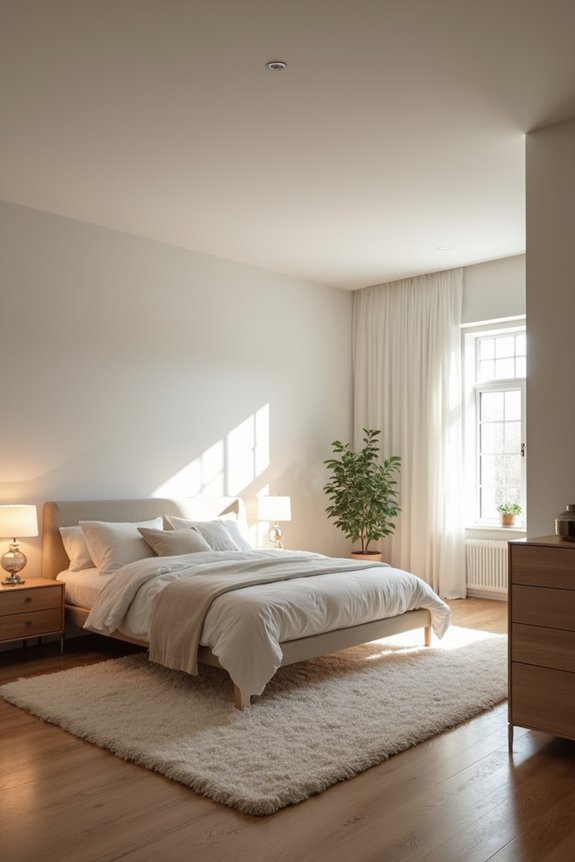
Now that you understand the differences between master and standard bedrooms, it’s time to look at what actually drives these size choices.
Several bedroom size factors shape how we design our spaces. Your home type matters; urban apartments need compact layouts, while suburban homes offer more flexibility. The floor plan layout determines what’s possible. Your bed size clearance requirements influence everything. A king bed demands roughly 30 inches around three sides, while a queen fits easier in tighter spaces.
| Factor | Impact | Consideration |
|---|---|---|
| Home Type | Urban vs. suburban | Space availability |
| Intended Use | Guest, kids, office | Furniture needs |
| Bed Size | King, queen, twin | Circulation space |
| Square Footage | Budget constraints | Livability targets |
| Floor Plan Layout | Room shape | Storage solutions |
Considering these bedroom size factors early helps you meet practical livability targets while maximizing your room footprint wisely. The decisions you make about these elements affect both how the space functions and how comfortable it feels for daily use.
Furniture Layout and Clearance Guidelines
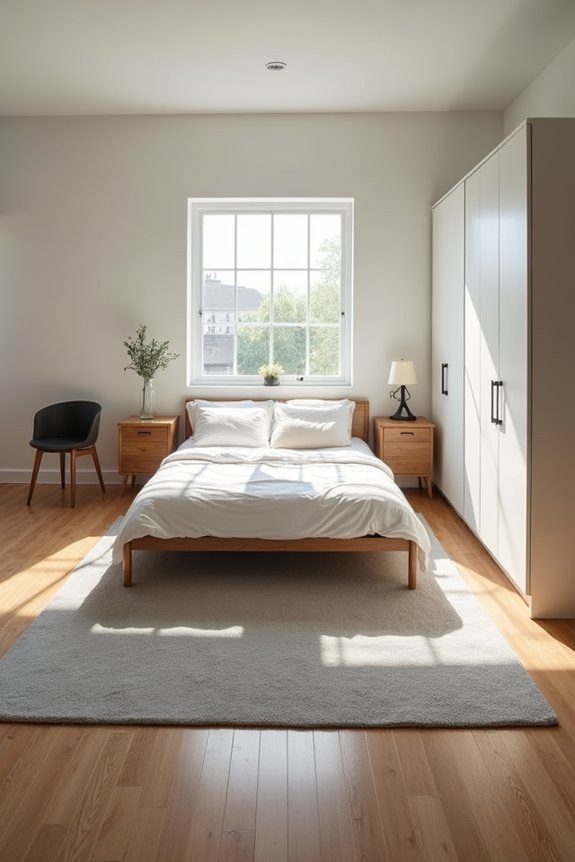
How you arrange your furniture shapes whether your bedroom feels cramped or comfortable.
1. Essential Clearance Guidelines
Maintain about 30 inches of space on three sides of your bed. This clearance lets you move freely and keeps your bedroom feeling open and accessible.
2. Smart Furniture Placement Tips
- Position your bed to maximize walkways through the room
- Keep nightstands and dressers away from main traffic paths
- Ensure at least one clear route to your bedroom door
- Leave space around closets so they open fully
3. Sizing Matters
In a standard bedroom (around 120 square feet), a queen bed works better than a king. Master bedrooms (224 square feet) accommodate larger furniture comfortably. Consider your square footage carefully when selecting pieces.
4. Creating Flow
Thoughtful planning makes even smaller bedrooms feel spacious. Clear walkways improve navigation and reduce daily friction in how you use the space.
How Bedroom Size Affects Home Value and Appeal?
Beyond arranging furniture wisely, the actual size of your bedrooms impacts something bigger: your home’s market value and buyer appeal.
1. Master Bedroom Size Matters Most
Your master suite significantly influences how buyers perceive your home’s overall value. Larger master bedrooms, typically 14 x 16 feet or bigger, attract more interest than cramped alternatives. A spacious master bedroom demonstrates quality living and commands higher prices in competitive markets.
2. Square Feet and Floor Plan Balance
Master bedroom size should represent about 11 to 12 percent of your total finished square feet. This proportion creates an appealing floor plan that feels balanced. Homes featuring generous master suites consistently outperform those with undersized bedrooms.
3. Investment in Your Future
Prioritizing adequate bedroom dimensions protects your investment. You’re not just creating comfort; you’re building financial security and home appeal for tomorrow’s buyers.
Design Solutions for Smaller Bedrooms
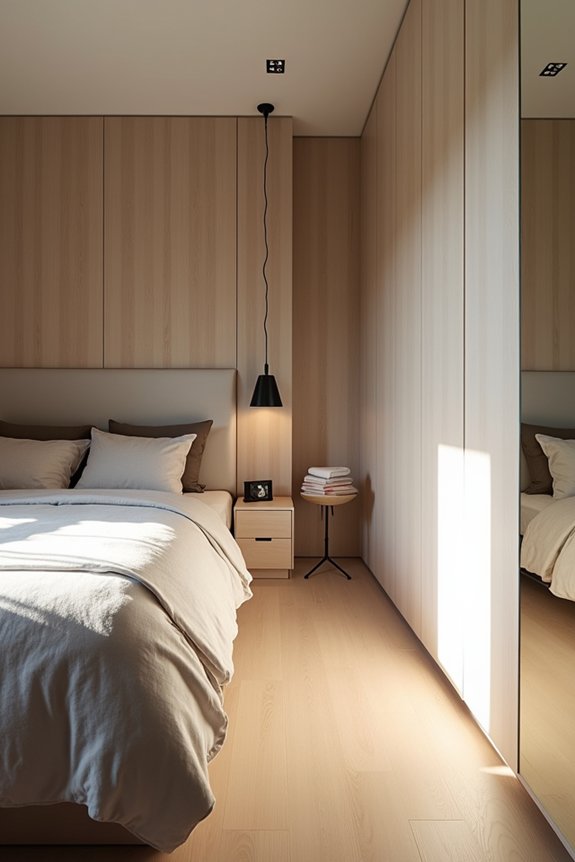
What if your bedroom’s modest square footage didn’t limit your comfort or style?
Smaller bedrooms, often 70 to 120 square feet, require thoughtful space planning. Strategic furniture layout turns tight spaces into functional retreats. Consider these approaches:
Thoughtful space planning transforms compact bedrooms into functional retreats through strategic furniture layout.
- Vertical storage maximizes square feet without floor clutter
- Multi-purpose furniture combines sleeping and seating efficiently
- Minimal clearance planning ensures 24 inches beside beds and 30 inches at the foot
- Wall-mounted solutions preserve walkways in compact bedrooms
When you prioritize clearance around your bed, movement feels natural. Selecting appropriately scaled furniture prevents cramped sensations. A 10 x 12 feet bedroom works beautifully with intentional choices. You’re not sacrificing comfort; you’re designing smarter. These solutions reduce waste, lower costs, and prove that bedroom sizes matter less than thoughtful arrangement. Your smaller space becomes genuinely livable.
Maximizing Space in Master Bedroom Layouts
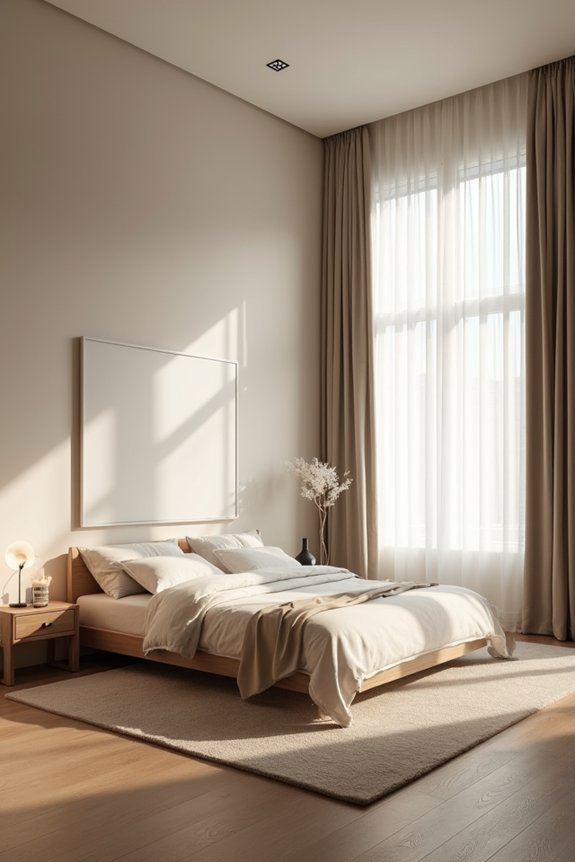
Position your bed, dressers, and nightstands strategically to avoid cramped areas and blocked pathways. The goal is to maintain smooth traffic flow throughout the room while keeping your layout functional.
Maintain a 24-inch clearance space on each side of your bed. This measurement directly impacts both comfort and how spacious the room feels. When you have adequate space to move around your bed without obstacles, the entire bedroom benefits from improved usability.
Consider these placement principles:
- Position your bed away from the door to create a natural entry zone that doesn’t feel interrupted by the sleeping area
- Place dressers along walls perpendicular to windows to maximize natural light and wall space
- Keep nightstands shallow or wall-mounted to preserve walking room
- Leave pathways clear between the bed and closet, bed and bathroom, and main entry points
The 24-inch rule isn’t arbitrary; it’s the minimum distance needed to comfortably make your bed, access storage, and move through the space during daily routines. Rooms that respect this clearance feel larger because they function better and allow for unobstructed movement.
Strategic Furniture Placement
How you arrange your bedroom furniture makes a real difference in how the space feels and functions.
1. Strategic Placement Fundamentals
Position your king bed against the room’s longer wall. This simple choice maximizes your floor area and improves overall room flow, creating more usable space for other essentials.
2. Key Placement Strategies
- Allow 30 inches of clearance on three sides around your bed for comfortable movement
- Position nightstands within arm’s reach of the bed for convenience and accessibility
- Place your dresser opposite the bed to balance the master bedroom size visually
- Arrange seating away from high-traffic zones to maintain furniture placement efficiency
3. Optimizing Layout
In a typical 14-by-16-foot master bedroom, strategic furniture placement prevents a cramped feeling. This thoughtful layout supports better circulation while accommodating everything you need without waste.
Traffic Flow and Clearance
A bedroom can feel cramped even when it has a decent size. Adequate clearance around your bed directly affects how comfortable the space feels. Aim for 30 inches of clearance around your bed on three sides to enable comfortable movement without feeling squeezed.
| Room Width | Bed Type | Side Clearance | Traffic Flow |
|---|---|---|---|
| 12 feet | King | 2 feet | Good |
| 12 feet | Queen | 2.5 feet | Better |
| 14 feet | King | 3 feet | Excellent |
| 15 feet | King | 3.5 feet | Optimal |
| 10 feet | Queen | 1.5 feet | Limited |
1. Placement Strategy
Position your bed on the room’s longer wall. This choice optimizes hallway circulation and furniture layout throughout your master bedroom. Thoughtful square footage allocation prevents awkward traffic patterns and maximizes usable space. When the bed sits on the longer wall, the remaining area flows more naturally for daily movement and other bedroom functions.
Bedroom Size Planning for Your Floor Plan
When you’re designing a home’s floor plan, bedroom size matters more than you might think. I’ll help you plan spaces that work for your family and budget.
1. Standard Bedroom Dimensions
A typical bedroom runs about 120 square feet, roughly 10 by 12 feet. Master bedrooms average 224 square feet, typically 14 by 16 feet. These sizes let you fit essential furniture comfortably.
2. Key Planning Considerations
- Allow 30 inches of clearance on three sides of your bed
- Leave 24 to 30 inches for walking around other furniture
- Plan for natural light and window placement
- Consider storage needs and closet access
3. Practical Space Efficiency
Minimum livable bedrooms need about 70 square feet, though that’s tight. Smart floor plan design saves money on construction while maximizing usability. Thoughtful bedroom size planning creates comfortable homes for everyone.
Choosing the Right Bedroom Size for Your Needs?
Choosing the Right Bedroom Size for Your Needs
What’s the perfect bedroom size for you? Consider how you’ll use your space. A standard bedroom around 120 square feet works well for single sleepers. Couples benefit from 180 to 250 square feet, offering comfort and personal space.
Plan Your Room Layout
Think about your mattress fit and clearance needs. You’ll want roughly 24 inches on each side of your bed and 30 inches at the foot. A queen bed suits most standard bedrooms nicely. Master bedrooms, typically 224 square feet, easily accommodate king beds with proper clearance.
Balance Budget and Space
Choosing the right bedroom size saves money on utilities and furnishings. Larger spaces aren’t always better; they’re just costlier to heat, cool, and decorate. Match your bedroom size to your actual needs, not unused square feet.