


To qualify as a legal bedroom, a room must meet five essential criteria. It needs at least 70 square feet of floor space with 7-foot ceilings.
You’ll require direct access to common areas, permanent heating (not portable heaters), and two escape routes: a door and an operable window of at least 5.7 square feet.
These standards protect your safety and property value. Understanding each requirement helps you identify which rooms legally count as bedrooms in your home.
Gating Criteria: The Four Non-Negotiables
What separates a legal bedroom from a fancy storage closet? Four essential requirements that I’ll walk you through.
1. Size and Height
Your bedroom needs minimum 70 square feet of floor space and minimum 7 feet of ceiling height. This ensures you’ll have comfortable room to live.
2. Direct Access
You need direct access to common areas without passing through another bedroom. This protects your privacy and safety.
3. Egress and Ventilation
You must have a window opening of at least 5.7 square feet for emergency escape and fresh air circulation. This dual-purpose window satisfies both safety and ventilation needs.
4. Heating
You’ll need permanent, independent heating; not portable space heaters. A reliable heat source keeps you comfortable year-round while reducing energy waste.
5. Two Means of Escape
You require two distinct escape routes for safety during emergencies. This critical feature protects everyone inside.
Room Size: Minimum Dimensions and Floor Area
Room Size: Minimum Dimensions and Floor Area
1. Understanding Minimum Floor Area
Bedrooms must meet specific size requirements. A bedroom needs a minimum floor area of 70 square feet. At least one horizontal dimension must measure 7 feet or longer. These criteria provide adequate space for furniture and comfortable movement.
2. Occupant Capacity Standards
| Occupant Count | Square Footage Required | Space Per Person | Usable Space Notes | Financial Impact |
|---|---|---|---|---|
| 1 occupant | 70 sq ft | 70 sq ft | Full bedroom minimum | Lower costs |
| 2 occupants | 120 sq ft | 50 sq ft each | Additional floor space | Moderate investment |
| 3 occupants | 170 sq ft | 50 sq ft each | Increased requirements | Higher expenses |
| 4 occupants | 220 sq ft | 50 sq ft each | Spacious layout | Significant cost |
| 5+ occupants | 250+ sq ft | 50 sq ft each | Extended dimensions | Premium pricing |
3. Ceiling Heights Matter
A 7-foot ceiling requirement supports comfortable living. Sloped ceilings work when the majority of usable space meets this height standard.
Ceiling Height, Windows, and Natural Light
Ceiling Height, Windows, and Natural Light
Why do bedrooms need both proper ceiling height and windows? They’re necessary for your comfort and safety.
1. Ceiling Height Requirements
Your bedroom’s ceiling height must reach at least 7 feet over 50% of usable space. Sloped ceilings work fine if most of your room meets this standard. This height creates an open feeling that supports relaxation.
Maintain at least 7 feet of ceiling height over 50% of your bedroom’s usable space to create an open, relaxing environment.
2. Window and Egress Standards
You’ll need at least one exterior window for natural light and emergency exit access. Your operable window must open easily from inside. The daylight opening should measure around 5.7 square feet minimum. Window placement matters: egress windows can’t sit higher than 44 inches from ground without permanent access aids.
3. Natural Light Guidelines
Your window area should cover roughly 8% of floor space. This natural light reduces energy costs while improving your wellbeing.
Egress and Emergency Exit Routes
How to Escape Your Bedroom Safely in an Emergency
Proper egress and emergency exit routes are fundamental to bedroom safety. You need two means of egress, typically a door and an exterior egress window.
Primary exit: A door opening directly to the outdoors provides your main fire escape path.
Secondary exit: An exterior egress window with at least 5.7 square feet of openable area serves as your backup route.
Window operability: Your window must open easily and meet height requirements, usually no higher than 44 inches from the ground.
Direct route: Both exits connect directly outdoors; they never pass through interior doors or other bedrooms.
Safety code compliance: These requirements protect you during fires and other emergencies.
Interior doors alone do not satisfy safety codes. Establishing proper egress in your bedroom provides both legal protection and practical security when an emergency occurs.
Heating, Ventilation, and Home Location
Heating, Ventilation, and Home Location
Beyond having safe exits, your bedroom needs the right conditions to keep you comfortable year-round.
1. Permanent Heating Requirements
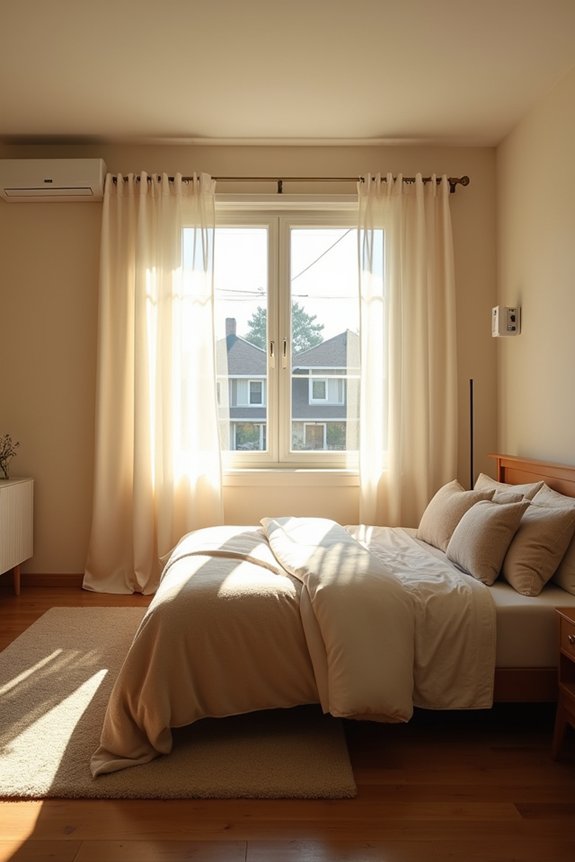
Your bedroom must have a permanent heating source. Portable space heaters don’t count. Instead, you’ll need HVAC systems or built-in heating that reaches your room consistently.
Permanent heating sources like HVAC systems or built-in units are required for bedrooms; portable space heaters don’t meet code standards.
2. Natural Ventilation Needs
Bedrooms require natural ventilation through doors to common areas or operable windows. This fresh air circulation matters for your health and comfort.
3. Basement Bedroom Considerations
Basement bedrooms face stricter rules. They must include an egress window meeting minimum size and operability standards for safety and emergency exit access.
4. Location-Specific Rules
Local building codes often add climate requirements beyond baseline standards. Check your area’s regulations; room accessibility and consistent heating influence whether spaces legally qualify as bedrooms.