

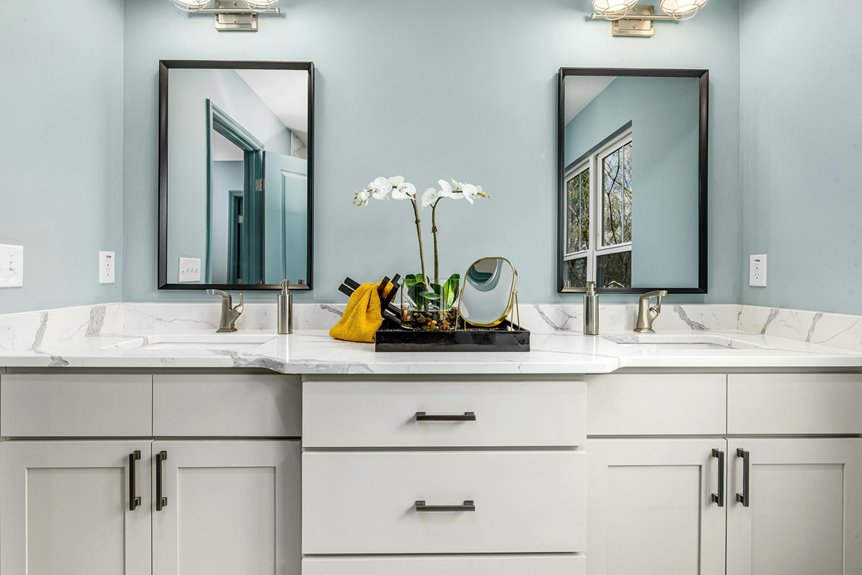
A bathroom vanity combines three essential elements: a sink, countertop, and storage cabinet. The sink provides your washing station. The countertop, often made from durable quartz or granite, sits on top of the cabinet. That cabinet underneath gives you drawers and doors for storing daily items like hairbrushes and medications. Many vanities include mirrors and lighting above for grooming. It serves as your bathroom’s command center. Which style would work best for your space?
What Exactly Is a Bathroom Vanity?
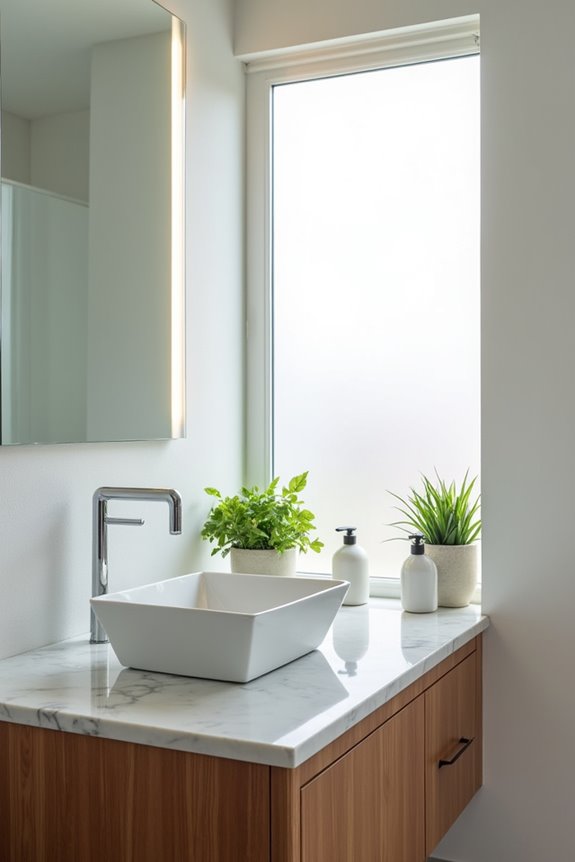
Ever wondered what that sink-and-cabinet combo in your bathroom is actually called? It’s a vanity, and it’s one of the most practical fixtures in your home. A vanity combines three essential elements: a sink, a countertop, and a base cabinet underneath. Think of it as your bathroom’s command center for getting ready and staying organized.
The sink sits on top, giving you a place to wash up. The countertop, usually made from durable materials like quartz or granite, surrounds it and resists water damage. Below that, you’ll find storage space with drawers or doors for keeping your toiletries and supplies tucked away neatly. Some vanities even include mirrors and lighting above, completing the grooming setup. They’re really just smart design meeting practical bathroom needs.
The Three Must-Have Components of Any Vanity
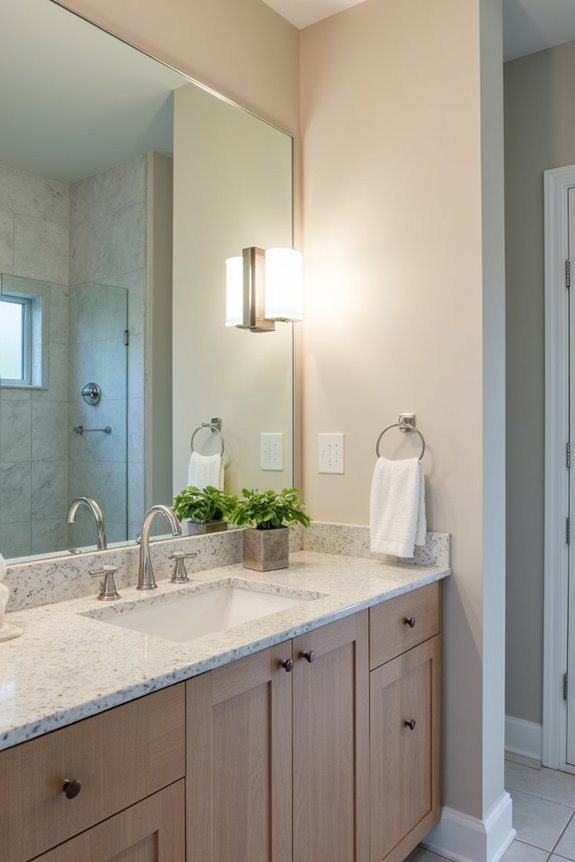
What makes a vanity actually work? I’ll break down the vanity components you’ll need. Think of your vanity as a team where each player matters equally.
Here’s what you’re working with:
- The sink: your washing basin that comes in undermount, vessel, or integrated styles
- The countertop: a durable, water-resistant surface like quartz that resists stains
- The base cabinet: sturdy storage underneath that handles humidity and supports everything
- The faucet: positioned to match your chosen sink type perfectly
You’re combining a functional washing station with smart storage. The countertop sits on your cabinet, creating that seamless look you want. Your sink connects to your faucet, and everything works together. These three core vanity components create a practical and organized bathroom that actually serves your daily routine.
How Vanities Differ From Bathroom Cabinets and Other Fixtures
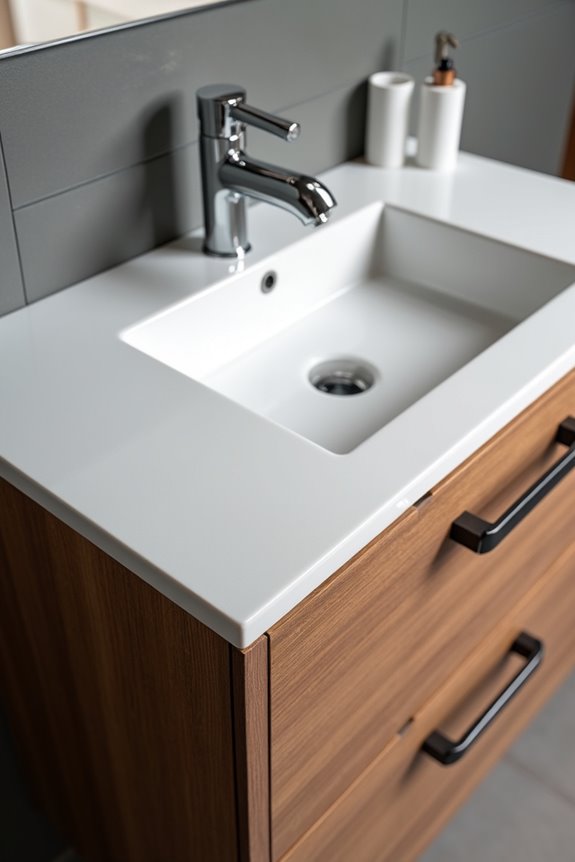
A vanity is purposefully designed to support washing, grooming, and storage all in one spot, while a regular cabinet focuses on storage alone. This key difference shapes how each fixture functions in your bathroom.
| Feature | Vanity | Storage Cabinet |
|---|---|---|
| Sink Integration | Included | Not included |
| Primary Purpose | Washing and grooming | Storage only |
| Countertop | Yes, with sink | No sink present |
| Plumbing | Built-in connections | No plumbing |
When you’re getting ready each morning, your bathroom vanity gives you everything you need nearby. The sink integration is the critical distinction here. You’re not hunting for supplies elsewhere. A storage cabinet, on the other hand, simply holds items without any washing capability.
Your vanity serves as your grooming command center by combining multiple functions into one fixture. It pairs functionality with organization for your daily routine. A storage cabinet cannot replicate this integration because it lacks plumbing connections and a countertop sink. The vanity’s design brings these elements together in a way that supports your grooming habits efficiently.
Choosing Your Vanity Style: Freestanding, Wall-Mounted, or Corner
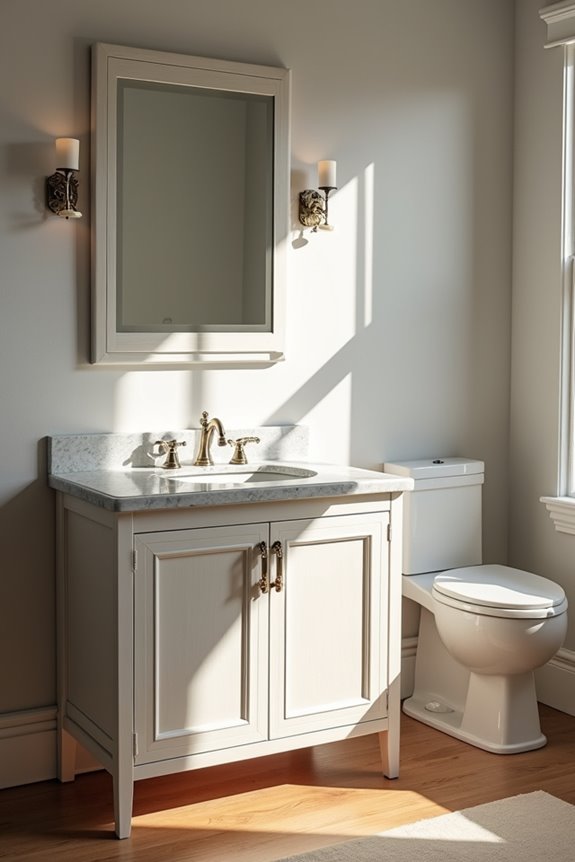
Once you’ve decided on a vanity, your next big choice is picking which style fits your bathroom best. The three main vanity styles each serve different needs and preferences.
- Freestanding vanities stand alone anywhere in your bathroom
- Wall-mounted vanities attach to walls, creating an open, airy feel
- Corner vanities tuck into spaces, maximizing room efficiency
- Each style offers different storage options like drawers and doors
Consider your bathroom’s space optimization needs first. Do you have limited square footage? Corner vanities work well in tight areas. Need easy floor cleaning? Wall-mounted options give you legroom underneath. Want maximum storage options and flexibility? Freestanding vanities deliver both.
Corner vanities maximize tight spaces, while wall-mounted styles ease cleaning. Freestanding vanities offer maximum storage and flexibility.
Think about your plumbing layout too. Wall-mounted styles require accessible wall plumbing, which may involve additional installation considerations. Each choice affects under-vanity visibility and cleaning ease differently. Pick the style that matches your lifestyle and bathroom layout.
Vanity Base Materials: Wood, MDF, Plywood, Metal, and More
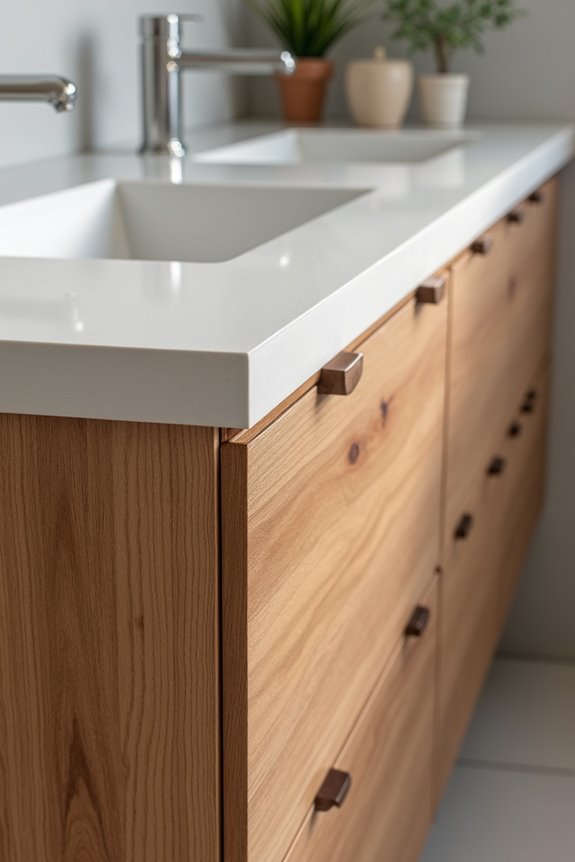
Solid wood brings warmth and elegance to bathroom vanities. However, it requires proper sealing to resist humidity. MDF offers affordability and smooth surfaces for painting but doesn’t hold up as well in moist environments.
Plywood strikes a solid balance. It’s sturdier than MDF and provides better moisture resistance for bathroom vanities. Metal bases like stainless steel deliver industrial appeal and exceptional moisture resistance, though they’re fingerprint-prone.
Consider your bathroom’s humidity levels and your budget. Each vanity base material has tradeoffs. Understanding these differences helps you make the smartest choice for your space and lifestyle.
Vanity Countertops: Choosing Materials for Durability and Easy Care
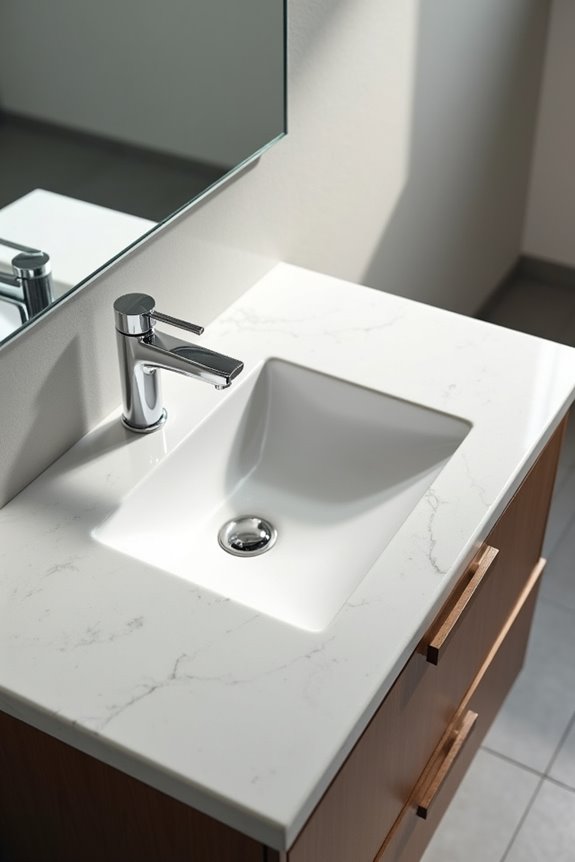
Your vanity base sets the foundation, but the countertop’s the real workhorse. I’ll help you choose wisely. Here’s what we’re working with:
- Quartz: non-porous, stain-resistant, needs zero sealing
- Marble: gorgeous but requires regular sealing and careful use
- Granite: dense and durable yet demands consistent maintenance
- Laminate: budget-friendly, though moisture can cause problems
Quartz wins for durability and low maintenance. You won’t seal it or worry about spills. Marble and granite look luxurious, but they’re porous and demand your attention. Laminate is affordable, but heat and moisture damage it faster.
I recommend quartz if you want something practical. It handles daily wear well. Look for GREENGUARD-certified options too; they’re better for your bathroom environment.
Vanity Storage Solutions: Keeping Your Daily Essentials Organized
I’ve learned that organizing your bathroom vanity requires smart strategies across three key areas. You’ll want to maximize your drawer space with dividers and pull-out trays that make finding your daily essentials quick and easy. Then, I’ll show you how to use cabinet storage for bulkier items and add built-in features like integrated outlets and hidden hampers that keep everything accessible yet clutter-free.
Drawer Organization Strategies
How’d you like to find your toothbrush without digging through clutter? I’m here to help you master drawer organization strategies for your vanity storage setup.
Full-extension drawers reveal everything inside easily. You’ll want drawer organizers to section your space effectively. Here’s how to organize like a pro:
- Place daily essentials in the top drawer for quick access
- Use dividers to separate toothbrushes, makeup, and medications
- Store grooming tools in pull-out trays to hide clutter
- Keep frequently used items at eye level or within arm’s reach
These strategies create organized systems from chaotic drawers. Dividers create compartments that group similar items together. When everything has its place, you’ll spend less time searching and more time getting ready. Your morning routine becomes smoother and more efficient.
Cabinet Storage Solutions
Once you’ve mastered your drawer setup, it’s time to tackle the cabinet space beneath your sink. Your integrated sink creates a unique challenge here. You’ll work around pipes and plumbing, so measure carefully before organizing. Pull-out shelves help deep cabinets become accessible storage zones. Install them to maximize your vanity storage without wasting space. Consider tiered shelving for smaller items like cleaning supplies or medications. Under-cabinet organization baskets keep everything visible and grouped by purpose.
Cabinet organization works best when you group similar products together. Cleaning supplies go in one section, personal care items in another. This system helps you find what you need quickly. Your bathroom vanity becomes functional and efficient with thoughtful planning. Smart storage solutions make daily routines smoother for everyone sharing the space.
Built-In Features Enhancement
What if your vanity could work as hard as you do? Built-in storage organizes your bathroom so everything has its place. Smart features make daily routines smoother and faster.
Consider these practical enhancements:
- Pull-out trays and drawer dividers keep grooming items sorted and easy to find
- Integrated outlets within storage compartments charge appliances without cluttering your countertop
- Tiered shelving maximizes vertical space for bottles, containers, and supplies
- Hidden hampers and concealed organization slots store extra products out of sight
These built-in features work together continuously. Integrated outlets reduce safety hazards from cords. Concealed organization maintains the clean, peaceful feeling you want. Your vanity becomes both functional and attractive, supporting your morning and evening routines without extra effort.
Sizing Your Vanity to Match Your Space and Bathroom Use
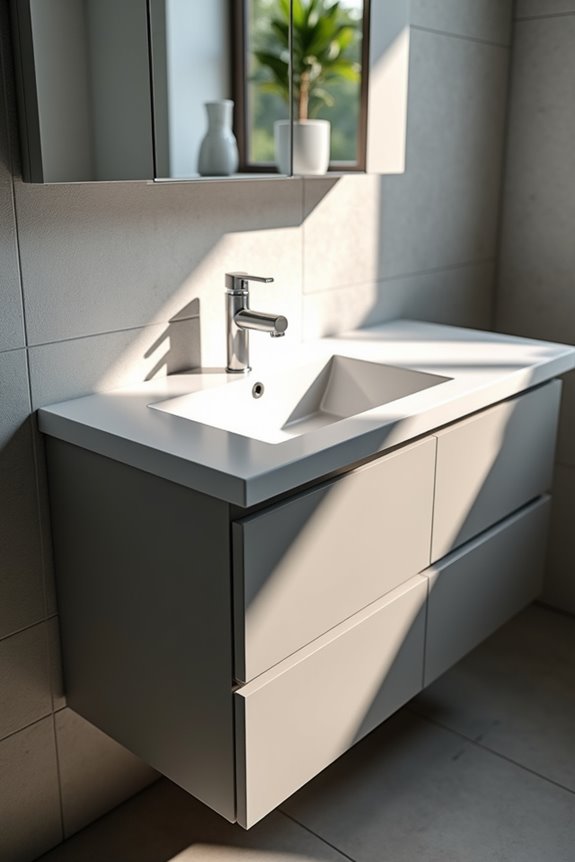
I’ll walk you through sizing your vanity to match your specific bathroom space and how you actually use it. When you’re planning storage capacity, you’ll need to think about whether you’re outfitting a small powder room or a spacious master bath; each situation calls for different vanity dimensions. Your daily essentials require enough drawer and cabinet space, so let’s explore how width, depth, and height work together to give you both comfort and functionality.
Space and Bathroom Type
How do you choose a vanity that actually fits your bathroom? Your vanity sizing depends on your bathroom’s purpose and available space. This guide will help you match the right vanity to your needs.
Consider these factors:
- Powder rooms need compact vanities (24–30 inches wide) for efficient storage solutions and guest comfort
- Family bathrooms benefit from wider vanities (48–60 inches) to handle multiple users and daily demands
- Master suites can accommodate larger vanities with double sinks, requiring 60+ inches of bathroom space
- Small bathrooms gain visual openness through floating vanities that create depth beneath the counter
Your bathroom type determines the storage solutions you’ll use daily. A powder room doesn’t require extensive storage, while family bathrooms need drawer space for everyone’s essentials. Master baths demand premium organization. Match your vanity’s width and depth to your bathroom space; you’ll appreciate the functionality in your routine.
Storage Capacity Planning
Once you’ve picked your vanity’s width, it’s time to think about storage. Your vanity storage needs depend on how often you use your bathroom and who’s using it. If you’re in there daily getting ready, you’ll want larger drawers and extra cabinets to hold everything. Think about what you’re storing: hairbrushes, medications, towels, cleaning supplies. More items mean you need more space. Consider your bathroom’s layout too. You’ll want easy access to your drawers and cabinets without bumping into the toilet or door. Also think about maintenance. Good vanity storage keeps clutter hidden while letting you reach what you need quickly. Planning your storage now saves headaches later.