

1) Identify the cause by checking for leaks or poor ventilation.
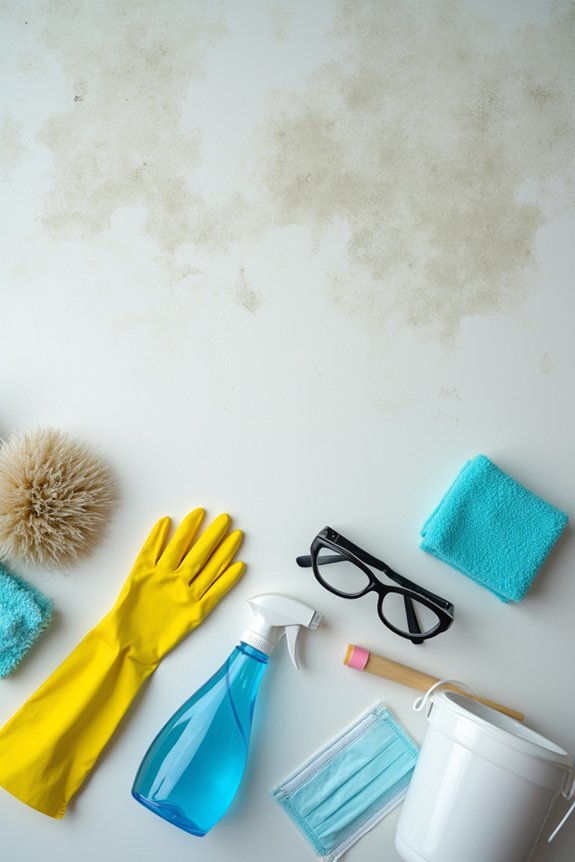
2) Gather safety gear (gloves, goggles, respirator) plus cleaning tools.
3) Mix equal parts vinegar and water for a safe, affordable solution.
4) Spray mold lightly and wait 10-15 minutes.
5) Gently wipe and rinse thoroughly with warm water.
6) Dry completely using fans and open windows.
7) Run a dehumidifier to prevent mold from returning and reduce costs over time. Each step builds on the last, producing lasting results.
Step 1: Find the Cause of Your Bathroom Ceiling Mold
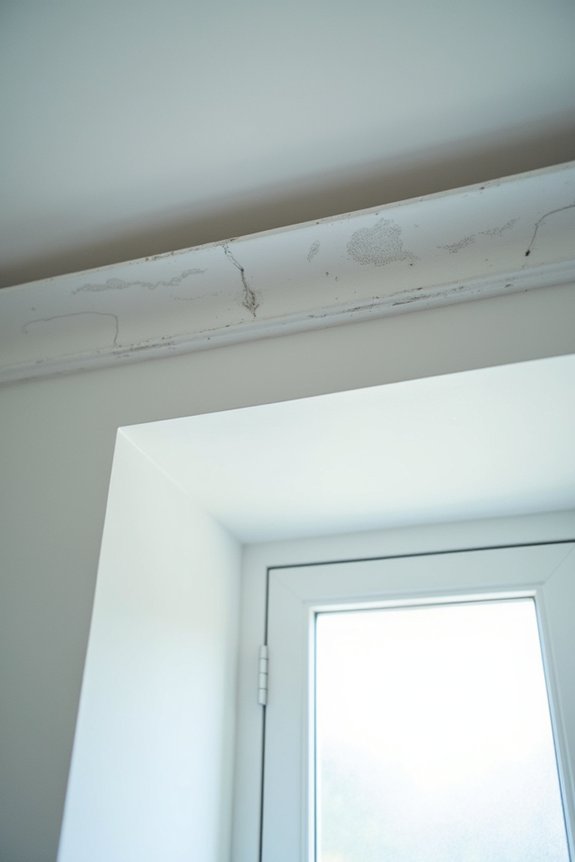
I’d recommend inspecting for leaks first. Check your roof and plumbing carefully. Water leaks from above create ideal mold conditions quickly.
If you don’t find leaks, then poor ventilation is likely your culprit. Bathrooms generate tons of moisture during showers. Without proper airflow, that moisture stays trapped, collects on your ceiling, and feeds mold growth.
Pay attention to condensation patterns. Damp patches tell you where moisture concentrates most. This detective work saves you money long-term by preventing mold from returning. You’ll address the real source: whether that’s ventilation gaps or hidden water damage.
Step 2: Gather Your Cleaning Tools and Safety Gear
Step 2: Gather Your Cleaning Tools and Safety Gear
Before you tackle that moldy ceiling, you’ll need the right tools and protection.
1. Safety Gear Essentials
Protect yourself with rubber gloves, goggles, and a respirator or mask. These items shield your skin and lungs from mold spores, which can irritate your respiratory system.
2. Cleaning Supplies
Gather a scrub brush, cleaning cloths, and a bucket or spray bottle for your chosen cleaning solution. You’ll also need plastic sheeting and a drop cloth to contain splashes and spores.
3. Additional Equipment
A stepladder helps you safely reach ceiling height. Ask a second person to steady your ladder during cleaning.
4. Ventilation
Open windows and turn on your exhaust fan before starting. Good airflow reduces spore exposure and prevents mold from spreading to other areas.
Step 3: Mix Your Cleaning Solution
Step 3: Mix Your Cleaning Solution
I’ll walk you through two effective cleaning solutions for bathroom mold. I prefer the vinegar method because it’s safe, affordable, and likely already in your home. Both options have merit, so choose based on your mold severity and preference.
1. Vinegar-Based Solution Method
Mix equal parts distilled white vinegar and water in a spray bottle using a 1:1 ratio. This natural solution kills mold spores without harsh chemicals, costs less, and reduces environmental impact. You may notice a temporary vinegar smell, but it dissipates quickly as the solution dries.
2. Bleach and Water Ratio
For stubborn mold, combine one part bleach with ten parts water. Bleach works faster than vinegar on heavy mold growth, though it’s stronger and demands better ventilation. Use bleach only if vinegar proves insufficient, since vinegar is gentler on surfaces and safer for your respiratory system.
Vinegar-Based Solution Method
Creating an effective cleaning solution doesn’t require expensive commercial products. I’ll show you how to make a powerful mold fighter using just two simple ingredients you likely already have at home.
1. Gather Your Ingredients
You’ll need distilled white vinegar and water. That’s it. No harsh chemicals needed.
2. Mix the Solution
Combine equal parts vinegar and water in a spray bottle. A 1:1 ratio works perfectly. This mixture cuts through mold effectively while remaining economical and environmentally responsible.
3. Prepare for Application
Before spraying, open a window for ventilation. Put on a mask and eyewear for protection. These simple precautions keep you safe while you work.
This straightforward approach gives you a reliable cleaning method that tackles bathroom mold at minimal cost.
Bleach and Water Ratio
For tougher mold infestations, a bleach solution packs more cleaning power than vinegar.
1. The Right Ratio
Mix bleach and water in a 1:3 ratio: one part bleach to three parts water. This proportion delivers a strong cleaner without waste or unnecessary harshness.
2. Prepare Your Solution
Pour the bleach into a spray bottle first, then add the water carefully. Mix thoroughly to create an effective solution that tackles stubborn mold growth.
3. Why This Works
The bleach kills mold at its source while water dilutes it safely for household use. This balanced approach saves money and protects your bathroom surfaces from damage.
Step 4: Spray the Mold and Wait for the Cleaner to Work
Once you’ve prepared your cleaning solution and suited up with protective gear, it’s time to spray. I’ll apply my cleaner in a fine mist across the moldy ceiling. A light, even coating works best; I’m avoiding excessive pooling that wastes product and money.
The Waiting Game
Now I let the cleaner penetrate the mold spores for 10 to 15 minutes. This sitting time is necessary. It allows the vinegar or hydrogen peroxide to break down the mold at its source, making removal easier later.
Ventilation Matters
I keep my window open throughout this process. Fresh air circulation protects both my health and the environment by dispersing fumes safely outdoors rather than trapping them indoors.
Step 5: Gently Wipe and Rinse the Treated Area
Now that you’ve let the cleaner work its magic, it’s time to gently remove the loosened mold and rinse away the cleaning solution. This step involves three key techniques: wiping, rinsing, and drying. Done correctly, they’ll leave your ceiling clean and dry without causing water damage.
Gentle Wiping Technique
How do you remove mold without damaging your ceiling? A careful approach protects your paint while removing stubborn growth.
1. The Right Tools Matter
- Use a clean sponge or soft cloth
- Avoid hard scrubbing that damages paint
- Wring out excess water thoroughly
- Rinse your sponge frequently during cleaning
- Switch to fresh cloths as needed
2. Proper Technique
Gently wipe treated areas with light pressure. This removes mold residues without harming your ceiling’s surface. Frequent rinsing prevents spore spreading and water saturation.
3. Water Temperature
Choose warm water for rinsing. It helps lift loosened mold effectively while protecting your paintwork. This simple choice saves money on future repainting.
4. Finishing Steps
If discoloration remains, wipe again with a fresh cloth. After thorough drying, anti-mould paint provides lasting protection.
Rinsing and Water Management
After you’ve treated the mold with your chosen cleaner, the rinsing step is just as important as the treatment itself. I rinse the treated spot thoroughly with clean water to wash away remaining cleaner and loosened mold particles. This prevents residue from encouraging future growth.
1. Smart Water Management
I use a well-wrung sponge to control moisture carefully. Excess water can damage your ceiling and create conditions where mold thrives again, costing you more money and effort later.
2. Complete Drying
I let the area dry completely using fans or a dehumidifier. Proper drying prevents regrowth and protects your home’s structure. This straightforward step stops you from needing repeat treatments and keeps your bathroom healthier for everyone.
Drying to Prevent Moisture
Proper drying stops moisture from returning and triggering new mold growth. This step protects your investment and your home’s health.
To dry thoroughly:
- Use a dry, absorbent cloth to dab excess moisture from the ceiling
- Set up a fan or dehumidifier to continue the drying process
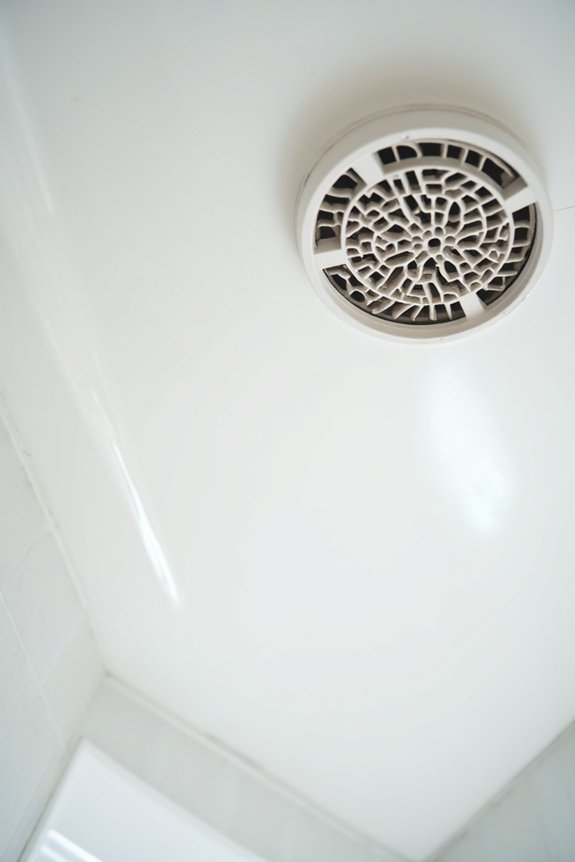
- Keep your extractor fan running during and after treatment
- Open windows to increase air circulation throughout the bathroom
- Monitor the area until it’s completely dry to prevent moisture buildup
Maintain good ventilation using both mechanical and natural airflow. On porous surfaces, continued air movement is particularly important. A dehumidifier handles stubborn dampness effectively. This phase prevents future problems and saves money on repairs. Taking time to dry everything properly delivers real benefits.
Step 6: Dry the Ceiling Completely and Dispose of Contaminated Materials
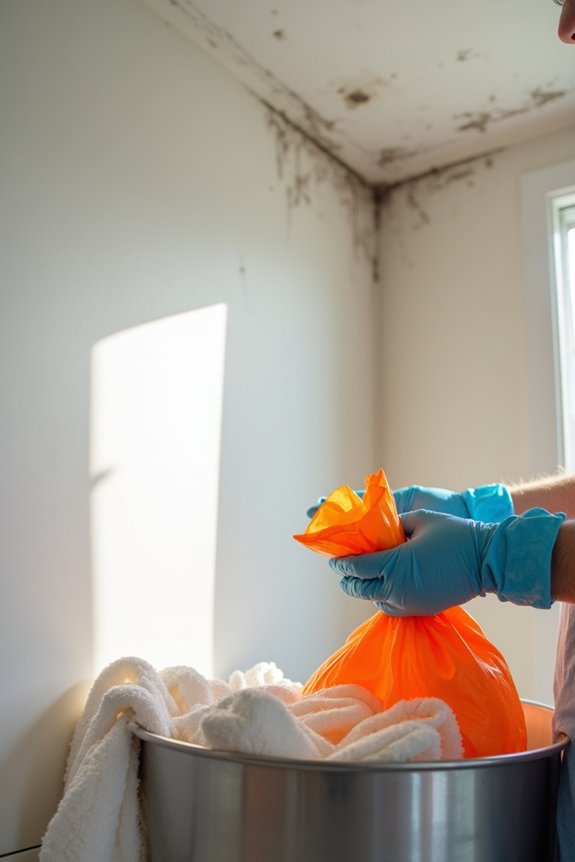
I dab the ceiling with a dry cloth, then wash it afterward. This prevents re-soaking the area with dirty water.
2. Ensure Proper Ventilation
I leave windows open or run the extractor fan continuously. Good ventilation speeds up drying and prevents moisture buildup that encourages mold growth.
3. Dispose of Materials Properly
I throw away used sponges and cloths carefully to prevent spreading mold spores throughout the home. This protects family health and saves money on future treatments.
4. Clean Contaminated Items
I wash worn clothes and floor cloths with biological detergent at the highest recommended temperature. This eliminates remaining spores effectively.
5. Final Surface Treatment
Once dry, I vacuum floors and wipe surfaces thoroughly, especially carpets where spores hide.
Step 7: Use a Dehumidifier to Stop Mold From Returning
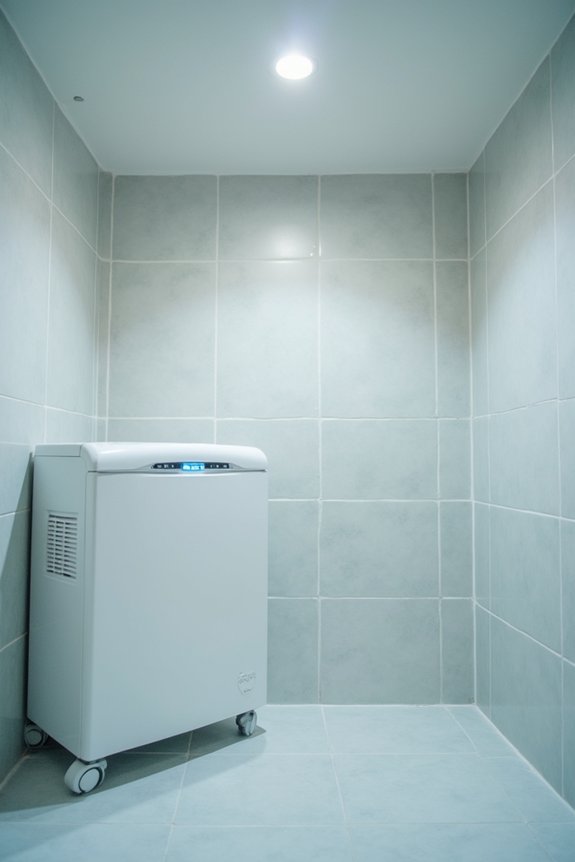
Step 7: Use a Dehumidifier to Stop Mold From Returning
How can you keep mold from coming back after you’ve cleaned it? A dehumidifier is your best defense. This device draws in air, removes moisture, and releases dry air back into your bathroom. Since mold thrives in damp environments, lowering moisture levels prevents it from returning.
Here’s why a dehumidifier works:
- Removes excess moisture from the air automatically
- Includes humidistats that run only when needed, saving energy
- Prevents mold growth on ceilings, walls, and fixtures
- Reduces ongoing cleaning costs and health risks
- Works in bathrooms with poor ventilation
If mold returns despite dehumidification, you may have leaks or structural issues requiring professional repair. For persistent problems, contact a mold specialist who can identify moisture sources and recommend solutions beyond dehumidification alone.