
A 3/4 bathroom contains three essential fixtures: a toilet, sink, and either a shower or bathtub. It’s missing one component that full bathrooms have, making it more affordable and water-efficient. You’ll find 3/4 baths in guest rooms, basements, and secondary spaces where a complete four-fixture bathroom isn’t necessary.
They typically occupy 35–57 square feet with a compact one-wall layout that maximizes floor space. This practical design saves money and resources while providing full bathroom functionality for most situations. There’s much to discover about layouts and upgrades.
What Fixtures Define a 3/4 Bathroom?
What Fixtures Define a 3/4 Bathroom?
Ever wondered what makes a bathroom a “3/4” bathroom instead of a full one? Understanding the difference helps you assess what this practical option provides.
What distinguishes a 3/4 bathroom from a full bathroom? Learn what this practical option provides.
The Essential Three Fixtures
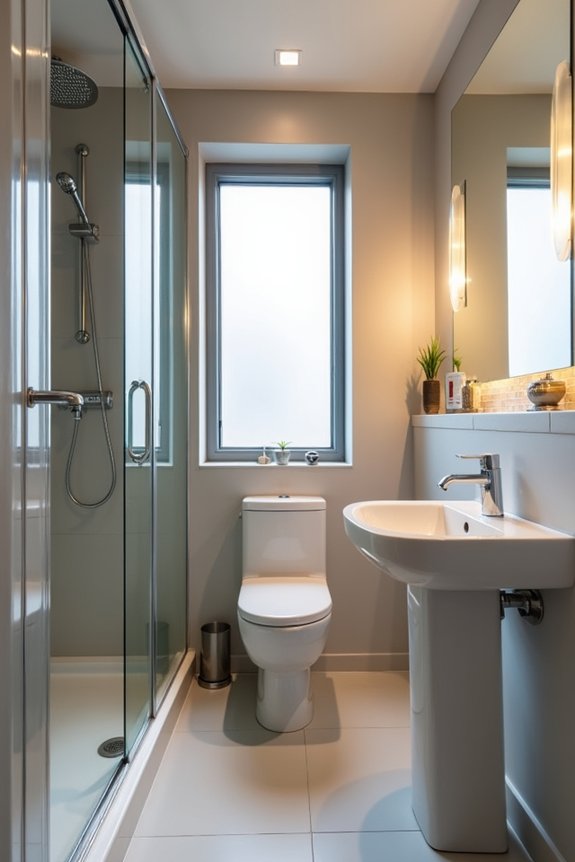
A three-quarter bathroom includes three main fixtures: a toilet, sink, and either a shower or bathtub. Unlike a full bathroom with four fixtures, a 3/4 bathroom omits one component while still providing the essentials for daily use.
The Typical Configuration
Most 3/4 bathrooms feature a toilet, sink, and standing shower. The shower typically replaces the bathtub, which reduces both construction costs and water consumption. This compact layout positions fixtures along one wall, which maximizes the available floor space and improves overall functionality.
Where 3/4 Baths Work Best: Guest Rooms, Basements, and Secondary Spaces
Now that you know what fixtures make up a 3/4 bathroom, you’re probably wondering where one actually works best in a home.
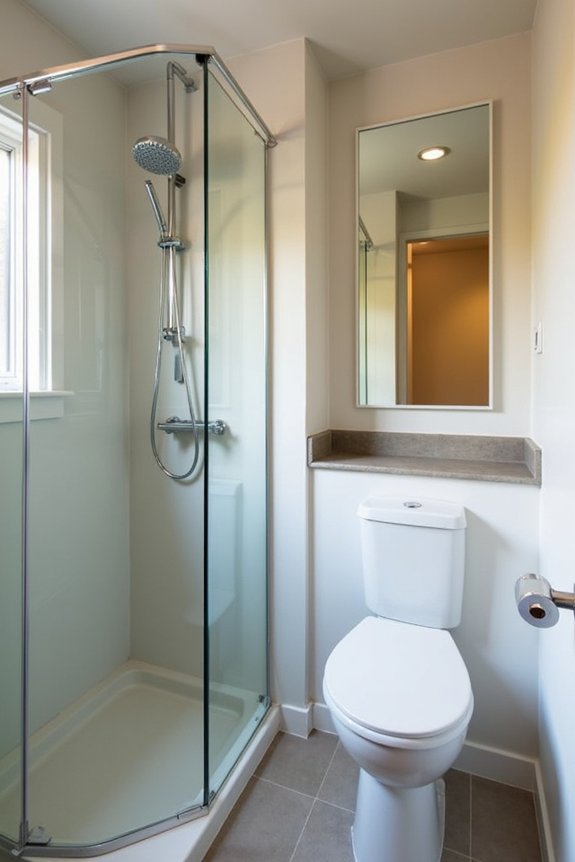
3/4 baths work well in specific spaces. They provide full functionality without consuming excessive square footage, making them ideal for guest rooms and secondary spaces. Basements benefit from their compact footprint, which maximizes usable living area. A one-wall layout arranges your three fixtures efficiently along a single wall, perfect for tight spaces.
They work best in these locations:
- Guest rooms needing full bathroom access
- Basements with space constraints
- Secondary bathrooms in smaller homes
- Apartments seeking space-saving solutions
- Hallway bathrooms serving multiple bedrooms
The walk-in shower serves as your primary space-saving element. This layout balances accessibility with practicality, reducing construction costs while keeping your home functional and welcoming.
3/4 Bath Floor Plans: Fixture Placement in Tight Spaces
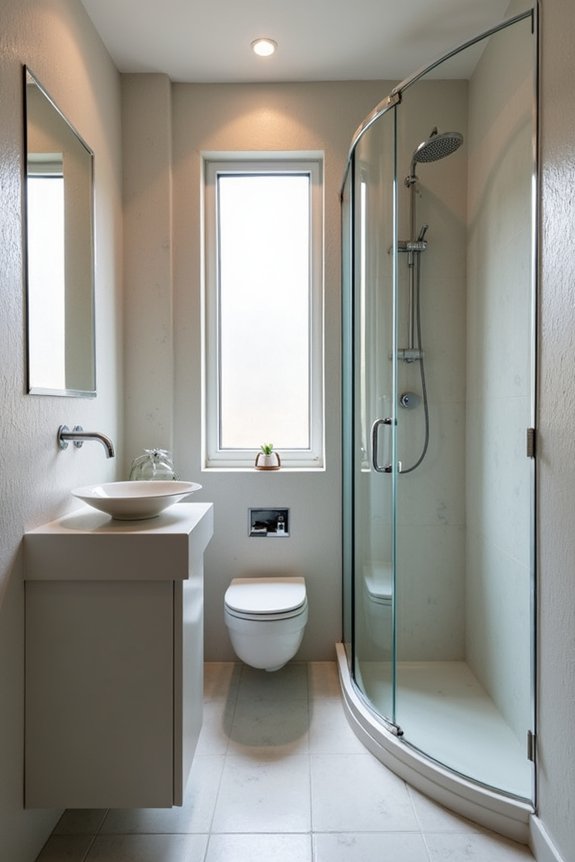
3/4 Bath Floor Plans: Fixture Placement in Tight Spaces
How do you fit three bathroom fixtures into a compact space without sacrificing functionality? The one-wall layout is your answer. I align the toilet, sink, and shower or tub side by side along a single wall, creating efficient bathroom floor plans for tight spaces.
1. Typical Dimensions
These 3/4 bath designs measure 7 to 9.5 feet wide and 5 to 6 feet deep, occupying just 35 to 57 square feet total.
2. Essential Clearances
I maintain at least 24 inches around each fixture and 30 inches of circulation clearance for comfortable shared use.
3. Space-Maximizing Features
I often install walk-in or glass-enclosed showers to enhance perceived space and simplify cleaning, making your investment stretch further.
3/4 Baths vs. Full Bathrooms: When to Choose Each
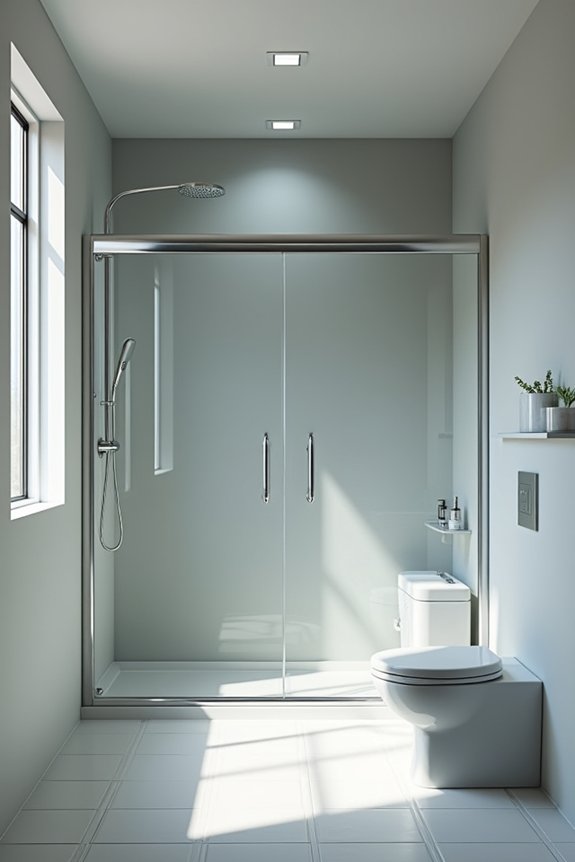
However, a full bath typically adds more resale value for families planning to stay long-term. Here’s what I consider:
- Square footage available: 3/4 baths fit 35–50 sq ft; full baths need more room
- Budget constraints: 3/4 installations cost less overall
- Guest bathroom use: Perfect for occasional visitors needing basic fixtures
- Standing shower preference: Saves space while maintaining functionality
- Future home value: Full baths attract more buyers
I’d choose a 3/4 bathroom for guest bathrooms or en-suites. Choose a full bath for primary bathrooms where resale matters most.
Upgrading Your 3/4 Bath to Full: Is It Worth It?
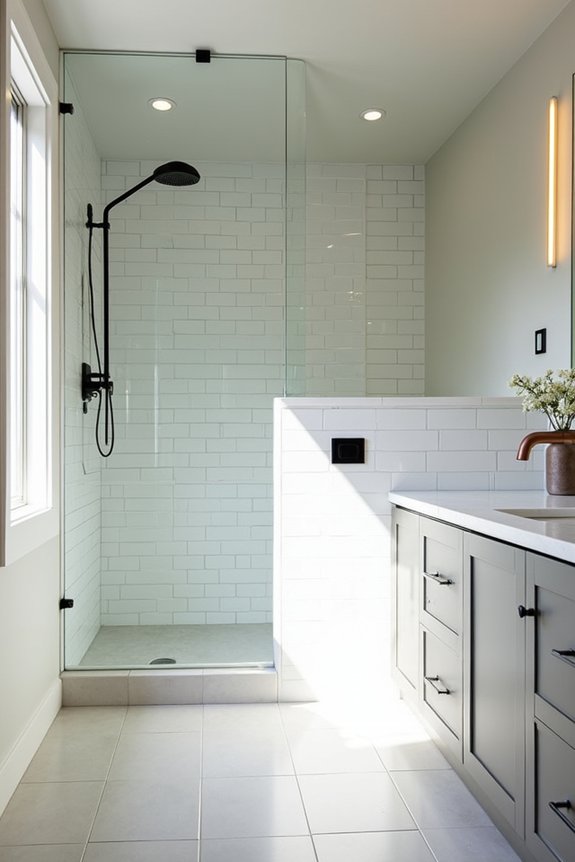
Upgrading Your 3/4 Bath to Full: Is It Worth It?
Should you upgrade your 3/4 bathroom to a full bath? It depends on your goals and space.
1. Resale Value Boost
Full baths attract more buyers. Families want both a tub and shower. You’ll likely recover much of your upgrading cost when you sell.
2. Cost Reality
Plumbing work drives expenses higher. Waterproofing and potential wall repairs add up quickly. Budget accordingly before starting.
3. Space Expansion
Your three-quarter bathroom may need reconfiguring. You might expand the footprint to fit both fixtures. Moving plumbing lines takes planning and investment.
4. When It’s Worth It
Upgrade if you’re staying long-term. Prioritize a primary-level bathroom. Plan for proper ventilation and aim for at least 60 square feet. You’ll enjoy daily functionality and financial returns.