
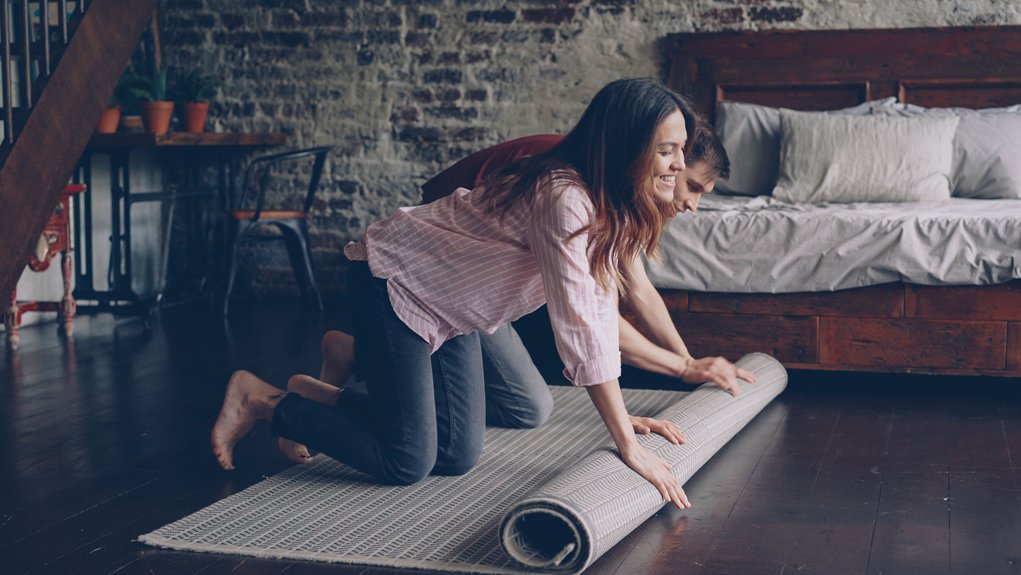
Position Your Rug Right. Start by measuring your sofa, then choose a rug that extends 20-30 cm beyond each side. Place front furniture legs on the rug to ground your seating zone. Leave 12-24 inches of exposed floor around edges for breathing room. Align the rug parallel to your sofa and centered under your coffee table. Use an anti-slip pad underneath for safety and durability. Step back to verify balance. Layer smaller patterned rugs over neutral bases for added depth and visual interest. These fundamentals establish a solid foundation for your living room layout.
Measure Your Sofa to Choose the Right Rug Size

How do you know what rug size will actually work in your living room?
1. Start by measuring your sofa size. Measure the length and width of your sofa first. This measurement serves as your foundation for choosing the right rug size.
2. Plan for proper rug extension. Aim for the rug to extend 20 to 30 centimetres beyond your sofa’s width on each side. This creates balanced proportion and makes the space feel deliberate.
3. Consider room spacing carefully. Leave about 40 centimetres of floor space between the rug and surrounding walls. This breathing room prevents the area from feeling cramped.
4. Visualize your layout before buying. Use blue painter’s tape to outline rug dimensions on your floor. This simple technique helps you see the final arrangement without purchasing first, saving both money and resources.
Decide How Much Furniture Should Sit on the Rug
Should your sofa sit completely on the rug, or is partial placement acceptable? Your room size and rug size determine the best approach. Here’s what works:
- Formal spaces: All furniture sits on the rug, creating a unified seating area that feels arranged with purpose
- Smaller rooms: Front legs on rug anchors your seating configuration while keeping the space open and less cramped
- Sectionals: Rug extends beneath the entire sectional’s front legs, defining a comfortable zone
2. Aligning Your Seating
Align your rug with the dominant seating configuration by placing it parallel to the sofa front edge. This grounds the space effectively. When furniture on rug includes at least the front legs, you establish visual connection without overwhelming the room. Your rug placement becomes the foundation for a welcoming gathering spot that works well with your layout.
Position the Rug to Ground Your Sofa and Armchairs
Where do you position your rug to create a unified seating area? Place your rug so the front legs of your sofa and armchairs rest directly on it. This anchors your furniture and creates a cohesive arrangement that brings everyone together.
| Setup Type | Best Practice | Result |
|---|---|---|
| Traditional Sofa | Align parallel to front edge | Clear visual connection |
| Multiple Chairs | Front legs on rug | Grounded, unified feel |
| Smaller Rug | At least front legs contact | Maintains definition |
| Sectional | Entire front sits on rug | Cozy, tucked-in appearance |
| Large Room | All seating touches rug | Formal, connected space |
Align Your Rug Properly
Align your rug parallel to your sofa’s front edge. This establishes a clear visual connection among furniture pieces. The alignment helps define your seating zone effectively, making your living room feel intentionally designed and welcoming.
Create Visual Breathing Room With Edge Spacing
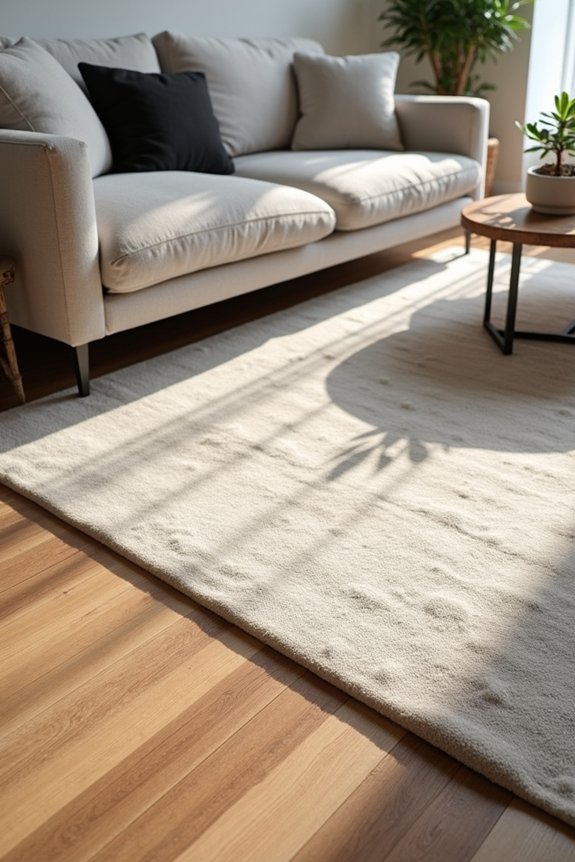
Why does spacing around your rug matter so much? It’s the difference between a cramped room and one that feels purposeful.
Edge spacing creates visual breathing room that makes your living room feel larger and more thoughtfully designed. When you leave 12 to 24 inches of exposed floor around your rug’s edges, you’re giving your eyes somewhere to rest. This margin prevents your room from feeling overcrowded.
Consider these practical benefits:
- Defines zones in open-plan spaces without walls
- Enhances flow between different areas naturally
- Showcases your flooring and overall design
This centered look approach works best when you align your rug placement with dominant furniture like your sofa. The exposed floor margins aren’t wasted space. They’re deliberate design choices that bring harmony to your living room.
Align Your Rug With Your Room’s Shape
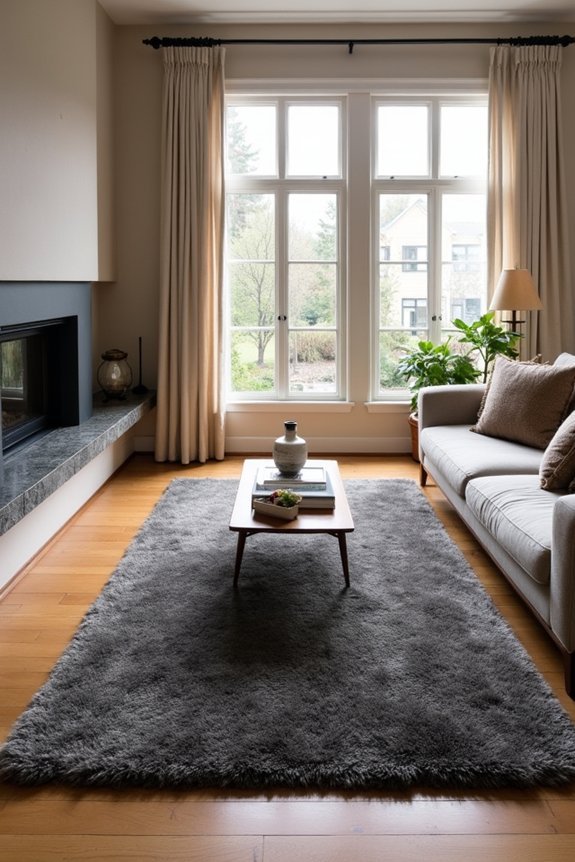
Your room’s shape should guide where you place your rug, since different layouts work better with different positioning strategies. The following approach helps you match your rug placement to whether you have a rectangular or square room, plus how entry points affect your decision. Getting this right helps create a unified, organized look that makes your space feel purposeful.
Rectangular Rooms
In rectangular spaces, run your rug lengthwise along the longer dimension. This approach complements the room’s natural lines and prevents the space from feeling choppy or fragmented. Position the rug so it aligns with your seating arrangement and pulls the eye toward the room’s length rather than across its width.
Square Rooms
Square rooms benefit from centered rug placement. A centered rug anchors the middle of the space and creates balance from all angles. This setup works particularly well when your furniture arrangement sits equidistant from the walls.
Considering Entry Points
Where you enter the room matters. Position your rug so the transition from the entryway feels natural. If people enter from one wall, angle your rug placement to guide them through the space logically. This prevents the rug from working against your traffic patterns and helps the room flow smoothly.
Practical Application
Measure your room before purchasing a rug. Note the dimensions and take photos from the entry point. This information helps you visualize how different sizes and orientations will work with your specific layout. A properly placed rug creates visual clarity and makes the room feel intentionally designed rather than randomly furnished.
Rectangular Rooms Need Length Alignment
When you’ve got a rectangular room, here’s the strategy: align your rug with the room’s length.
This rug placement approach anchors your living room effectively. Positioning your rug lengthwise creates intentional balance throughout your space. It guides eye movement naturally across your floor space and connects your seating area purposefully.
Why Length Alignment Works:
- Creates visual flow that guides people through your rectangular rooms naturally
- Anchors furniture and prevents your center rug from appearing to float awkwardly
- Reinforces room symmetry while maintaining clear pathways for movement
Lengthwise orientation prevents your rug from dividing the space uncomfortably. This approach maximizes your floor space efficiently, saves money by avoiding multiple rugs, and creates a cohesive environment where everything belongs together. You’ll notice how this alignment brings intentionality to your living room, making it a welcoming gathering space.
Square Rooms Benefit From Centering
Square rooms offer a unique advantage: they’re inherently balanced spaces. Centering your rug echoes this natural symmetry and delivers practical benefits for your layout.
1. Anchor Your Seating Area
A centered rug placement anchors your seating area and unifies furniture arrangement. This approach works because it creates a grounded, cohesive focal area that feels deliberate and organized.
2. Choose the Right Rug Shape
Select a square or large round rug to reinforce symmetry. These shapes complement your room’s geometry and maximize visual harmony.
3. Focus on Dominant Furniture
Center your rug on your dominant furniture layout, not the room itself. This strategy defines your seating zone effectively and allows flexible furniture rearrangement while maintaining balance.
Centered rug placement in square rooms creates lasting design value and prevents costly layout mistakes.
Entry Points Guide Rug Orientation
How do entry points shape your rug placement? Your doorways and pathways create natural movement patterns that your rug should follow, not fight against. Observing where people naturally walk helps position rugs that feel purposeful and welcoming.
- Leave one to two feet of open floor space around busy walkways to maintain smooth movement
- Position your rug to complement doorway flow, creating a visual guide that shapes how people use your space
- Align rug orientation with entryways so foot traffic remains uninterrupted and integrated seamlessly
When you align your rug with entry points and pathways, the room feels more cohesive. This thoughtful placement anchors your space while respecting natural movement patterns. Smart alignment means less wear on high-traffic areas and a living room that functions beautifully for everyone.
Center the Rug on Your Coffee Table and Seating
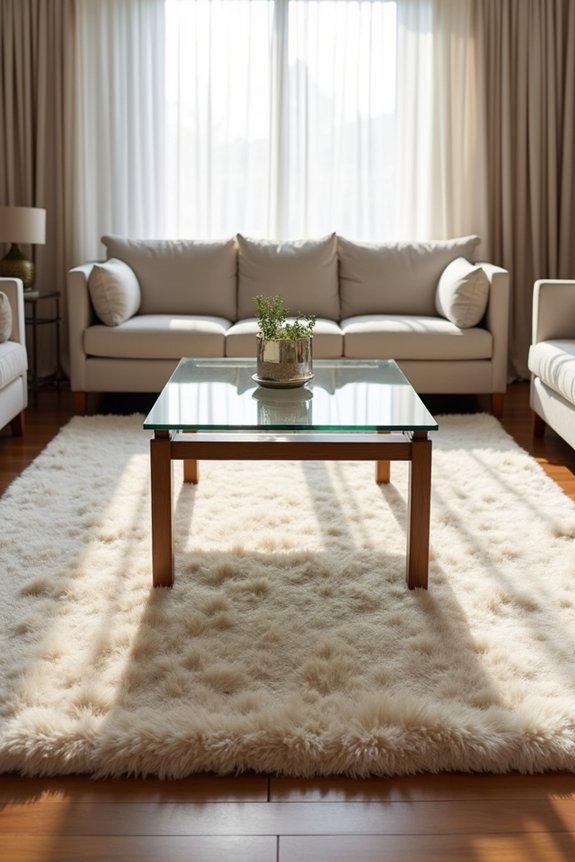
Since your seating arrangement serves as the room’s anchor point, you’ll want your rug to do the same.
1. Anchor Your Seating with Proper Rug Placement
Center the rug directly under your coffee table and main seating pieces. Position it so the front legs of your sofa and chairs rest on the rug. This creates a unified, grounded look that ties everything together visually.
2. Choose a Proportional Rug Size
Select a proportional rug size like 8×10 or 9×12. Larger rugs work best for sectionals and multiple seating pieces. Your rug becomes the focal point that defines the entire conversation area.
3. Avoid Common Placement Mistakes
Don’t center the rug in your room’s geometric middle. Instead, align it with your sofa’s front edge. This enhances symmetry and creates better flow throughout your space.
Use an Anti-Slip Rug Pad to Prevent Movement
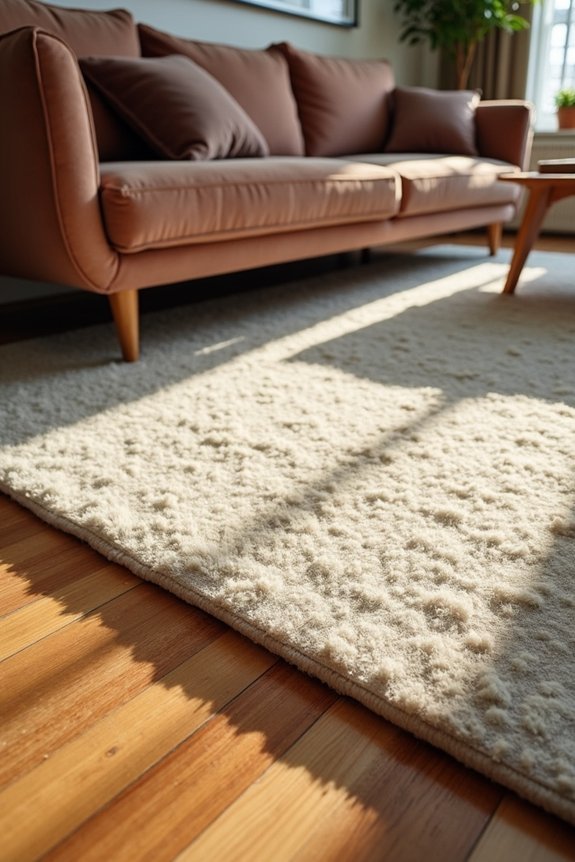
You’ll want to add an anti-slip rug pad underneath your rug for safety, protection, and lasting durability. This underlay prevents your rug from shifting during daily use, which keeps your family safer and reduces wear on both the rug and your floor. Choosing the right pad for your rug’s pile height and size provides maximum grip while protecting your investment for years to come.
Safety and Stability Benefits
Safety and Stability Benefits
Why does a rug shift and bunch under your feet? Without proper support, rugs slide across floors with daily movement. An anti-slip rug pad solves this problem by anchoring your rug securely in place.
These benefits have real value:
- Prevents trips and falls by keeping the rug stable during foot traffic
- Reduces flooring damage through minimized friction and scuffing underneath
- Extends rug life by preventing edge curling and bunching from movement
An anti-slip pad provides stability that protects both you and your investment. The cushioning absorbs impact, reducing noise while safeguarding your flooring. When you choose the right pad matched to your rug size and floor type, you’re setting up long-term safety. This simple addition gives you peace of mind and saves money on repairs.
Proper Underlay Installation
Proper Underlay Installation
What keeps your rug from shifting across the floor? A quality anti-slip underlay beneath your King Living rug provides the stability you need.
1. Choosing the Right Rug Pad
Select a high-quality rug pad that matches your rug’s full size. This delivers maximum stability and floor protection whether you have hardwood, tile, or carpet surfaces. A properly sized underlay prevents bunching and wrinkling, maintaining a visually cohesive appearance.
2. Installation Best Practices
Position the pad to cover the entire rug area during installation. This approach provides consistent cushion underfoot and reduces movement throughout the day. Verify the pad thickness allows adequate furniture clearance and safe door access, preventing tripping hazards.
3. Long-Term Benefits
Quality anti-slip underlays minimize rug shifting, extend durability, and reduce replacement costs. You’ll experience enhanced comfort while protecting your floors from wear and damage.
Rug Protection and Longevity
Rug Protection and Longevity
An anti-slip rug pad placed directly beneath your King Living rug represents one of the most practical investments for protection. This underlay prevents your rug from shifting when you walk or move furniture around. It also reduces wear on your rug’s edges, which helps it last longer and saves you money.
Key Benefits for Your Home
- Enhances stability on smooth floors, reducing dangerous slipping
- Preserves edge integrity and prevents curling in high-traffic areas
- Maintains comfortable underfoot feel without affecting furniture balance
Maintenance Matters
Regular inspection of your anti-slip underlay catches signs of wear before they become problems. Replacing it when needed maintains continuous rug protection and extends longevity. This simple habit protects both your investment and your home’s safety for years to come.
Step Back and Check the Visual Balance
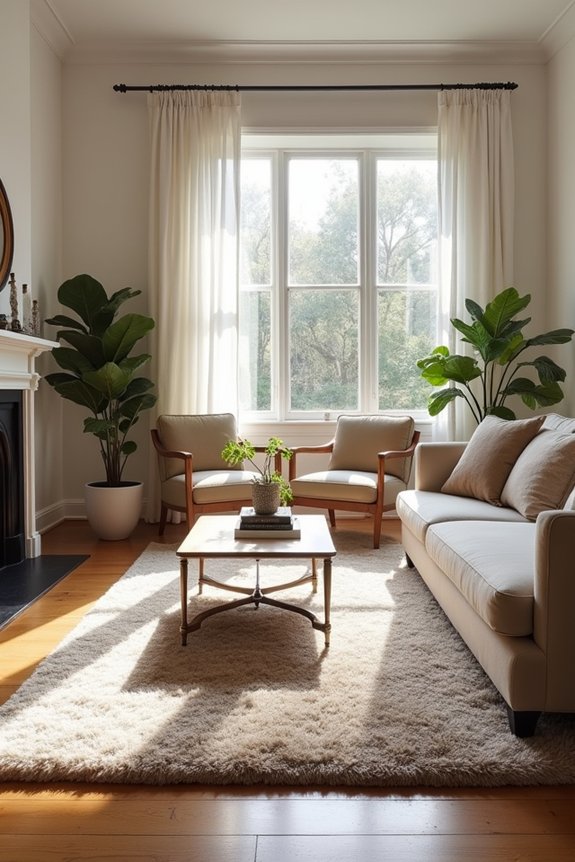
Step Back and Check the Visual Balance
Once you’ve positioned your rug, here’s how to check if it’s working in your space.
1. Check Your Front Feet Placement
Stand back and verify that the front feet of your sofas and chairs rest on the rug. This grounds your seating zone and creates visual cohesion.
2. Assess Furniture Alignment
Your rug should complement your furniture layout rather than compete with it. Align your anchor rug with dominant pieces instead of centering it in the room.
3. Measure Visible Floor
Plan for 12 to 24 inches of consistent floor showing around your rug edges in larger rooms. This maintains proportion and prevents your space from feeling cramped.
4. Evaluate Rug Size
For spacious living rooms, consider larger sizes like 10×14 or 12×16 feet. Placing all furniture legs on the rug creates a unified, intentional look that maximizes your investment.
Layer Rugs and Textures for Added Warmth and Style
Now that you’ve positioned your rug and verified your furniture placement, you can increase your living room’s visual interest. Rug layering combines rugs strategically to add depth and texture. Place a smaller patterned rug over a larger neutral base rug to create movement and visual appeal.
2. Key Layering Principles
- Your underlying rug should extend beyond the top rug, anchoring seating and defining zones effectively
- Keep front furniture legs on at least one rug for a grounded, cohesive appearance
- Use contrasting textures or subtle pattern differences to prevent clashing while maintaining your room’s color palette
3. Final Touches
Consider organic-shaped or outdoor-to-indoor rugs for sculptural interest. Layered rugs maximize durability and value, protecting your investment while creating a welcoming living space with intentional design choices you’ll genuinely enjoy.