

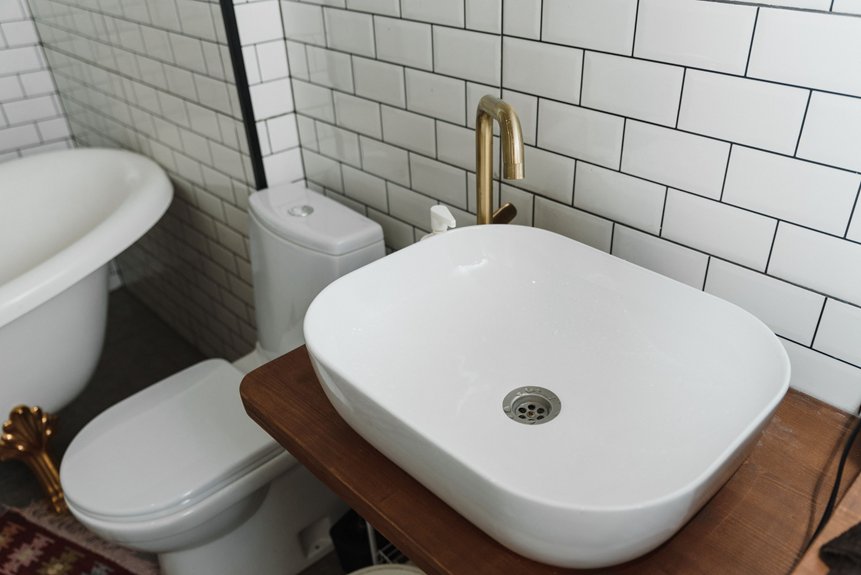
1) Measure Interior Bowl Dimensions – Measure the length, width, and depth of each bowl to determine your capacity needs.
2) Measure Countertop Cutout and Cabinet Width – Record the cutout’s exact dimensions and compare them against your new sink’s specifications for proper fit.
3) Check Plumbing Clearance – Verify faucet hole spacing, drain location, and under-sink depth to prevent costly installation problems.
These measurements save money by preventing mismatches between your sink and existing space.
Learning the detailed process helps you select a replacement that fits perfectly without complications.
Measure Your Existing Sink’s Interior Dimensions
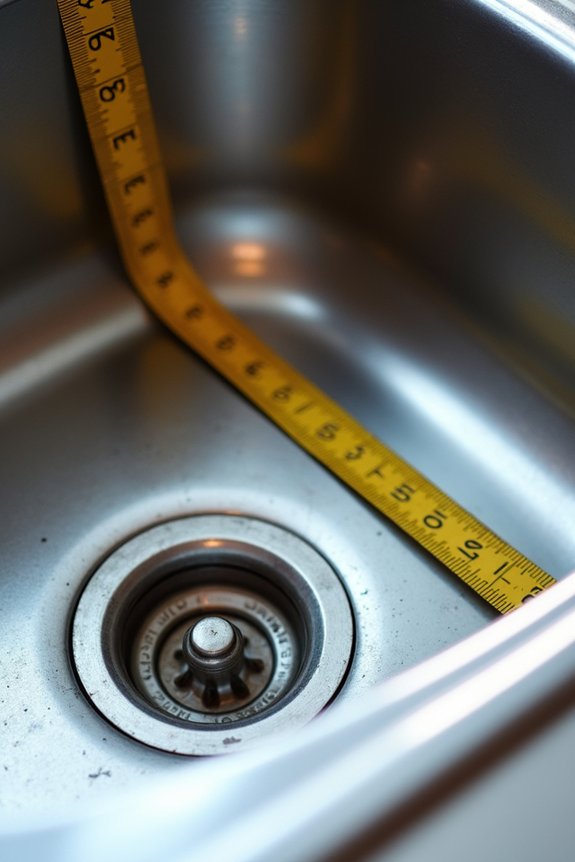
How do you know if a new sink will fit in your space? Accurate interior dimensions enable you to select a compatible replacement.
1. Measure Bowl Capacity
Measure the length, width, and depth of each sink bowl. These interior measurements determine the size and capacity needed for your household.
2. Document Bowl Configuration
Record whether you have single, double, or triple bowls. This configuration guides your selection of comparable replacements.
3. Check Faucet Hole Spacing
Measure the distance between faucet holes and fixtures. Accurate spacing ensures your new faucet will fit properly.
4. Take Measurement Baseline Photos
Photograph your current setup, plumbing, and accessories. These photos serve as your reference guide for ordering compatible replacements.
Measure Your Countertop Cutout and Cabinet Width
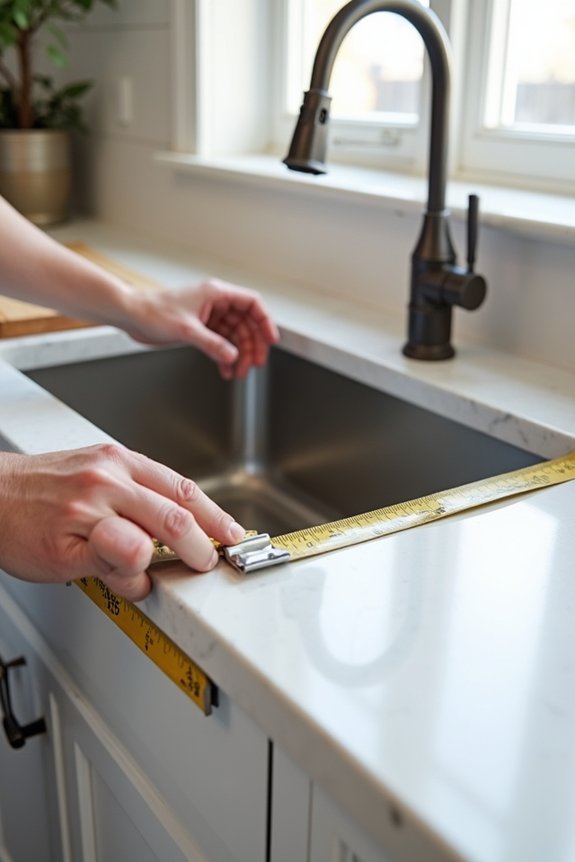
Measure Your Countertop Cutout and Cabinet Width
Once you’ve documented your sink’s interior, you’ll need to measure the space where it’ll sit.
1. Measure Your Countertop Cutout
Grab your metal tape and measure the cutout length and width from edge to edge. Note any irregular shape variations carefully. These measurements matter because top-mount, undermount, and farmhouse sink styles require different clearances and involve different lip considerations.
2. Check Cabinet Width
Measure your cabinet width as well. This confirms your new sink fits properly without gaps or overhang issues.
3. Verify Installation Fit
Compare your countertop measurement and cabinet width against your new sink’s specifications. Double-check by re-measuring and rounding to the nearest eighth inch. Clear away obstructions first to improve accuracy. This precision prevents costly installation problems and confirms your investment fits perfectly, saving you money and hassle during installation.
Check Plumbing Clearance and Depth Requirements
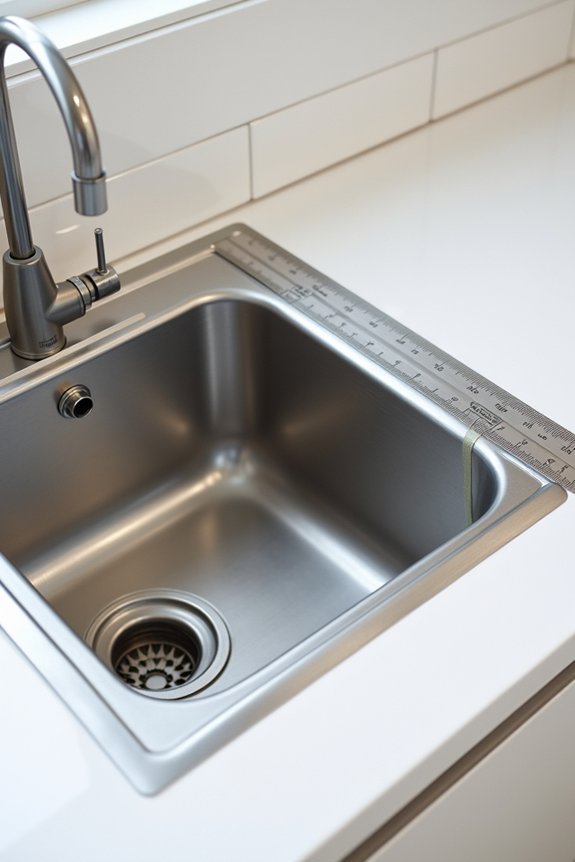
Why does what’s underneath your sink matter just as much as the sink itself? Because proper clearance prevents costly mistakes and ensures your new sink fits perfectly with existing plumbing.
1. Measure Your Under-Sink Space
Check the cabinet clearance first. Measure the distance from the back wall to your cabinet’s front edge. This confirms your cutout width and prevents interference with soffits or backsplash. Next, verify faucet hole spacing and drain location alignment with current plumbing.
2. Account for Sink Depth
Deeper undermount sinks require more cabinet clearance. Measure sink depth carefully, checking that pipes, shutoffs, and disposal components won’t collide. Under-sink plumbing needs adequate space for functionality.
| Measurement | Purpose |
|---|---|
| Back wall distance | Cutout width confirmation |
| Cabinet depth | Undermount clearance |
| Faucet spacing | Accessory alignment |
| Drain location | Plumbing compatibility |
| Pipe clearance | Collision prevention |