

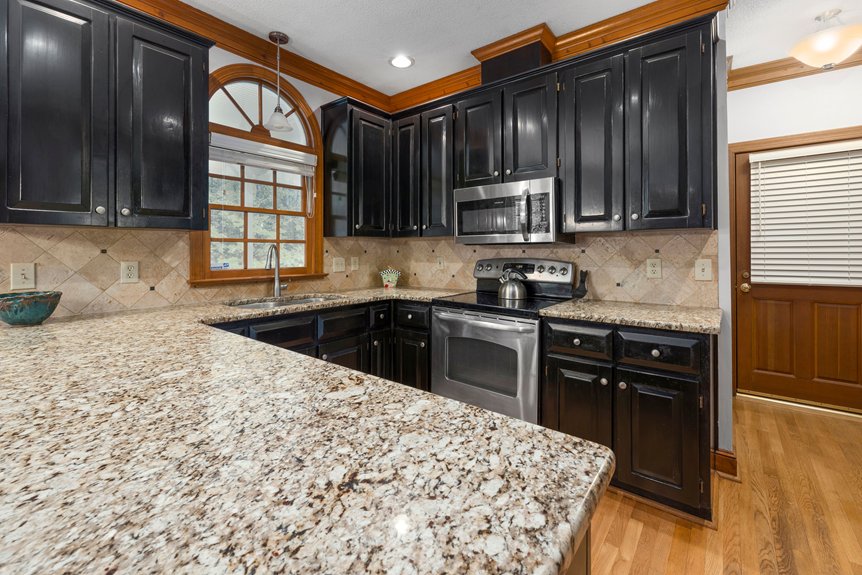
Standard kitchen counters should be 25 to 25.5 inches deep. This measurement combines your 24-inch base cabinets with a 1 to 1.5 inch overhang that protects cabinet fronts from spills and improves accessibility.
The standard depth maximizes prep space while keeping counters from blocking walkways, fits typical appliances without costly modifications, and reduces material waste.
If your kitchen has unique needs, such as taller cooks or island seating, custom depths of 27 to 30 inches may work better, though they involve higher initial costs.
We’ll explore how to choose what’s right for you.
Why 25.5 Inches Is Standard Kitchen Counter Depth
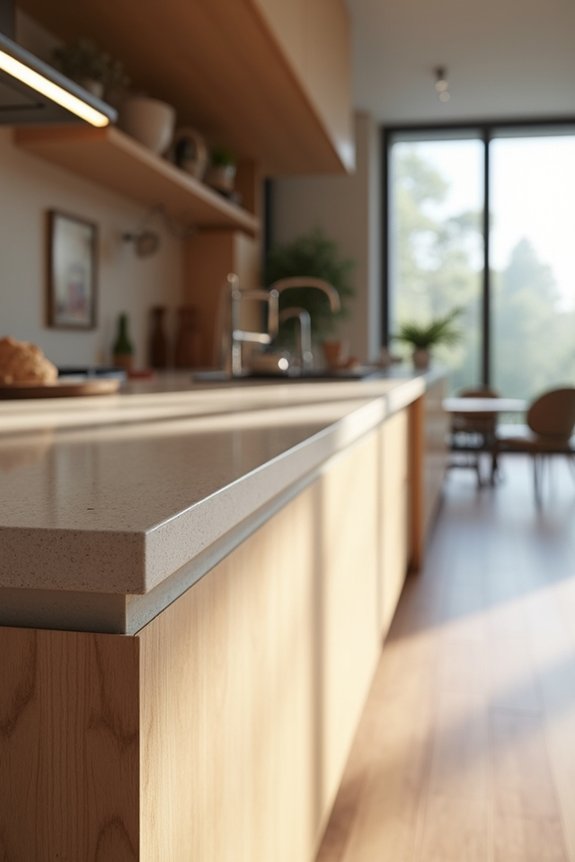
Why does 25.5 inches matter for your kitchen counters? This standard depth comes from a simple formula: 24-inch base cabinets plus a 1.5-inch overhang. This measurement works well because it balances functionality with comfort.
Standard 25.5-inch counter depth combines 24-inch base cabinets with a 1.5-inch overhang, balancing functionality and comfort perfectly.
2. The Purpose of the Overhang
That 1.5-inch overhang serves a practical purpose. It protects your cabinet fronts from spills and keeps drawers and doors accessible. This small detail extends cabinet life and reduces water damage, which saves money over time.
3. Why It Works for Most Kitchens
This standard depth fits most perimeter configurations well. Your counter won’t stick out into walkways, and you’ll have enough prep space. The counter depth aligns with typical appliances and workspace needs, creating a functional and comfortable kitchen for daily cooking.
Base Cabinets and Overhang: The Math Behind the Standard

How do manufacturers arrive at that standard 25.5-inch counter depth?
1. Starting with Base Cabinets
Base cabinets measure 24 inches deep. This standard depth works well for most kitchens and appliances. It’s also efficient for manufacturers to produce, which keeps costs down for you.
2. Adding the Overhang
Manufacturers add 1 to 1.5 inches of countertop overhang beyond the cabinet front. This overhang serves multiple purposes: it protects cabinet doors and drawers from spills and daily wear, gives you better knee clearance, and makes it easier to access and pull open drawers.
3. The Result
Twenty-four inches plus that overhang equals your standard 25.5-inch countertop depth. This balanced measurement provides comfortable workspace while maintaining functionality throughout your kitchen.
Counter Depth and Ergonomics: Designing for Comfort
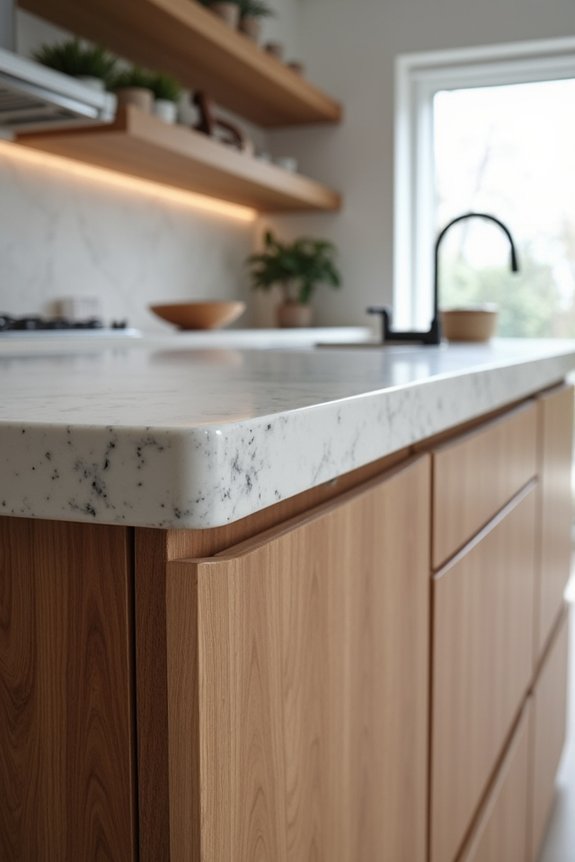
Counter Depth and Ergonomics: Designing for Comfort
Beyond the standard measurements lies an equally important consideration: your comfort while working at the counter.
1. Finding Your Ideal Height
Counter depth affects ergonomics, which is how your body moves and feels. Prep surfaces work best about 3 to 4 inches below your elbow height. This positioning reduces strain on your back and shoulders during food preparation. Cooking surfaces benefit from being 5 to 6 inches lower, while bakers prefer counters up to 8 inches below elbow height for detailed work.
Counter height significantly impacts ergonomics—prep surfaces work best 3-4 inches below elbow height to reduce back and shoulder strain.
2. Balancing Depth and Reach
Deeper counters provide more prep surface, but they can make back areas harder to reach. In smaller kitchens, this creates workflow challenges. Kitchen islands commonly measure 27 to 28 inches deep, accommodating both work and seating comfortably. Consider your kitchen’s layout and your personal reach when choosing counter depth for maximum comfort and efficiency.
Fitting Appliances and Prep Space
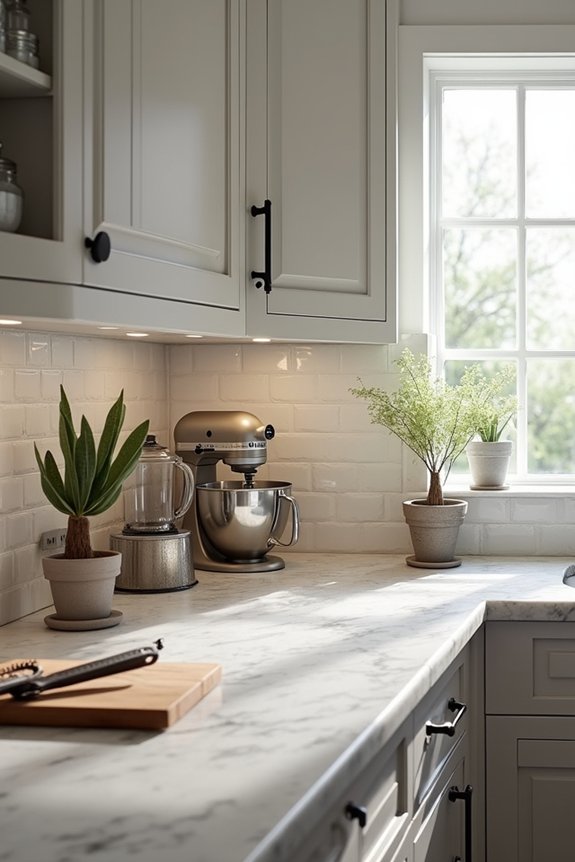
When you’re choosing your counter depth, you’ll need to think about both the appliances you’re installing and the workspace you need for cooking and prep work. The following sections walk you through how standard counter sizes fit with your equipment and how to confirm you have enough room to work comfortably without wasting space.
Standard Appliance Clearance Requirements
Why does your countertop depth matter so much? Understanding appliance clearance requirements helps you create functional, efficient kitchens that work for your lifestyle.
1. Standard kitchen counter depth ranges from 25 to 25.5 inches. This measurement combines your 24-inch base cabinets with a 1 to 1.5 inch overhang.
2. Appliance clearance needs are critical for proper installation and operation:
- Behind-cabinet space requires 1 to 1.5 inches for hookups and ventilation
- This clearance prevents appliance damage and fire hazards
- Proper spacing extends appliance lifespan, saving you money
- Island depth typically exceeds 27 to 28 inches for additional workspace
3. Planning ahead ensures your counters accommodate appliances safely. When you respect these clearance standards, you’re investing in durability and functionality. Your kitchen becomes both practical and built to last.
Workspace and Prep Optimization
Workspace and Prep Optimization
Once you’ve figured out the right clearance for your appliances, you’re ready to focus on the actual workspace you’ll use every day.
1. Finding Your Sweet Spot
The right counter depth balances your ergonomic reach with prep space. Most people comfortably reach about 25.5 inches forward, making standard counters ideal for everyday tasks.
2. Comparing Your Options
| Counter Type | Depth | Best For |
|---|---|---|
| Standard | 25–25.5″ | Most kitchens |
| Deep | 27–28″ | Large appliances |
| Shallow | 22–24″ | Small spaces |
| Island | 27–28″ | Extra workspace |
| Island seating | 30″+ | Dining comfort |
3. Maximizing Efficiency
Standard versus deep counters matters for workflow. Deeper surfaces give you room for multiple prep tasks simultaneously. Shallower options preserve walkway space in compact kitchens. Island depth typically runs 27–28 inches, offering additional workspace without compromising movement.
Countertop Depth and Equipment Fit
How you’ll actually use your counters matters more than you might think.
1. Matching Depth to Your Appliances
Your countertop depth should accommodate the appliances you use daily. Standard cabinet depth is 24 inches, but adding that 1–1.5 inch overhang gets you to the typical 25–25.5 inches. Larger appliances like coffee makers and blenders need adequate space. Deeper counters at 27–28 inches provide room for equipment without crowding your workspace.
2. Key Considerations for Equipment Fit
- Standard cabinet depth plus overhang supports most everyday appliances
- Appliance fit prevents unnecessary replacements and saves money
- Island depth around 27–28 inches offers extra prep space
- Knee room of 30+ inches accommodates comfortable seating areas
Selecting the right countertop depth keeps your equipment fitting properly, maximizes usable space, and reduces waste from poor planning decisions.
Island Countertop Depth: When Deeper Makes Sense
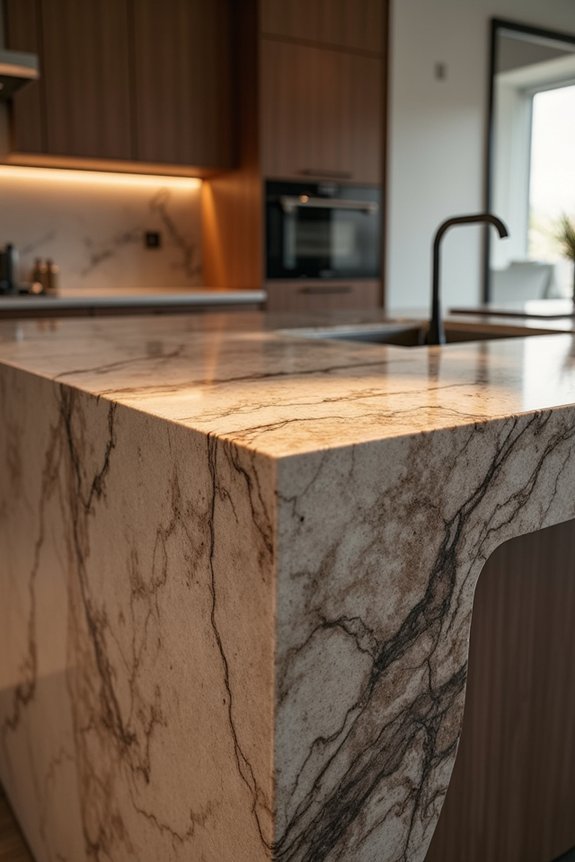
When you’re designing a kitchen island, should you go deeper than the standard 27 to 28 inches?
1. Creating Comfortable Seating Space
Going deeper makes sense when you plan seating. You’ll want island countertop depth around 30 inches or more for proper knee room. This keeps guests comfortable without their legs cramping underneath.
Island countertops should be 30 inches or deeper when seating is planned, ensuring comfortable knee room for guests.
2. Accommodating Larger Appliances
Deeper islands let you fit larger appliances. Extra workspace prevents crowding your perimeter counters. You’ll cook more efficiently without shuffling between stations.
3. Custom Depths for Your Needs
Your layout drives the final dimension. Custom depths address accessibility requirements or unique design goals. Unlike perimeter counters, islands offer flexibility. Consider what you’ll actually use the space for. That consideration is your best guide to deciding depth.
Choosing Your Counter Depth: Standard vs. Custom
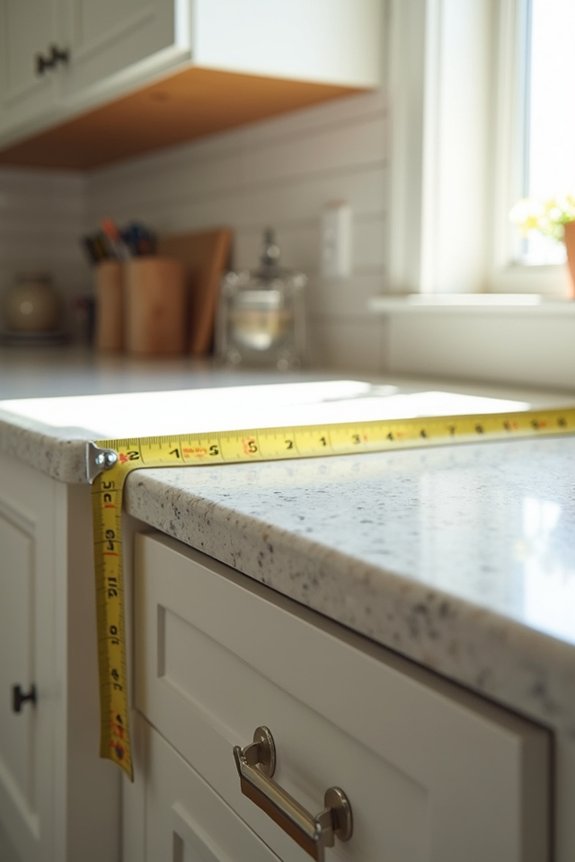
When you’re planning your kitchen, you’ll face a choice between sticking with standard depths or going custom. Standard counters at 25–25.5 inches offer proven comfort, lower costs, and easier appliance compatibility for most kitchens. Custom depths let you tailor your workspace to your specific needs, whether that’s maximizing a tight space or creating extra room for your cooking style.
Standard Depth Benefits
Standard Depth Benefits
Why does the standard 25 to 25.5-inch counter depth work so well for most kitchens? This measurement combines a 24-inch base cabinet with a 1 to 1.5 inch front overhang, creating the ideal balance for your cooking space.
Key Advantages
- Fits standard appliances without requiring costly modifications
- Prevents counters from blocking walkways and kitchen traffic flow
- Maximizes prep space while maintaining accessibility and comfort
- Reduces waste by eliminating unnecessary cabinet materials and construction
Why It Matters
Choosing the standard countertop depth saves money upfront. You’ll avoid custom adjustments to your base cabinet system. This proven standard works reliably for countless homeowners. Whether you’re renovating or building new, this depth balances functionality with practicality. The measurement accommodates typical appliance widths, fits through standard doorways, and leaves adequate space for daily kitchen tasks without requiring special ordering or installation costs.
Custom Depth Considerations
While standard depths work well for most kitchens, custom depths may better suit your specific needs. Tailoring your counter depth saves money and materials by eliminating waste. Custom cabinetry front protection extends counter lifespan, reducing replacement costs over time.
| Consideration | Standard Depth | Custom Depth |
|---|---|---|
| Island depth | 27–28 inches | 30+ inches |
| Overhang support | 1–1.5 inches | Variable needs |
| Accessibility height | 36 inches typical | 34 inches possible |
| Material waste | Minimal | Reduced with precision |
| Installation cost | Lower | Higher initially |
1. Accessibility Needs
Custom depths accommodate wheelchairs and mobility devices. Lower heights around 34 inches work better for some households.
2. Workspace Requirements
Deeper islands at 30+ inches provide extra prep area. Longer overhang requires proper cabinetry front protection.
3. Material Fabrication
Quartz and porcelain cut precisely to your specifications minimize waste. This approach supports sustainability goals while matching your exact layout.
Finding Your Perfect Fit
How do you know which counter depth works best for your kitchen?
Your countertop depth depends on several factors that affect how you’ll use your space daily. Consider these elements to make the right choice for your home.
- Measure your workflow: Consider where you’ll prep food and whether you need extra workspace for cooking projects
- Assess your reach: Deeper counters provide more surface area, but back reachability becomes challenging for some users
- Evaluate your layout: Standard kitchen counter depth works well for most homes, while island depth allows flexibility for seating
- Plan for appliances: Nonstandard appliances or accessibility needs may require custom depths
The standard kitchen counter depth of 25 inches suits most kitchens efficiently. However, deeper counters (27–28 inches) maximize workspace if you have room. Choosing thoughtfully saves money and reduces future renovations, creating a kitchen that works for your lifestyle.
Working With Fabricators on Custom Depths
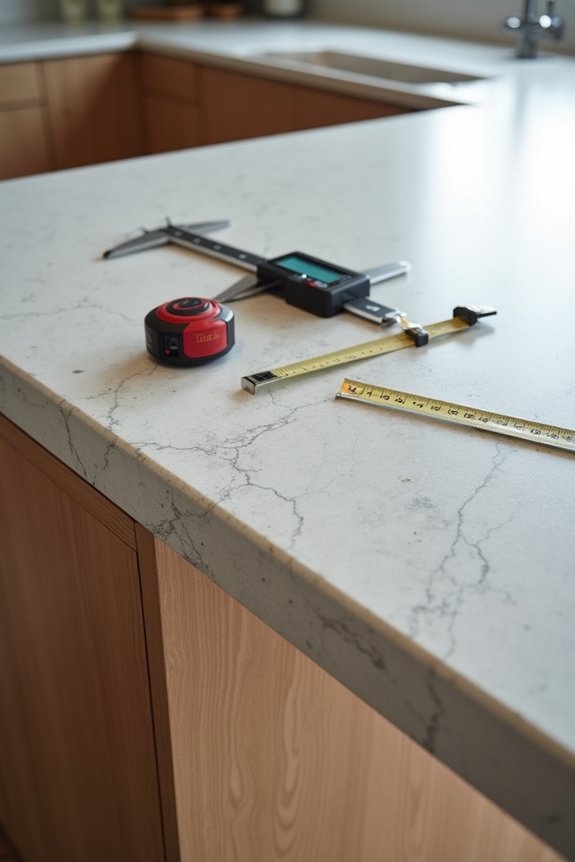
If you’ve decided that the standard 25.5-inch counter depth doesn’t fit your kitchen’s needs, you’re not alone.
1. Planning With Your Fabricator
Custom depths require clear communication about your kitchen’s purpose. Tell your fabricator whether you need extra prep space, island seating, or accessibility features. This conversation guides proper base cabinet planning and ensures everything aligns perfectly.
2. Critical Considerations
Discuss knee clearance under islands and overhang support for deeper counters. Your fabricator confirms structural requirements, especially for counters exceeding 28 inches. They’ll verify your appliances fit and check plumbing and electrical clearance behind the countertop.
3. Warranty and Materials
Ask about warranty implications with custom depths. Materials like Caesarstone quartz handle bespoke dimensions well, protecting your investment long-term.