

1. Gather Tools and Measure
Collect your wrench, screwdriver, plumber’s putty, and silicone sealant. Measure your sink opening carefully to confirm proper fit.
2. Shut Off Water
Turn the valves clockwise beneath the sink until water stops flowing completely.
3. Disconnect Old Lines
Loosen supply hoses and drain pipes using your wrench. Set aside any components you may need to reuse.
4. Remove Old Sink
Loosen the mounting clips and lift out the sink with assistance. Clean the countertop surface of any remaining putty or debris.
5. Test-Fit New Sink
Lower the new sink into the opening and check alignment. Verify the sink sits level before proceeding.
6. Secure With Clips
Tighten clips in a diagonal cross pattern to distribute pressure evenly and prevent warping.
7. Seal Edges
Apply silicone sealant around the rim where the sink meets the countertop. Smooth the bead with a wet finger for a clean finish.
8. Reconnect Plumbing
Reattach supply lines and drain components. Hand-tighten connections first, then use your wrench for a secure fit.
9. Test for Leaks
Run water through the sink and inspect all connections underneath for drips or moisture.
10. Verify
Check that water drains properly and shut-off valves operate correctly. Make any final adjustments needed.
Gather Tools, Materials, and Measure Your Sink Opening
1. Measure Your Sink Opening
Measure the current sink opening precisely. Note the length, width, and any irregularities in the cutout. This prevents your new sink from leaving gaps or requiring costly countertop adjustments.
2. Choose Your Sink
Select a sink material and depth that suit your needs. Stainless steel with an 8 to 10 inch basin depth works well. Composite options offer durability and longevity.
3. Gather Essential Materials
Collect plumber’s putty, mounting clips, and water supply hoses. These items ensure a secure, watertight installation.
4. Get Your Tools Ready
Gather wrenches, screwdrivers, and a utility knife. Having everything prepared prevents delays and frustration during installation.
Shut Off Water and Protect Your Workspace
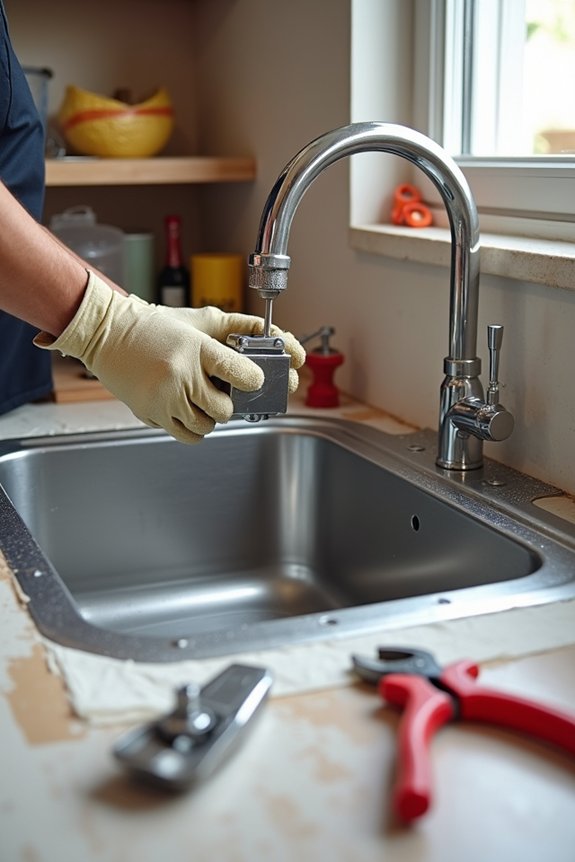
Before you remove that old sink, follow these steps to protect your kitchen and prevent water damage. Locate the water shutoff valves under the sink or at your home’s main supply, then turn them off completely. Gather buckets and towels, then protect your flooring and cabinets from spills and sharp edges.
Locate And Turn Off Valves
Locate And Turn Off Valves
1. Find the Water Shut-Off Valves
Look under your kitchen sink in the cabinet. You’ll spot two small valves attached to the supply lines; one controls hot water and one controls cold water. They’re typically oval-shaped handles or round knobs.
2. Turn Them Off
Rotate both valves clockwise until they stop. Don’t force them; just turn firmly. This stops water flow to your sink.
3. Verify the Shut-Off
Open your nearest faucet to release pressure. You shouldn’t see any water. This confirms your valves work properly and you’re ready to proceed safely with your installation.
Protect Flooring And Surfaces
Now that you’ve shut off the water valves, it’s time to safeguard your space before you remove the old sink.
1. Prepare Your Work Area
I’ll protect flooring by laying old blankets or towels underneath. This shields against dropped tools, debris, and sharp metal edges. It’s a practical step that prevents costly floor damage.
| Protection Item | Coverage Area |
|---|---|
| Blankets/towels | Flooring beneath sink |
| Plastic sheeting | Nearby countertops |
| Towel rolls | Cabinet interiors |
2. Cover Nearby Surfaces
I’ll cover countertops and cabinets to prevent putty, silicone, or water drips from staining them. This protects surfaces you’ve worked to maintain.
3. Stay Ready
I’ll keep a bucket and towels nearby. This catches residual water and manages spills during installation.
Gather Buckets And Towels
Why should you prepare buckets and towels before touching any plumbing? Water’s going to spill. You’ll want supplies ready to catch it quickly and protect your home from damage.
Here’s what I gather before starting:
- Bucket or drain pan to catch residual water during disconnection
- Several towels for quick cleanup and spill management
- Old towels or rags to place under the work area
- Flashlight to inspect hidden leaks or damaged fittings
- Protective gloves to keep your hands safe and clean
Having these items nearby means you’re prepared for drips and unexpected water flow. You’ll protect your cabinet and floor from costly water damage. This simple preparation saves time, money, and stress during your sink installation project.
Disconnect Supply Lines and Drain Pipes
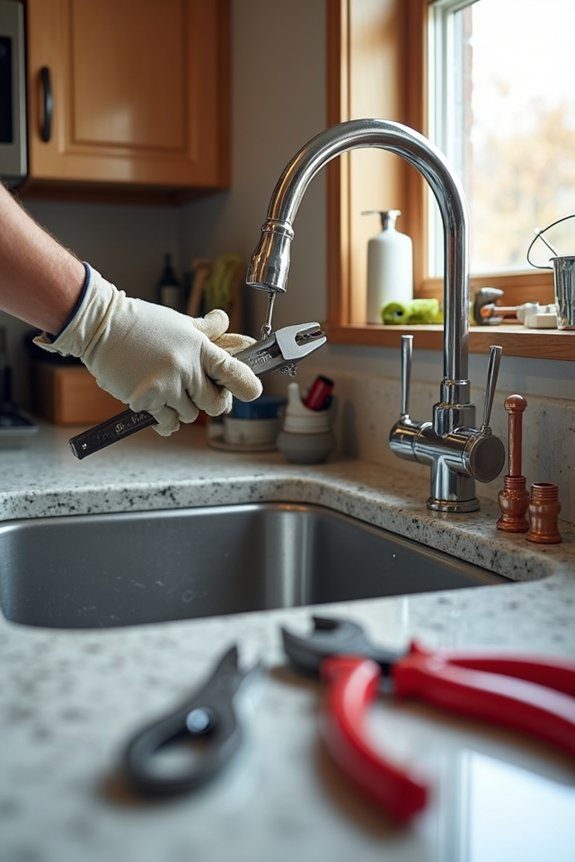
How to Safely Remove Your Old Sink
1. Turn Off Water
Start by turning off the water supply valves located under the sink. This step prevents leaks and protects your cabinets and floor from water damage.
2. Prepare for Water Spillage
Place a bucket underneath the connections and lay towels nearby. Water always remains in the lines even after shutting off the supply.
3. Remove Supply Lines
Using an adjustable wrench, loosen and remove the flexible water hoses from both the faucet and shutoff valves. Work carefully to avoid stripping the connections.
4. Disconnect Drain Pipes
Disconnect the drain pipe and garbage disposal if one is present. This frees up the sink basin so you can remove it from the counter.
5. Document Your Work
Take photographs of all connections or label them with tape. This reference saves time and prevents confusion when you reassemble everything.
Remove the Old Sink and Clean the Countertop
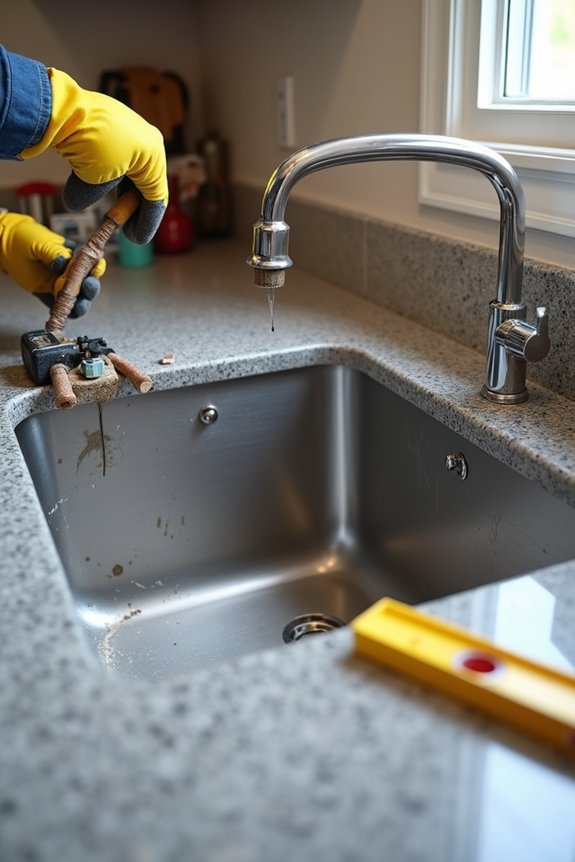
With your supply lines and drain pipes disconnected, you’re ready to remove the old sink itself. I’ll walk you through this process step by step.
1. Loosen Mounting Clips
- Locate clips beneath the sink
- Use a wrench to loosen them
- Remove clips completely
2. Remove Caulk and Sealant
- Cut away old caulk around the rim
- Use a putty knife for stubborn spots
- Work carefully to avoid countertop damage
3. Lift Out the Old Sink
- Get a helper for stability
- Lift slowly and steadily
- Keep a bucket nearby for water
4. Clear Debris
- Remove remaining putty from counter
- Scrape away old sealant residue
5. Countertop Cleanup
Clean the edges thoroughly. This creates a smooth, even surface for your new sink installation. Proper preparation at this stage leads to better fit and longer-lasting results.
Test-Fit Your New Sink
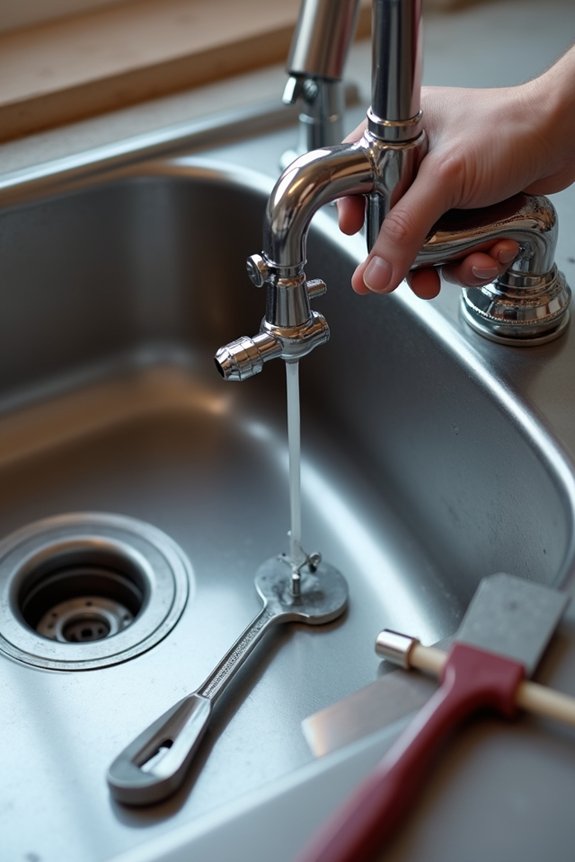
Test-Fit Your New Sink
Before you permanently install your new sink, test-fit it first. This step saves you time and money by catching problems early.
Test-fit your sink before permanent installation to catch problems early and save time and money.
1. Lower the Sink
Carefully lower your new sink into the cutout. Check that it sits level and aligns properly around the entire rim.
2. Verify Connections
Confirm your water supply lines and drainage openings match up with plumbing underneath. Make sure hoses reach without kinking and have adequate clearance for disposal or filtration components.
3. Mark Issues
Note any high spots or misalignments before removing the sink. Mark problem areas with tape or marker.
4. Clean the Cutout
Remove your sink and inspect cutout edges carefully. Scrape away old sealant so your new sink seals properly during final installation.
Apply Plumber’s Putty and Position the Sink
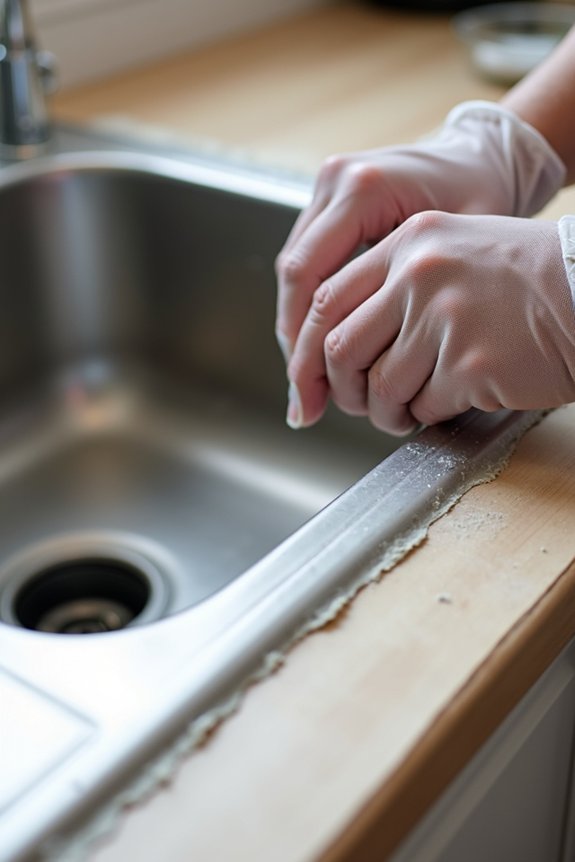
Now that you’ve confirmed everything fits, it’s time to seal and secure your sink.
1. Apply Putty
Apply plumber’s putty around the sink’s edge or under the drain flange. This creates a watertight seal that prevents leaks.
2. Position Your Sink
Follow these steps to position the sink properly:
- Lower the sink carefully into the countertop cutout
- Check that drain openings align with existing plumbing
- Press down firmly to seal the putty
- Wipe away excess putty as it squeezes out
- Verify the sink sits level and secure
3. Secure with Clips
Use clips or brackets underneath the sink. Tighten them evenly in a cross pattern to hold everything firmly in place. This prevents shifting and creates a lasting installation.
Secure With Mounting Clips
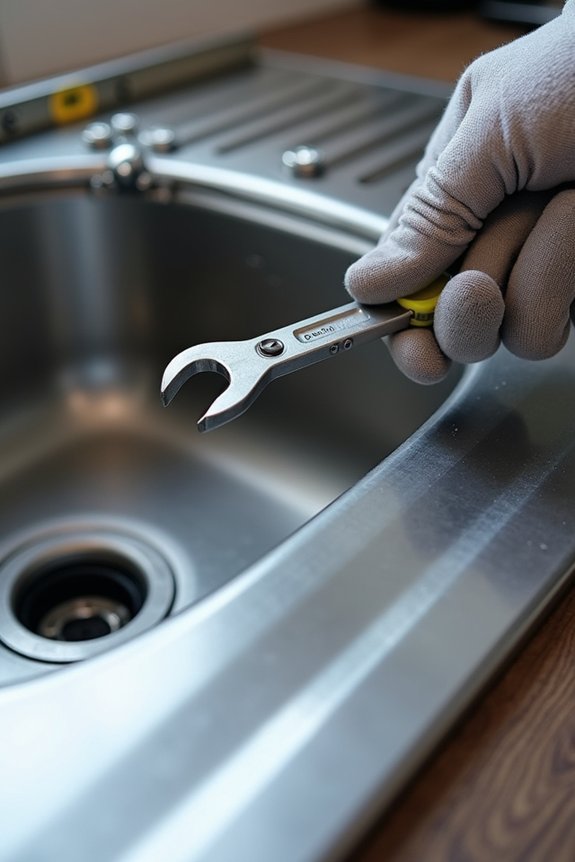
1. Positioning Clips Correctly
Attach the mounting clips to the brackets on your sink’s underside, making sure they’re snug but not cross-threaded. Proper positioning allows each clip to pull evenly without forcing the sink out of alignment.
2. Tightening In Cross Pattern
Tighten your clips in a cross pattern by alternating sides, similar to how you would tighten a car wheel. This method distributes pressure evenly and prevents the sink from tilting or warping as you secure it.
3. Ensuring Even Secure Fit
Recheck that your sink stays level after final tightening and before sealing. A secure, level fit prevents leaks, reduces the risk of water damage repairs, and extends the life of your sink.
Positioning Clips Correctly
Once your sink is positioned correctly in the countertop opening, you’ll secure it using mounting clips. This section walks you through proper positioning for a solid installation.
1. Locate Your Brackets
Find the mounting brackets underneath your countertop. These serve as your anchor points.
2. Position Your Sink Clips
- Attach sink clips to brackets directly beneath the countertop
- Use only the provided mounting clips from your sink kit
- Make sure each clip engages its bracket securely
- Space clips evenly around the sink perimeter
- Keep clips accessible for tightening
3. Prepare for Installation
Position each clip carefully before final tightening. This prevents problems later and avoids costly repairs. Proper positioning creates a level, watertight seal that protects your countertop investment for years to come.
Tightening In Cross Pattern
Tightening In Cross Pattern
With your clips positioned and ready, you’re set to secure your sink firmly in place. This guide shows you how to tighten mounting clips in a cross pattern for the best results.
1. Start Opposite Corners
Begin at clips positioned diagonally across from each other. This approach prevents tilting and keeps everything aligned properly as you work around the perimeter.
2. Tighten Gradually
Use a screwdriver or nut driver to snug each clip. Make multiple passes, tightening a little more each round rather than fully tightening one clip at a time.
3. Check Your Work
After each pass, look for gaps between the sink rim and counter. There shouldn’t be any wiggle or movement.
4. Avoid Overtightening
Stop when edges feel flush. Too much tension cracks sinks and warps countertops, costing you money and resources.
Ensuring Even Secure Fit
Ensuring Even Secure Fit
The mounting clips you’ve positioned are your sink’s anchor to the countertop. Follow these steps to achieve a secure fit that will last for years.
1. Level Check First
- Use a spirit level across the sink’s top edge
- Verify the sink sits completely flat
- Adjust positioning if needed before tightening
2. Gradual Tightening Process
- Tighten each clip slightly in rotation
- Work in a cross pattern systematically
- Avoid over-tightening any single clip
3. Final Verification
- Check that the sink’s edge sits flush with the countertop
- Maintain a uniform gap for sealant application
- Look for corner gaps that indicate tilting
Taking time with this process prevents leaks and water damage. A properly secured sink protects your investment and keeps your kitchen functioning as intended for years to come.
Seal Edges With Silicone Sealant
How do you keep water from seeping under your new sink and damaging your cabinets below? The answer is silicone sealant. I’ll apply it liberally around the edge of the sink to create a watertight barrier.
First, I use painter’s tape to mark the sink’s perimeter. This guides my silicone application for a clean, even bead. Next, I carefully apply the sealant around the entire edge of the sink after lowering it into place. I wipe away excess silicone promptly so it doesn’t cure visibly.
At drain openings, I combine silicone with plumber’s putty for enhanced sealing. Finally, I allow everything to cure completely per manufacturer instructions before reconnecting plumbing. This prevents costly water damage and extends your sink’s lifespan.
Reconnect Water Lines and Drains
Now that you’ve sealed the edges, you’ll reconnect the water supply lines and drain system; these final pieces will make your sink fully functional. This section walks you through securing these connections properly so you avoid water waste and prevent costly leaks. You’ll address supply lines, drain connections, and leak testing in this critical step.
Reconnecting Supply Lines Properly
Getting your water lines and drains reconnected properly is essential; it’s where most leaks happen if you’re not careful.
1. Hand-Tighten First
Start by reconnecting both hot water and cold water supply lines by hand. Don’t use your wrench yet. Hand-tight connections let you position everything correctly without forcing anything.
2. Secure with Your Wrench
Once hand-tight, use your wrench for final tightening. This prevents leaks that waste water and money over time.
3. Check Your Work
Here’s what you’ll need to verify:
- Both supply lines are seated firmly
- Hot water line connects to the correct valve
- Cold water line is in the right position
- No visible gaps exist at connection points
- Connections feel snug but not over-tightened
4. Turn Water On Gradually
Open your water supply slowly. This reduces pressure on new connections.
5. Inspect for Leaks
Watch all joints carefully for drips immediately and after running water for several minutes.
Securing Drain Connections Safely
Securing Drain Connections Safely
While your supply lines are now secured, the drain connections demand equal attention.
1. Install the Drain Gasket
Use a new rubber gasket or plumber’s putty under the drain. This creates a watertight seal that prevents leaks and water damage underneath your sink.
2. Tighten the Slip-Joint Nut
Attach the slip-joint nut securely. Hand-tighten first, then use a wrench for a snug fit. Avoid overtightening, as this will crack the fitting.
3. Reattach the Disposal
If you’re installing a disposal, connect it using manufacturer specifications. Proper alignment ensures smooth operation and prevents leaks.
4. Check for Leaks
Run water for several minutes and inspect all drain connections carefully. Watch for drips or moisture. Catching leaks early saves money and protects your cabinets from water damage.
Testing For Leaks Thoroughly
Before you celebrate your new sink installation, you’ll want to verify that all your connections are watertight.
1. Pressurize Your System
Slowly turn on the water supply and observe for at least one minute. Watch carefully for any unexpected drips or moisture.
2. Inspect All Connections
Check these areas thoroughly:
- Supply line connections under the sink
- Drain and disposal flange joints
- Silicone sealant edges
- Plumber’s putty areas
- All clamp locations
3. Test Water Flow
Run hot and cold water separately, then together. Different pressures and temperatures reveal leaks you might otherwise miss.
4. Address Leaks Promptly
If you detect dripping, shut off water immediately. Disassemble the connection and reseal it with fresh plumber’s putty or silicone, then retest. Repeat this process until no leaks appear. Fixing problems now saves water and money later.
Test for Leaks and Verify Everything Works
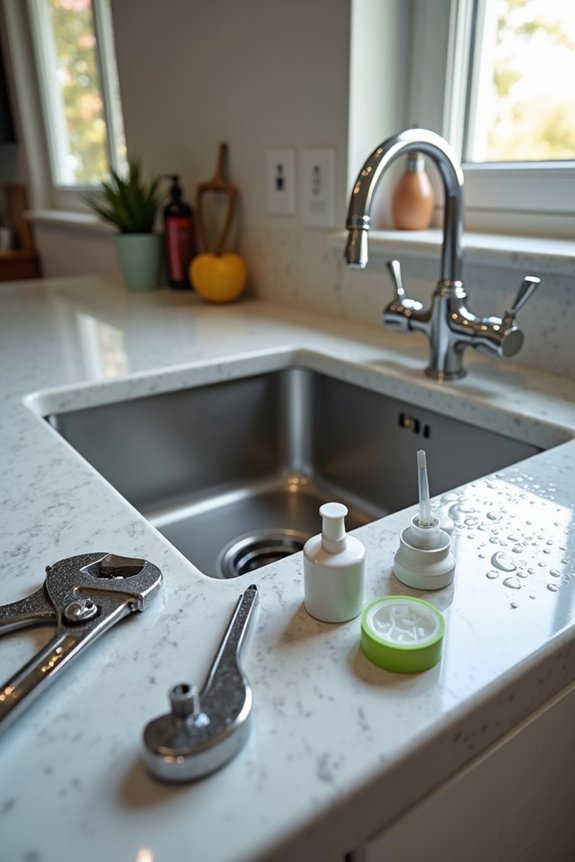
1. Turn Water Back On
Gradually turn the water supply back on. Let water flow for several minutes through both hot and cold lines.
2. Check for Leaks
Inspect all supply lines and drain connections carefully. Look for dripping or moisture at joints and seals. Any visible leaks require tightening connections or reapplying sealant.
3. Test the Drain
Run water continuously into the sink. Watch underneath with cabinet doors closed for hidden drips or moisture buildup.
4. Verify Disposal
If installed, listen for unusual noise and confirm no leaks occur during operation.