

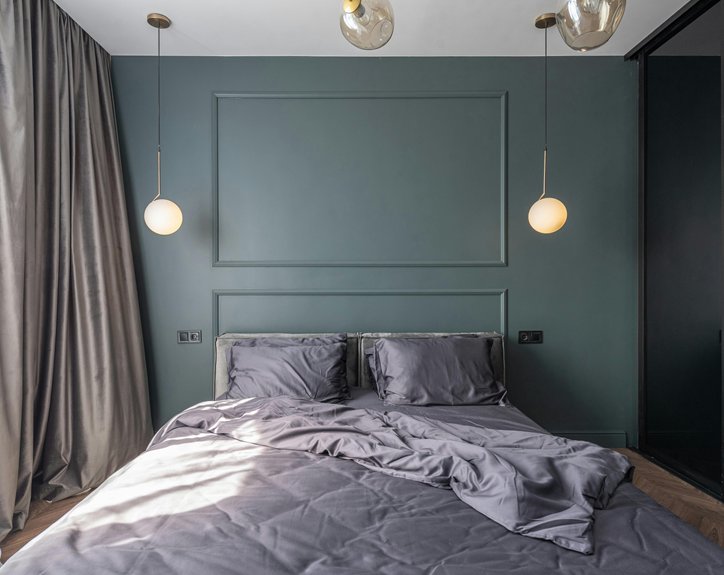
I’ve tested ten design tricks that work in cramped bedrooms. Paint everything one color to eliminate visual breaks. Hang mirrors opposite windows to bounce light everywhere. Choose furniture with exposed legs to reveal floor space. Build vertical storage that draws eyes upward. Replace bulky bedside tables with wall sconces. Keep window treatments minimal and lightweight. Use multi-functional furniture for hidden storage. Mix overhead and wall lighting strategically. Declutter surfaces first; it makes everything else work better. These budget-conscious changes create noticeable spaciousness without renovation costs or environmental waste.
Paint Your Entire Room in One Colour to Make It Look Bigger
Paint Your Entire Room in One Colour to Make It Look Bigger
Ever wonder why some small bedrooms feel spacious while others feel cramped? A simple solution exists: paint your entire room in one color.
1. How It Works
When walls and ceilings receive the same light shade, the space feels larger. This uniform color creates fewer visual breaks, so your eyes don’t stop at sharp edges between walls and ceiling.
2. Choosing Your Color
Soft whites, pale greys, or pastels work well. Light-toned colors reflect more light around the room, which naturally expands the perceived space.
3. The Cohesive Effect
One color wraps your bedroom in a unified feel. Without color contrast, boundaries seem to disappear, making the room feel more open and welcoming for rest.
Hang Mirrors Strategically to Reflect Light and Expand Space
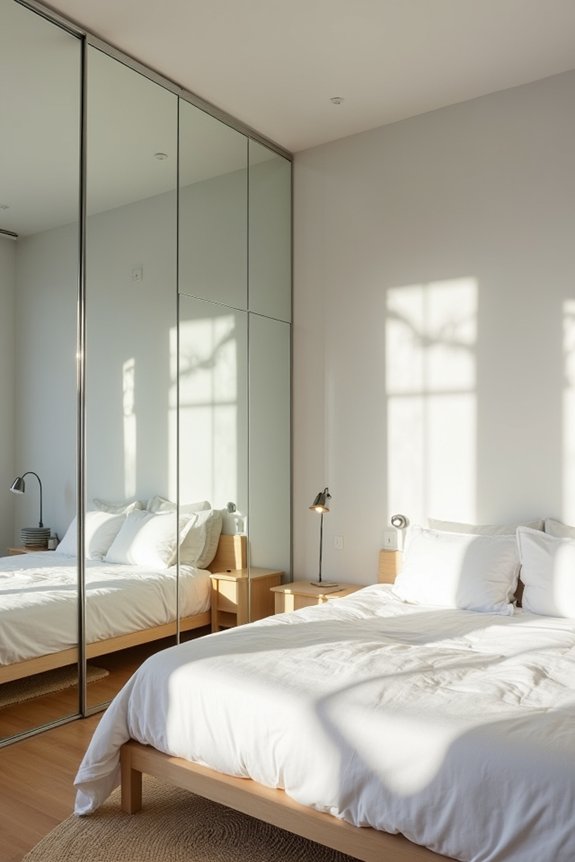
While paint creates a unified backdrop, mirrors do something equally powerful; they multiply light and visually expand your bedroom.
Mirrors multiply light and visually expand your bedroom, creating equally powerful effects as paint’s unified backdrop.
1. Position Mirrors Opposite Windows
Place mirrors across from windows to bounce natural light throughout your space. This strategy brightens dark corners without requiring additional lighting, saving energy and money.
2. Use Tall Mirrored Surfaces
Install floor-to-ceiling mirrored wardrobe doors or tall mirrors to draw your eye upward. This technique extends your bedroom’s perceived height, making compact rooms feel airier.
3. Add Reflective Furniture
Incorporate mirrored nightstands or chests to reflect light across surfaces. These pieces multiply space perception while serving practical storage purposes, maximizing functionality in tight areas.
4. Hang Mirrors Strategically
Position large mirrors above your bed to bounce light without cluttering surfaces. Smart placement improves how your bedroom feels and functions daily.
Choose Furniture With Legs to Make Your Bedroom Feel Larger
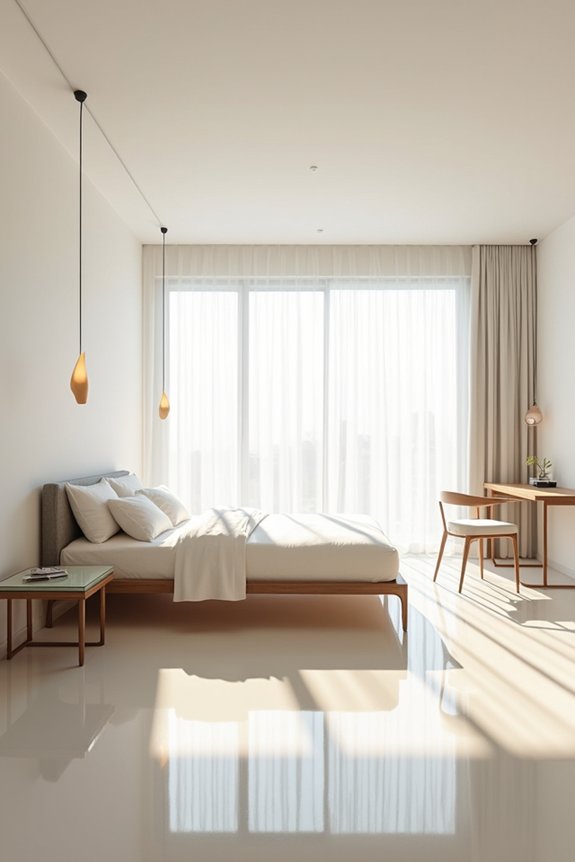
When you choose bedroom furniture with exposed legs, you’re creating visible floor space that makes your room feel bigger and less crowded. An elevated bed frame, for example, lets you see the floor underneath, which tricks your eye into thinking the bedroom is more open and airy. This simple choice also saves money over time since you’ll buy less furniture to fill the space and reduce unnecessary clutter.
Reveal Floor Space Underneath
Why does furniture that sits on legs feel so different from heavy, solid pieces? When you choose furniture with legs, you’re revealing floor space underneath. This under-furniture visibility makes your bedroom feel airier and more open.
1. Creating Visual Flow
Legged beds, dressers, and nightstands keep your floor visible. This creates continuous sightlines that make rooms feel larger than they actually are.
2. Improving Your Space
Wall-mounted bedside tables paired with elevated beds maximize floor exposure. Slim, leggy dressers replace bulky solid-block pieces. Open legs and setback drawers enhance airflow throughout your room.
3. Long-Term Benefits
Furniture with clearance below is easier to clean underneath. You’ll spend less time maintaining your space while enjoying an airy, spacious bedroom that welcomes you home.
Select Elevated Bed Frames
Your bed’s frame style significantly impacts how spacious your bedroom feels. I recommend choosing elevated bed frames with visible legs rather than solid bases that sit directly on the floor.
1. Create Visual Space
Elevated bed frames reveal floor space underneath, which tricks your eye into perceiving a larger room. This open area allows light to flow freely, enhancing the sense of airiness throughout your bedroom.
2. Maximize Under-Bed Storage
Legged frames offer practical benefits too. You can place under-bed storage baskets beneath your elevated bed, keeping belongings organized while maintaining that clean, airy floor line. This approach saves money by reducing your need for additional furniture.
3. Choose Slim Designs
Select sleek bed frames over bulky, heavy headboards. Slim designs minimize visual mass, contributing to your bedroom’s open feel while maintaining functionality and style.
Build Vertical Storage to Make Small Bedrooms Feel Taller
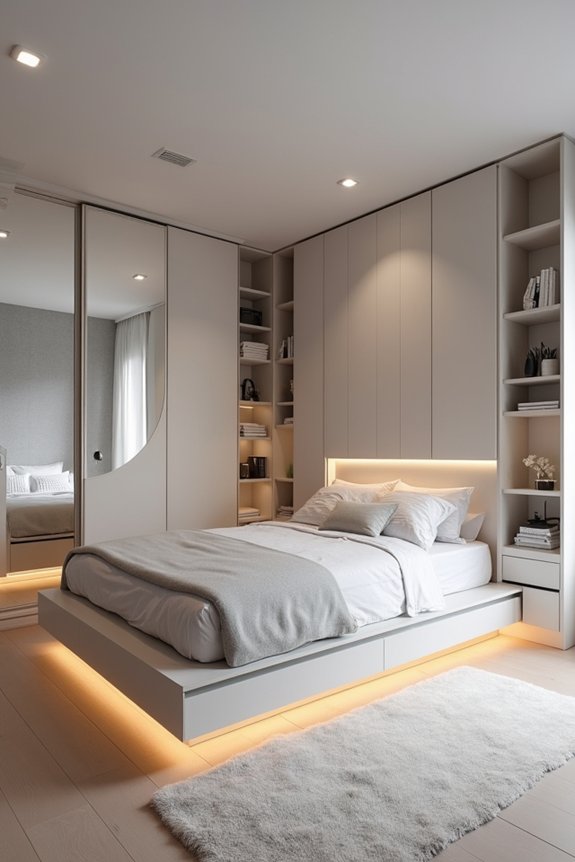
How can you make a cramped bedroom feel spacious? Building vertical storage is your answer. I’ve found that utilizing ceiling-height spaces has a significant impact on small rooms.
1. Install Floor-to-Ceiling Shelves
Floor-to-ceiling shelves maximize every inch. They draw your eye upward, creating the illusion of height. You’ll free valuable floor space while storing books, décor, and personal items efficiently.
2. Choose Tall Furniture
Select tall wardrobes with slender profiles instead of bulky chests. These tall furniture pieces maintain open sightlines throughout your room. Your bedroom instantly feels less crowded and more open.
3. Add Wall-Mounted Storage
Install peg rails or hooks high on walls. This off-floor storage keeps surfaces clear. You’ll reduce clutter while adding visual interest, making your small bedroom feel well-organized and purposefully designed.
Replace Bulky Bedside Tables With Wall Sconces to Free Floor Space
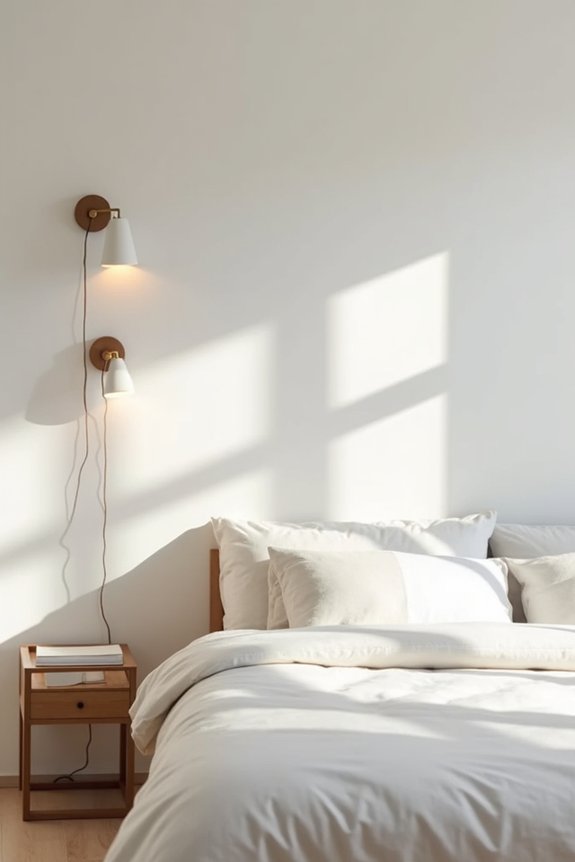
While vertical storage pulls your eye upward and maximizes wall space, there’s another smart move for small bedrooms: eliminating bulky bedside tables altogether.
1. Swap Tables for Wall Sconces
Replacing traditional bedside tables with wall sconces frees up valuable floor space and creates a cleaner look. Installing a pair of swing-arm or adjustable sconces on either side of your bed provides balanced lighting without clutter.
Wall sconces replace bulky bedside tables, freeing floor space while delivering balanced lighting and a cleaner, more spacious bedroom aesthetic.
2. Embrace Minimalism Through Smart Lighting
This minimalist approach visually widens your room. Clear surfaces support a streamlined aesthetic that feels more spacious. You’ll also save money by avoiding furniture purchases while reducing environmental waste.
3. Maximize Your Bedside Space
Wall sconces with light-directed features eliminate shadows that shrink perceived space. You gain usable bedside surface area for small items or decor instead. This lighting layout creates a functional, airy bedroom that actually works for daily living.
Anchor One Large Artwork as Your Focal Point
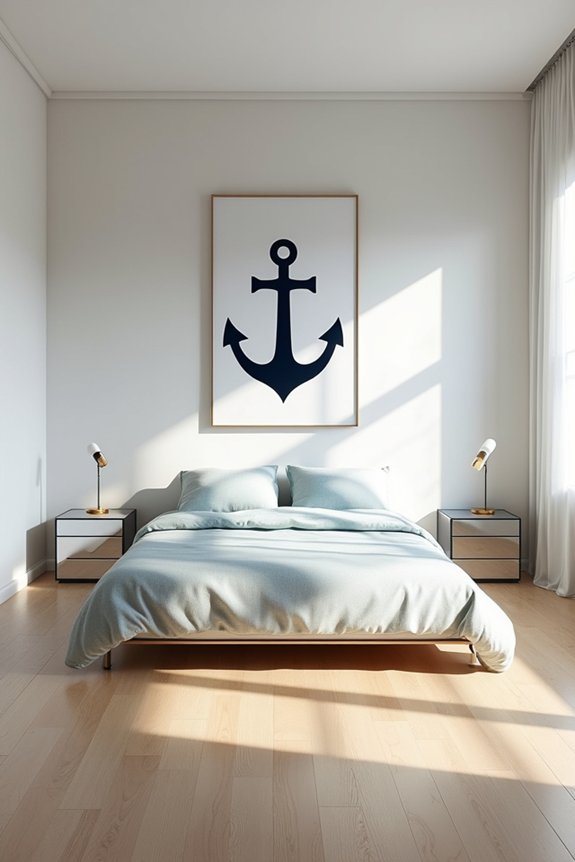
What makes a small bedroom feel intentional rather than cramped? Anchoring one large artwork as your focal point shifts the entire dynamic of the space.
1. Choose Your Statement Piece
Select one substantial artwork to hang above your bed or dresser. This single focal point draws the eye naturally, creating visual interest without cluttering walls.
2. Size and Placement Matter
Size the artwork to span roughly the furniture’s width. This creates cohesion and prevents the piece from appearing lost or overwhelming.
3. Embrace Negative Space
Surround the large artwork with ample negative space; avoid busy gallery walls. This minimalist approach emphasizes the piece’s dominance while maintaining an open, breathable feel.
4. Maximize Impact
Pair your focal point with neutral, light-colored surroundings and simple frames. This contrast makes the artwork stand out beautifully, allowing you to save money on multiple pieces while reducing visual clutter.
Keep Window Treatments Minimal to Maximize Natural Light
When you’re working with a small bedroom, your window treatment choices really matter. They can either eat up precious space or help your room feel brighter and bigger. Here are two smart approaches that’ll help you get the most natural light while keeping things streamlined.
1. Simple Shade Solutions
Inside-frame roller shades are your best option. These mount directly inside your window frame rather than on the wall, so they don’t stick out and steal space. You’ll save money on fabric, reduce visual clutter, and still have full control over light and privacy when you need it.
2. Light-Maximizing Hardware Choices
Skip heavy curtain rods and busy patterns that make the room feel cramped. Instead, choose lightweight sheer or light-colored fabrics that bounce natural light around the room, making everything feel more open. Hanging your treatments as close to the ceiling as possible also tricks the eye into seeing taller windows and a more spacious bedroom.
Simple Shade Solutions
How do you keep a small bedroom from feeling cramped around the windows? I recommend choosing simple shades mounted inside your window frame. This approach saves valuable space and keeps your room clutter-free.
1. Why Shades Work Best
Inside-mounted shades take up minimal room compared to heavy curtains. They won’t protrude into your space or create visual bulk. This simple choice lets natural light flood in freely, making your bedroom feel larger and brighter.
2. What to Avoid
Skip busy patterns and thick fabrics. Heavy window treatments block daylight and overwhelm small spaces. Avoid extra hardware and rod extensions that stick out.
3. Maximizing Light
Position your shades to let sunlight pour through during daytime hours. More natural light makes cramped rooms feel open and welcoming. Your energy bills decrease too when you rely on sunshine.
Light-Maximizing Hardware Choices
The right hardware keeps your small bedroom bright and spacious. Choosing minimal, streamlined fixtures improves how light flows through your room.
1. Hardware Selection Matters
For maximizing light, consider these options:
- Pick slim, low-profile rods that don’t protrude into your space
- Choose cordless or motorized blinds to eliminate dangling cords and clutter
- Select lightweight brackets that hold curtains without visual bulk
2. Smart Fabric Choices
Light-colored curtains and sheer blinds work well. They allow sunshine to filter through naturally while maintaining privacy. White or cream tones reflect light beautifully throughout the room.
3. Installation Tips
Mounting hardware inside your window frame keeps everything compact. This approach preserves every inch of your bedroom while creating an airy, open feeling that makes your space feel considerably larger.
Use Multi-Functional Furniture to Triple Your Storage
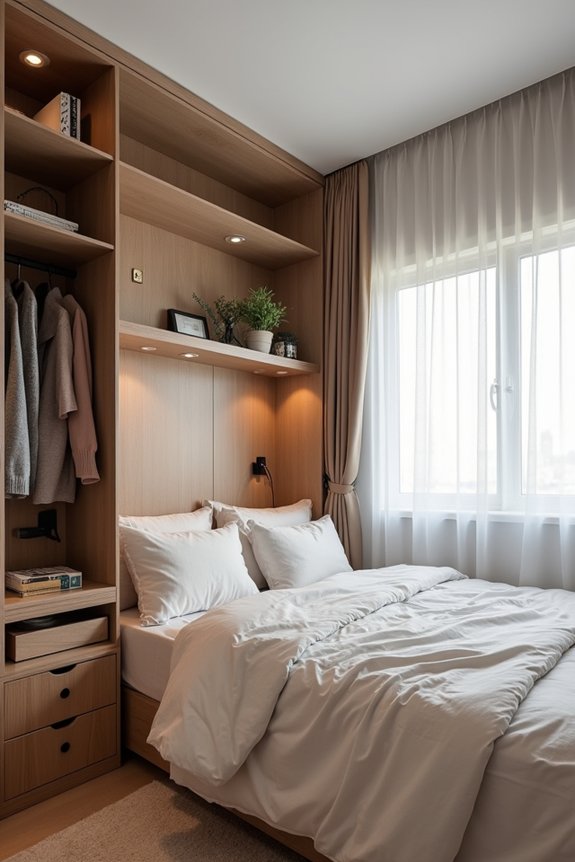
1. Multi-Functional Furniture
Furniture that serves multiple purposes is a practical solution for small bedrooms. A bed with built-in drawers stores seasonal items underneath while freeing floor space. A chest-of-drawers that doubles as a bedside table consolidates surfaces and reduces clutter. This approach maximizes space without crowding your room.
2. Smart Storage Solutions
Under-bed baskets keep items hidden and organized. A writing desk functioning as a bedside table eliminates extra furniture. These choices help you maintain a clutter-free environment while storing essentials.
3. Elevated Sleeping Options
Murphy beds and loft-style beds create daytime living area. They work well for small spaces. A storage-ottoman at your bed’s foot anchors a focal point while providing utility.
Mix Overhead and Wall Lights to Expand Visual Space
When you’re working with a small bedroom, lighting placement makes a real difference in how spacious your room actually feels.
Layering different lighting sources works well in tight spaces. Here’s my approach:
- Install wall-mounted sconces on either side of your bed to free floor space and create even, lateral light
- Add ceiling pendants or overhead lights to draw eyes upward and enhance perceived height
- Position mirrors opposite windows to reflect combined overhead and wall light, amplifying brightness and depth
This strategy works because it eliminates dark corners that make rooms feel cramped. Adjustable swing-arm sconces direct light exactly where you need it without cluttering your space. By combining overhead ambient lighting with task lighting near seating areas, you minimize shadows that shrink perception. Your bedroom will feel more open and inviting.
Declutter Surfaces First: Everything Else Depends on It
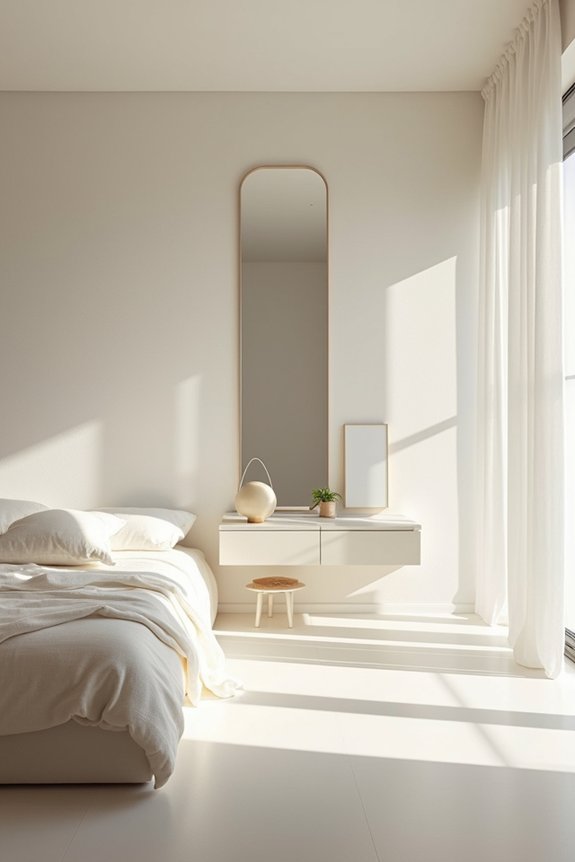
Before you rearrange furniture or install new lighting, you’ve got to clear your surfaces.
1. Start with Honest Assessment
I recommend evaluating what you actually need versus what’s just taking up space. Ask yourself: Do I use this daily? Does it bring me joy? This honesty prevents accumulating items that crowd your small bedroom.
2. Clear Surfaces for Impact
When I remove unnecessary items from dressers, nightstands, and desks, my room instantly feels larger and airier. Clearing surfaces makes cleaning easier and reduces visual compression that makes spaces feel cramped.
3. Implement Smart Organization
I hide remaining items in drawers, bins, or wall storage. This minimalist approach keeps my small bedroom feeling open while maintaining organization. Decluttering surfaces first makes every other design trick work better.