

Start by measuring your room’s length, width, and ceiling height. Position your bed against the longest wall with at least 24 inches of clearance on one side. Maintain 36 inches for main walkways and 30 inches in front of dressers. Choose multifunctional furniture like storage beds to save money and floor space. Layer mirrors and lighting to expand your room visually. Arrange pieces in sequence: bed first, then major furniture, then accessories. This prevents costly mistakes. Thoughtful placement improves your bedroom’s comfort and functionality.
Measure and Map Your Space: The Essential First Step
Measure and Map Your Space: The Essential First Step
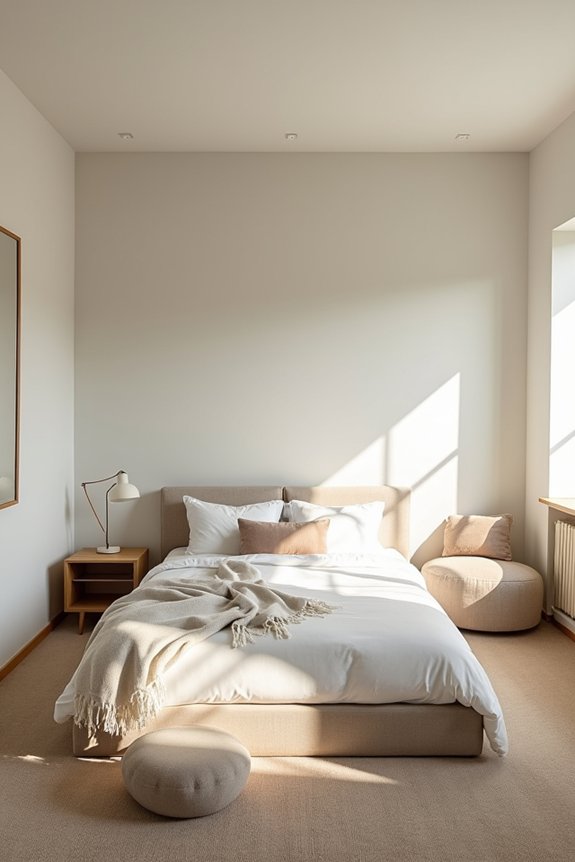
Before you move a single piece of furniture, you’ll want to measure your bedroom and map out your space. I start by noting the length, width, and ceiling height. Then I measure all windows, doors, and closets carefully.
1. Create Your Floor Plan
I sketch these room measurements onto graph paper or use an online room planner. This visual bedroom layout helps me see furniture arrangements before moving anything heavy.
2. Mark Fixed Features
I identify fixed features like closets, radiators, and built-ins. These can’t move, so I plan around them to avoid blocking important spaces.
3. Note Electrical Outlets
I locate all electrical outlets on my floor plan. This prevents lamps and chargers from being hidden behind furniture, saving energy and money while maintaining functionality.
The Bed as Your Room’s Anchor: Where and How to Place It
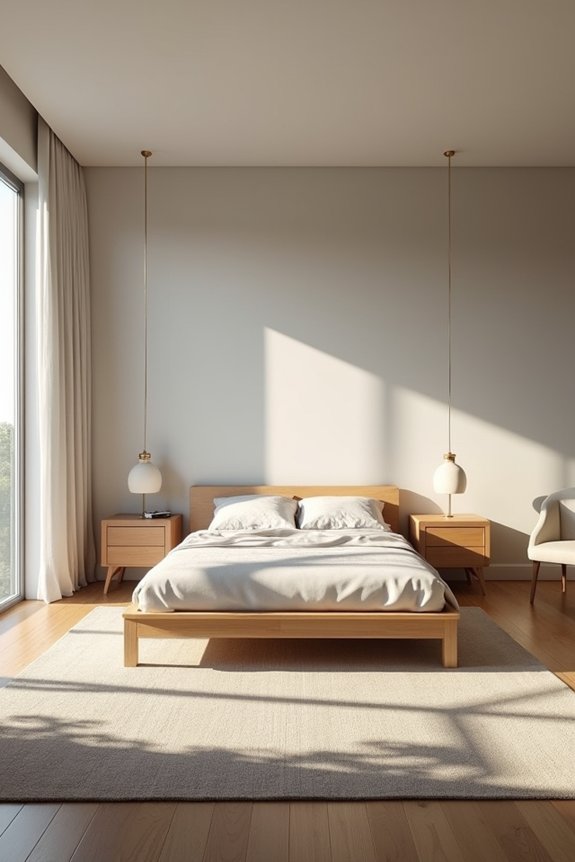
Your bed is the largest piece of furniture in your bedroom, so its placement sets the tone for everything else. Think of it as your room’s anchor: the foundation that makes everything work together.
Here’s how to approach bed placement for maximum comfort and usable space:
- Position against the longest wall to create balanced flow and open up your room
- Maintain 24 inches of clearance on at least one side for movement and airflow
- Avoid direct window placement to prevent drafts and light issues
- Choose smaller bed sizes in tight spaces to preserve valuable floor area
Strategic bed placement saves money by maximizing your room’s potential without buying extra furniture. You’ll feel more spacious and connected to your bedroom when everything flows naturally around this central anchor.
Clearance Rules That Make Your Bedroom Livable
I’ve learned that clearance, the open space around furniture, matters just as much as the furniture itself. You’ll want to follow specific measurements for walkways and furniture access so your bedroom actually functions well and feels comfortable. Let me show you the clearance rules that’ll make your room work better and feel more livable.
Essential Walkway Dimensions
Essential Walkway Dimensions
Have you ever stubbed your toe rushing to your dresser or squeezed past furniture to reach your closet? Thoughtful furniture spacing prevents these frustrations. Well-planned walkways create a bedroom that functions properly and feels comfortable.
1. Main Circulation Paths Need 36 Inches
Your primary circulation path, the main walkway through your bedroom, requires 36 inches of clearance. This width lets you move freely without brushing against furniture.
2. Bed Clearance Matters
Maintain at least 24 inches around your bed’s accessible side for comfortable movement and bed-making. This spacing prevents that trapped feeling and makes daily tasks easier.
3. Dresser and Vanity Access
Reserve 30 inches of open space in front of dressers and vanities. This furniture spacing ensures easy access and eliminates awkward reaching or bending.
4. Doors and Windows Stay Unblocked
Plan your arrangement so doors and windows open freely without obstruction. Keeping these areas clear protects your circulation path and prevents daily frustrations.
Furniture Access Requirements
Beyond walkway dimensions lies another critical consideration: how much space you’ll actually need around each individual piece of furniture.
1. Dresser Access
Maintain at least 36 inches of clearance in front of your dresser. This distance lets you open drawers fully without obstruction. You’ll appreciate this spacing when you’re getting ready for the day.
2. Desk or Vanity Clearance
Reserve 30 inches of front clearance for your desk or vanity. This provides comfortable seating and allows you to work or apply makeup without feeling cramped.
3. Bed Positioning
Plan for a minimum 24 inches of clearance around the bed on at least one side. This measurement supports movement and makes bed-making manageable.
Bedroom furniture placement with adequate clearance space creates a functional, livable room where everything serves you well.
Size-Specific Strategies: Small, Medium, and Large Bedrooms
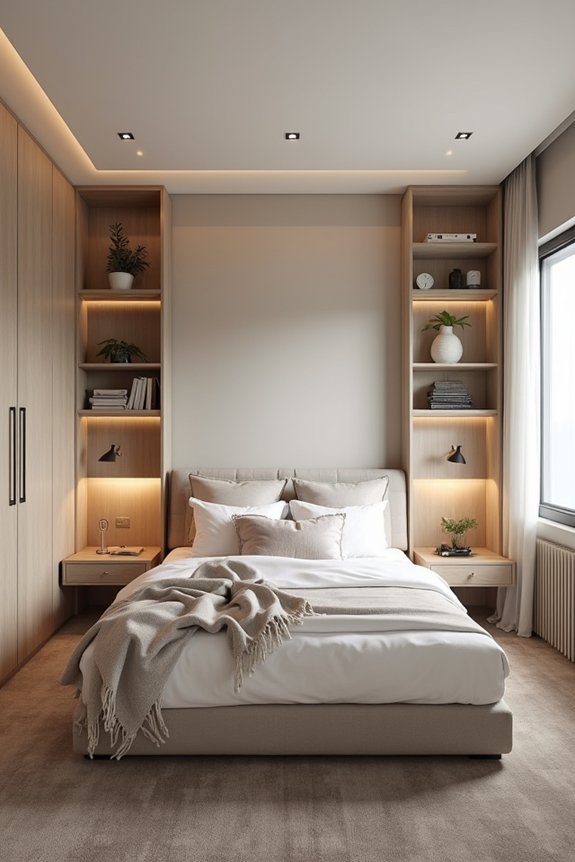
I’ll adjust my furniture arrangement based on my bedroom’s size because each space needs different strategies. Small rooms require multifunctional pieces and vertical storage solutions, while medium and large bedrooms allow me to create separate zones for sleeping, relaxing, and working. By tailoring my approach to my specific space, I’ll maximize both comfort and efficiency in every square foot.
Maximizing Compact Space
When should you rethink your bedroom layout? I’d suggest reconsidering it whenever you feel cramped or struggle to move freely. Small bedrooms need smart planning to feel comfortable and functional.
What works best:
- Choose multifunctional furniture like storage beds that hide items underneath
- Install vertical storage with tall, narrow chests instead of wide pieces
- Position mirrors strategically to reflect light and expand the visual space
- Place your bed against the longest wall with at least 24 inches of clearance
This space-saving approach maximizes your room’s potential. Multifunctional furniture reduces clutter while saving money and resources. Strategic mirror placement brightens everything naturally. Vertical storage keeps your floor open for movement and breathing room. These changes turn cramped spaces into comfortable retreats where you’ll actually want to spend time.
Creating Multiple Functional Zones
Now that you’ve maximized your available space, you’re ready to organize your bedroom into distinct zones.
1. Define Your Zones with Area Rugs
Area rugs anchor different sections, creating natural boundaries without walls. Place one under your bed and another beneath a seating group to establish separate areas for sleeping and relaxing.
2. Use Multifunctional Furniture
Storage beds and dressers serve double duty, saving money and resources. They provide essential storage while keeping your walk-around space open and accessible.
3. Add Mirrors Strategically
Mirrors reflect light and expand your room visually. Position one opposite a window to brighten your bedroom zones naturally.
4. Create a Seating Group
Include a comfortable chair or small bench in your relaxation zone. This encourages you to use your bedroom as a true retreat space.
Dresser Placement and Visual Balance Across Your Layout
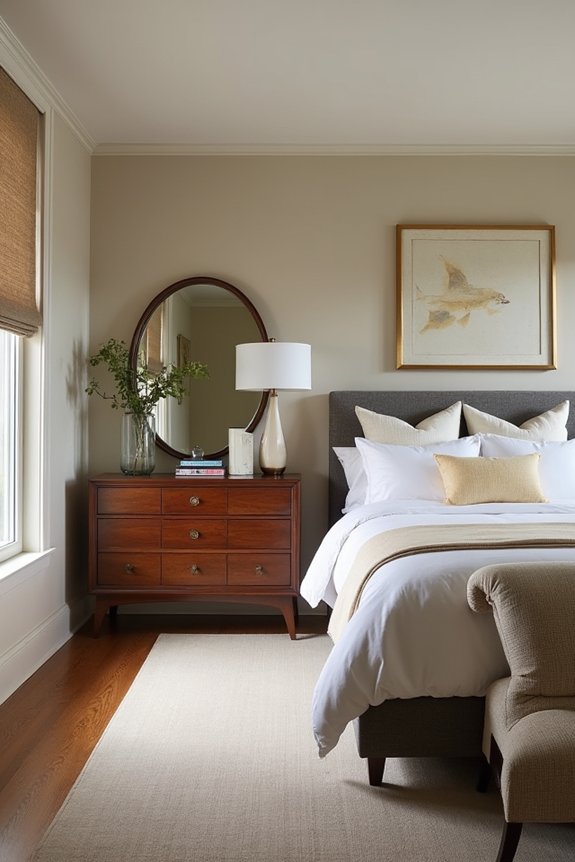
Where should your dresser go? Strategic dresser placement creates room symmetry while optimizing your space. Consider these key positioning strategies:
- Opposite the bed on your longest wall for balanced visual weight
- 36 inches clearance in front for full drawer access and comfortable movement
- Along the longest unoccupied wall when space is tight, maintaining traffic flow
- Near closets or between doors only if it doesn’t block pathways
Varied dresser heights with cohesive materials, such as white finishes with brass hardware, create architectural rhythm throughout your bedroom. This approach maximizes space optimization while keeping your room feeling open and inviting.
A second smaller dresser works well between doors, provided it maintains clear paths. This intentional wall layout prevents overcrowding and ensures everyone in your home moves comfortably through the space.
Define Sleep, Relaxation, and Work Zones
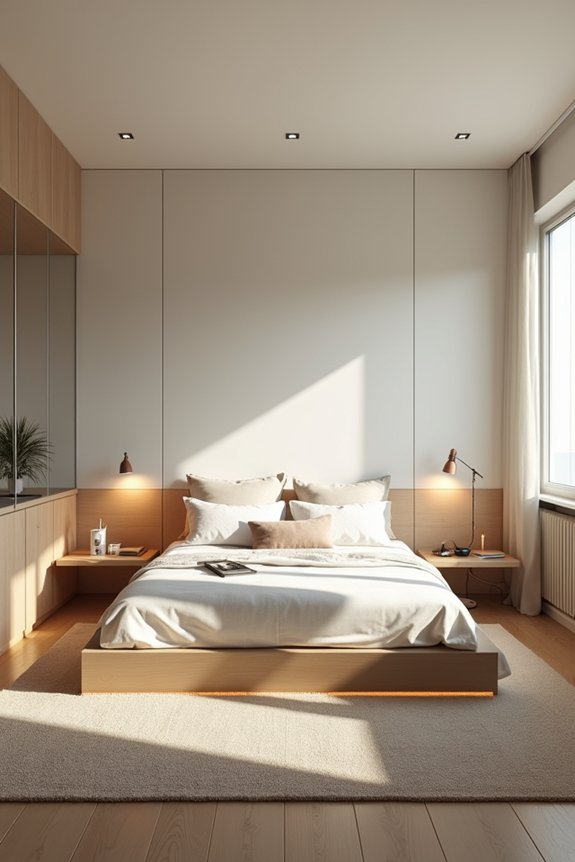
How to Fit Everything Into One Bedroom Without Feeling Cramped
Creating distinct zones is the key to making a single bedroom work efficiently.
1. Define Your Sleep Zone
Place your bed on the longest wall with 24 inches of clearance for sheet changes. This dedicated sleep area serves as your personal retreat, separate from other activities.
2. Create a Relaxation Zone
Use an area rug and a single accent chair to separate your relaxation space from sleeping quarters. This visual boundary makes the room feel organized and purposeful.
3. Establish a Work Zone
Position your desk in a quieter corner near natural light. This dedicated workspace keeps distractions minimal and allows you to focus on tasks.
4. Maximize with Smart Furniture
Choose multifunctional pieces like storage beds and slim dressers. Vertical storage keeps your floor open while maintaining functionality and reducing clutter.
Multifunctional Furniture: Maximize Your Layout Without Sacrifice
Smart furniture choices can reshape your bedroom without consuming floor space. Storage beds and dual-purpose pieces like storage benches provide hidden spots for blankets, pillows, and seasonal items while keeping your room open and airy. You get two pieces of furniture in one, which saves money and reduces clutter. Both your wallet and your space benefit from this approach.
Storage Beds Save Space
Storage beds maximize bedroom functionality by utilizing existing furniture footprint rather than adding bulky pieces. They keep items concealed while maintaining a clean, uncluttered aesthetic.
Why storage beds work effectively:
- Under-bed storage holds linens, seasonal clothing, and extra blankets, freeing valuable floor space
- Drawers or lift-up designs keep belongings out of sight, preserving visual clarity throughout the room
- Space optimization happens naturally through multifunctional furniture that serves dual purposes
- Bed-making ease improves when storage mechanisms operate smoothly for daily use
Pair your storage bed with vertical storage solutions like tall chests or shelves. This approach optimizes bedroom layout by directing visual attention upward and keeping surfaces clear.
When selecting a storage bed, verify that drawers glide smoothly and platforms lift without resistance. Quality mechanisms support long-term durability and consistent daily functionality. Investing in multifunctional furniture reduces both expenses and environmental impact compared to purchasing separate pieces.
Dual-Purpose Furniture Solutions
Why settle for furniture that does only one job when you can choose pieces that work harder for your space?
Multifunctional furniture makes a real difference in cramped bedrooms, turning them into organized sanctuaries. Storage beds conceal linens and seasonal clothing beneath the mattress. Floating nightstands provide surface space without consuming floor area. A storage bench at the foot of your bed offers seating plus hidden compartments for blankets or pillows.
Low-profile dressers maintain open sightlines while keeping clothes accessible. Modular furniture adapts to awkward corners, maximizing square footage efficiently. These solutions reduce clutter, lower furniture costs, and minimize waste by eliminating single-purpose items.
| Furniture Type | Primary Function | Storage Benefit |
|---|---|---|
| Storage Beds | Sleeping | Conceals linens |
| Floating Nightstands | Bedside surface | Frees floor space |
| Storage Benches | Seating | Hidden compartments |
| Low-Profile Dressers | Clothing storage | Preserves sightlines |
Mirrors and Lighting: Expand Your Space Visually
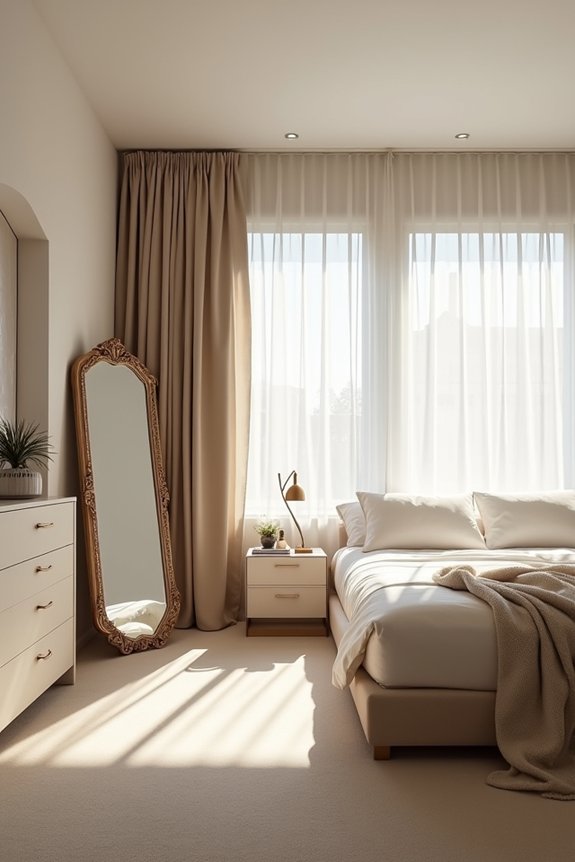
How can you make your bedroom feel larger without knocking down walls? Strategic mirrors and thoughtful lighting work together to make cramped spaces feel more open and welcoming. Here’s how to maximize your bedroom’s potential.
- Position a large mirror opposite your window to reflect natural light and double perceived depth
- Choose tall, slim mirrors over bulky ones to keep floor space open and uncluttered
- Layer your lighting with ceiling fixtures, bedside lamps, and wall sconces for balanced ambience
- Use matching nightstands with tall lamps for symmetrical, focused illumination
Hanging sheer curtains maintains light diffusion while brightening your space. These reflections and layered lighting eliminate shadows, creating a bedroom that feels noticeably spacious. You’ll enjoy better ambience while reducing energy costs through natural light maximization.
Furniture Placement Order: Why Sequence Matters
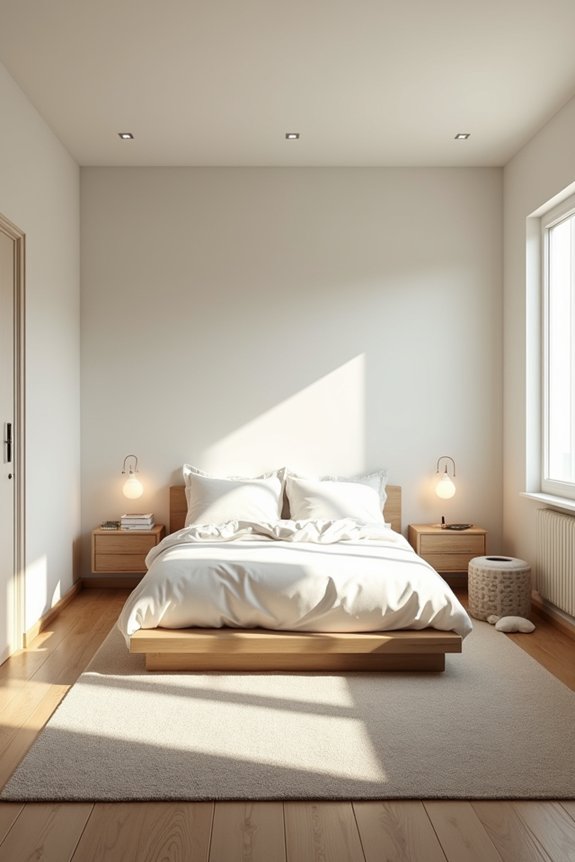
When you’re arranging bedroom furniture, the order you place each piece makes a real difference. Starting with your bed on the longest wall creates a foundation for everything else. Next, position larger items like dressers to establish visual balance throughout the room. This space planning approach prevents costly mistakes and rearranging.
Once your bed and major pieces are set, measure movement clearance carefully. At least 24 inches on one side ensures comfortable bed-making and walking. Use symmetry by placing matching nightstands on either side, which creates a calming atmosphere that helps you feel grounded.
Finally, layer smaller accessories like lamps and chairs last. This sequence protects pathways, maintains functionality, and makes cleaning easier. Thoughtful furniture placement saves money, space, and stress.
Finalizing Your Layout: Last Checks Before You Move Furniture
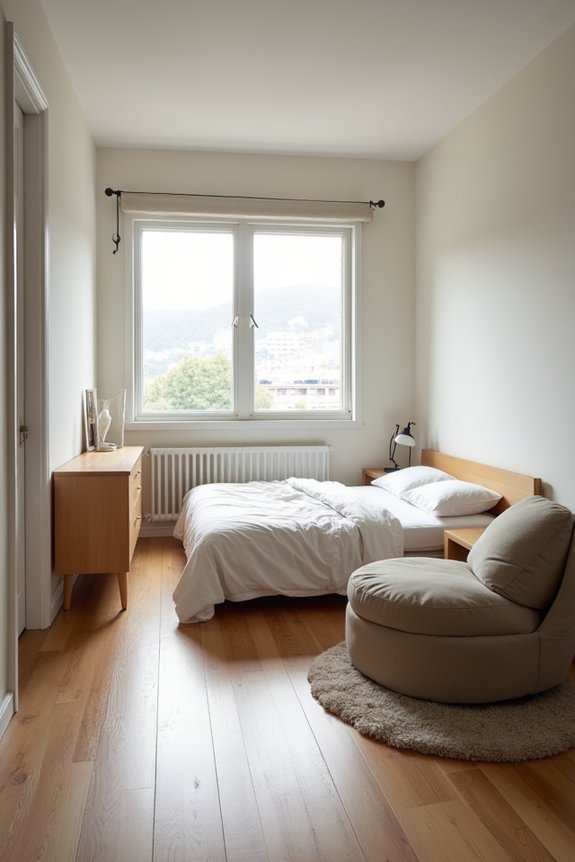
Finalizing Your Layout: Last Checks Before You Move Furniture
Before you start moving heavy furniture around, verify all your measurements and test your layout on paper first.
Final Layout Verification
Complete these checks before moving anything:
- Confirm bed placement on the longest wall and verify 24 inches of clearance around it
- Check walkway measurements to ensure 36 inches of space for comfortable movement through your room
- Review your floor plan for symmetry and logical flow between furniture pieces
- Assess multifunctional furniture positioning to confirm storage beds and floating nightstands fit properly
This approach saves you time, effort, and money by preventing costly mistakes. Your floor plan becomes your blueprint for success. Testing layouts on paper before moving heavy pieces protects your floors and your back. You’ll feel confident knowing your bed as anchor and supporting furniture create accessible, comfortable spacing throughout your bedroom.