

1) Level Your Cabinets Start by leveling cabinets within 1/4 inch using shims, then clear your workspace completely.
2) Dry Fit Sections Lay countertop pieces on cabinets to test alignment before making cuts.
3) Cut and Secure Use a track saw with painter’s tape to minimize chipping, then install screws every 12-16 inches.
4) Seal Seams Apply 100% silicone caulk to prevent water damage and mold.
5) Choose Your Material Laminate suits DIY installation; stone requires professionals.
Following these steps saves money while delivering professional results. Detailed guidance follows.
Prepare Your Kitchen: Level Cabinets and Clear the Space
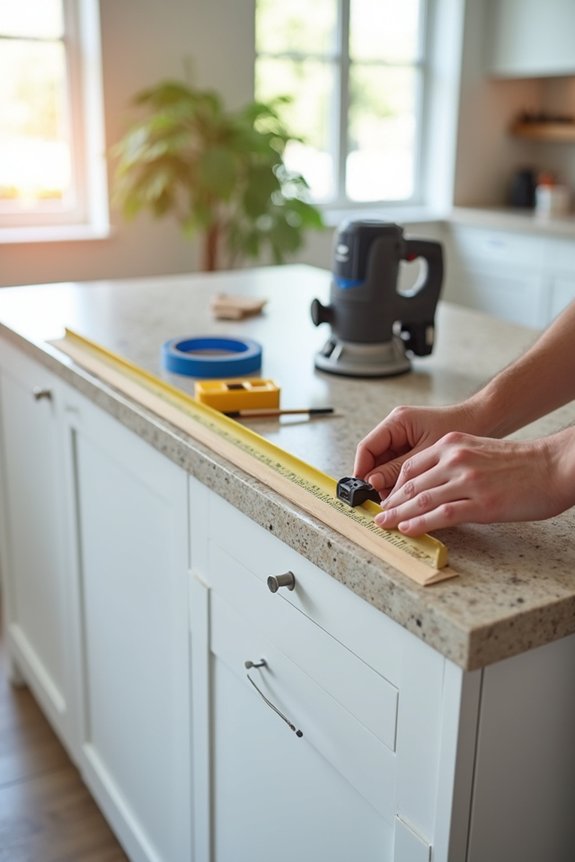
Before you install new countertops, you’ll need to prepare your kitchen properly.
1. Level Your Cabinets
I always start by checking if my cabinets are level within 1/4 inch. This tolerance matters because heavy countertops need solid, even support. If they’re uneven, I unscrew cabinets and insert shims; thin wedges create a flat surface and prevent costly mistakes during fabrication.
2. Clear Your Workspace
Next, I remove everything from countertops, drawers, and cabinets. This gives installers room to work safely and reduces hazards.
3. Ensure Access Routes
I keep driveways, hallways, and doorways clear for moving large slabs. Clear pathways prevent damage and speed up the installation process.
4. Create a Safe Work Environment
Finally, I restrict other trades and secure pets and children. A focused workspace prevents accidents and protects your family.
Dry Fit and Mark Your Countertop Sections for Precision Cuts
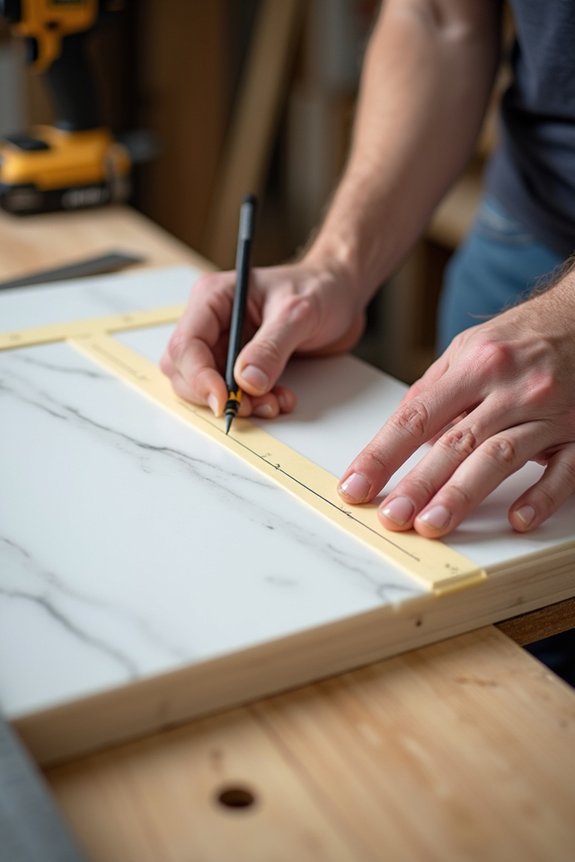
Now comes the important step: I lay out my countertop sections directly on the cabinets to test how they’ll fit before making any permanent cuts. This dry fit process prevents costly mistakes and wasted material.
Laying out countertop sections directly on cabinets prevents costly mistakes and wasted material before making permanent cuts.
1. Position and Align
I arrange sections with manufactured edges meeting perfectly. I check where base cabinets connect, ensuring seams line up properly.
2. Check for Wall Irregularities
I inspect walls and corners carefully. Most aren’t perfectly straight. I scribe the back edge to match wall contours, capturing these imperfections on my countertop.
3. Mark Precise Cut Lines
Small angle deviations (even 1–2 degrees) affect seam fit and appearance. I mark final cut lines accounting for wall irregularities and planned adjustments. This scribing technique guides accurate cuts, saves material, and produces a professional finish.
Cut, Fit, and Secure Countertops Using Proper Techniques
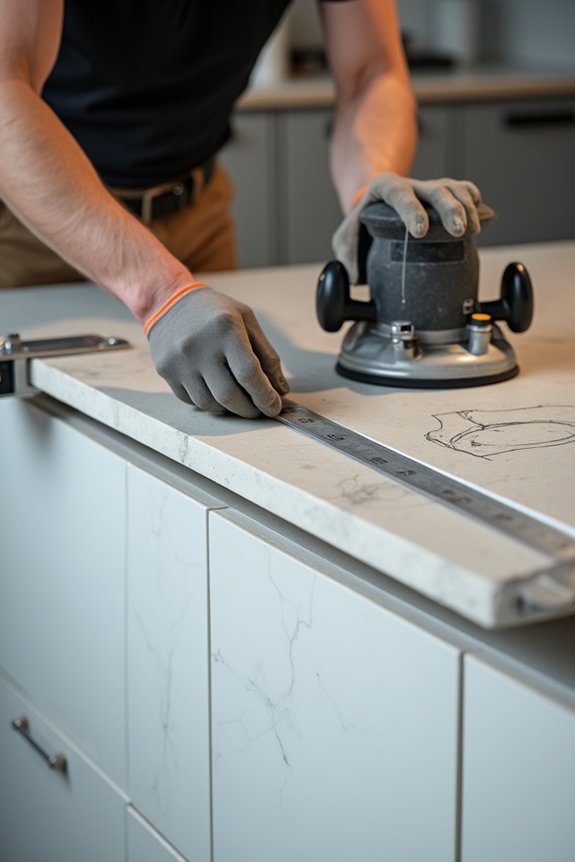
How do you convert your marked countertop sections into perfectly fitted pieces? Follow these steps for reliable results.
1. Make Your Countertop Cuts
Use a track saw or circular saw with a fine-tooth blade to achieve clean cuts. Apply painter’s tape along your cut line to minimize chipping and reduce material waste.
2. Perfect Your Fit
Recheck your dry fit in position and rescribe the back edge to match wall contours precisely. This step accounts for wall irregularities and prevents gaps during installation.
3. Secure Everything
Install under-counter screws every 12 to 16 inches using washers for proper load distribution. Seal all joints with 100% silicone to create a durable, water-resistant barrier that protects your investment.
Caulk and Seal Seams to Prevent Water Damage
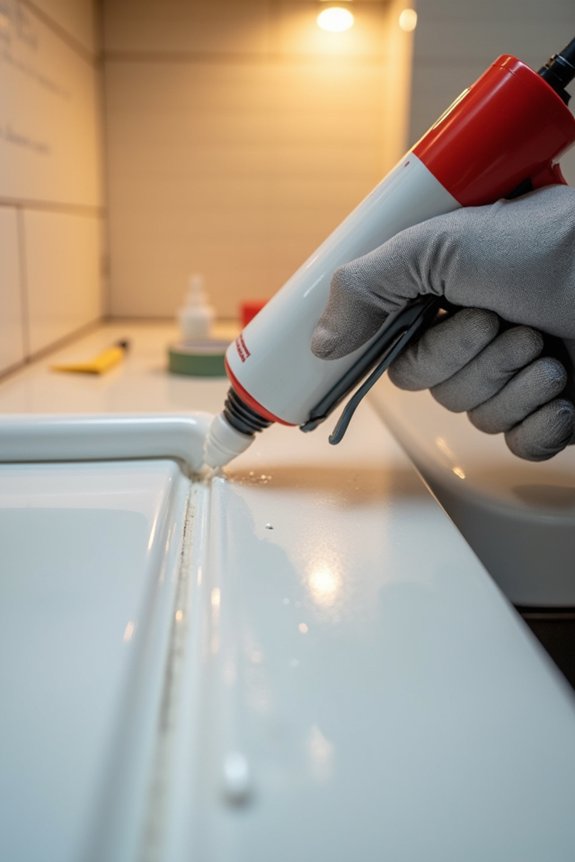
Why do seams matter so much? Gaps between countertops and walls invite water intrusion, causing expensive damage and mold growth. Here’s how to seal them properly.
- Choose the right caulk. Use kitchen/bath-grade or 100% silicone caulk for a watertight joint that resists moisture and prevents water damage behind your countertops.
- Match your grout/caulk color. Select caulk that matches your countertops or surrounding surfaces. This creates a seamless, professional appearance that looks intentional.
- Tool and cure correctly. Smooth the caulk with a damp finger or tool for a uniform, recessed joint. Let it cure fully before using the area to achieve maximum protection and durability.
Laminate vs. Stone: Which Materials You Can DIY

Choosing Between Laminate and Stone Countertops
Your decision between laminate and stone countertops should account for your budget, skill level, and willingness to handle installation yourself.
Laminate’s DIY Advantage
Laminate countertops work well for DIY installation. They’re lighter than stone, require simpler tools, and reduce heavy lifting risks. You’ll use a fine-tooth blade with painter’s tape to minimize chipping. Dry fitting before final securing prevents costly mistakes.
Stone’s Professional Requirement
Stone countertops demand professional installation. Their weight and precision demands exceed typical DIY capabilities. Professional installers have specialized equipment you’d need to rent or purchase.
Budget Considerations
Laminate saves money upfront and during installation. Stone costs more initially but offers greater durability. Both options last longer when properly installed.
Moisture and Maintenance
Proper edge sealing and ventilation around sinks matter for laminate. Stone requires less moisture maintenance overall.