
1) Install Motion-Activated Deterrents
Pair lights with sprinklers near entry points. This combination starles raccoons effectively through sudden movement and water spray.
2) Secure Food Sources
Keep trash cans in your garage until pickup day and use tight-fitting lids. Treat your lawn with milky spore to reduce grubs, which are a primary food source that attracts raccoons to residential areas.
3) Use Repellents
Apply capsaicin-based sprays around garden beds. These irritant sprays discourage raccoons from entering treated areas.
4) Seal Entry Points
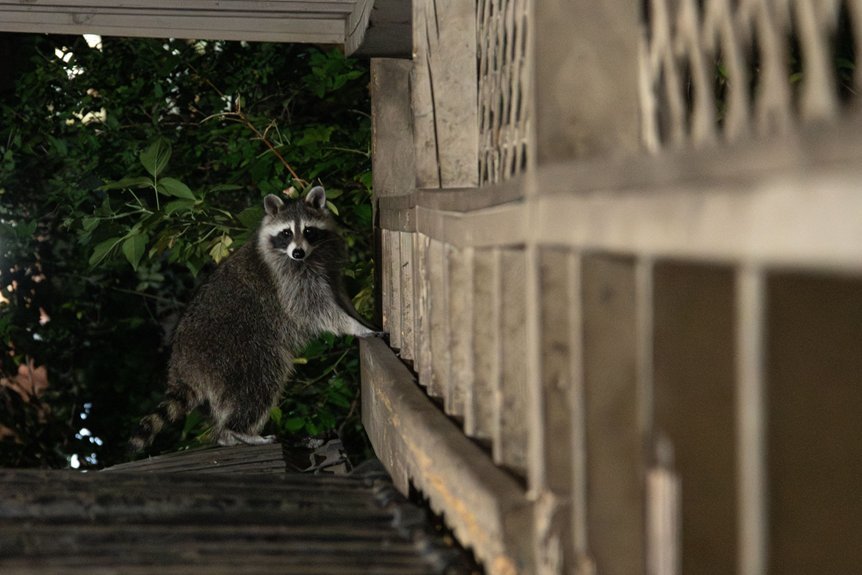
Block attic and deck gaps with wire mesh. This prevents raccoons from accessing shelter and nesting sites on your property.
These strategies work together because raccoons are adaptable creatures. Addressing multiple problem areas simultaneously creates an environment that discourages them from returning. Each method targets different aspects of what makes your yard attractive to wildlife, from food availability to shelter options.
Install Motion-Activated Lights and Sprinklers
Why do raccoons keep raiding your backyard at night? They’re drawn to darkness and easy access. Motion-activated lights work well as a deterrent.
1. How They Work
When raccoons approach your yard, the lights suddenly turn on. This startles them, making them retreat to safer areas.
2. Boost Your Defense
Pairing lights with sprinklers creates maximum impact. Together, they form a multi-sensory deterrent that’s hard to ignore.
3. Strategic Placement
Position these devices near entry points: gaps under decks, along fences, and around garden beds. This covers where raccoons typically operate.
4. Smart Choices
Solar-powered or battery-operated options save money on wiring. They also work during power outages.
5. Maintain Effectiveness
Regularly reposition and test your devices. Raccoons adapt quickly, so switching things up keeps them away.

Humane Lawn Protection: The Orbit Yard Enforcer Motion-Activated Sprinkler helps guard gardens and lawns from unwanted animals using a motion-activated sprinkler system

MOTION DETECTION: Detecting animal heat and movement within 60 feet, as the advanced infrared sensor instantly triggers a startling water spray to effectively repel squirrels, cats, deer, raccoons, and other nuisance pests from your yard

Motion Activated Sprinkler: Our motion activated sprinkler serves as an effective deer repellent device and cat deterrent, providing an efficient solution for keeping cats out of yard permanently. Ideal for yards, this device offers peace of mind.
Secure Trash, Food, and Grubs
While lights and sprinklers startle raccoons away, they’ll keep returning if food sources remain available.
1. Manage Your Trash Properly
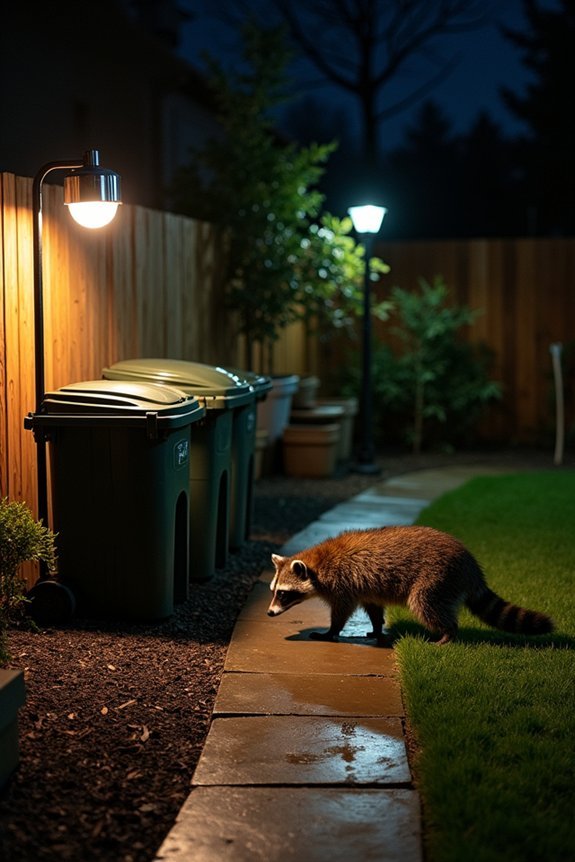
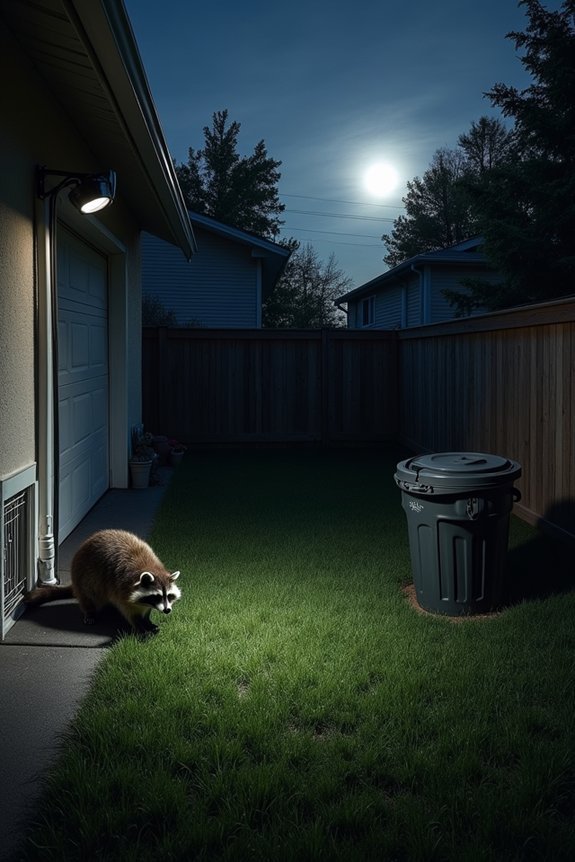
Store trash in wildlife-proof cans with secure lids. Use bungee cords or weights to keep lids firmly closed. Keep cans inside a shed or garage until pickup day. This simple step removes the food smells that attract raccoons at night.
Store trash in wildlife-proof cans with secure lids and keep them inside until pickup day to eliminate food odors attracting raccoons.
2. Reduce Food Odors
Freeze smelly foods like fish between pickups. Frozen items produce fewer odors, making your trash less appealing to raccoons.
3. Eliminate Grub Attractants
Treat your lawn with milky spore or nematodes to reduce grubs. Fewer grubs mean fewer reasons for raccoons to dig. This long-term solution cuts off a major food source they seek nightly.
4. Apply Deterrents
Use capsaicin-based repellents around protected areas. These deter raccoon foraging near gardens and yards effectively.

【360° Full Protection for Your Yard】: This solar animal repeller features a 3-sided design with PIR motion sensors, ultrasonic speakers, and dual LED flashing lights, delivering true 360° coverage. When motion is detected, it emits ultrasonic waves to stimulate animals’ hearing while flashing lights disrupt their vision, creating an uncomfortable environment that drives them away. Helps repel deer, cats, dogs, raccoons, skunks, rabbits and more.

2026 NEW AND ESSENTIAL FEATURES - Ultrasonic animal repeller activated by 2 sensors for a wider detection range of 220 degrees (no longer a 110 degree sensor) and 2 alarms with adjustable volume covering 360 degrees (no longer 1 fixed high volume). The 2 motion sensors are triggered by animals and will activate the flashing LED lights and emit a subtle ultrasound, which makes animals uncomfortable and keeps them away from your area. Wait about 2 weeks until the animals no longer appear.

【5 Adjustable Frequency Modes for Targeted Control】This repellent device features 5 selectable frequency settings to effectively deter various animals—from small pests like squirrels to larger ones such as raccoons, stray cats, dogs, foxes, and even deer. Easily switch between modes to prevent animals from getting used to the sound, ensuring long-lasting protection for your garden.
Safely Remove Raccoons Inside Your Home
If a raccoon has made its way into your home, don’t panic. You can handle it safely without direct contact.
1. Create an Exit Route
Open doors and windows to guide the raccoon outside. Use a chair to block spaces if needed. Keep pets secured in separate rooms so they won’t interfere with the removal.
2. Lure It Out
Place a trail of marshmallows or cheese leading toward an open door. This encourages the raccoon to leave on its own without confrontation.
3. Know When to Call
If the raccoon is trapped with its feet off the ground in your attic or chimney, contact your local animal control. Professionals handle difficult removals safely and humanely.
4. Avoid Trapping It Inside
Never seal entry points while a raccoon may still be present. Doing so will trap it inside and create bigger problems.

Durable Metal Double Claw: Heavy-duty metal claws with rubber coating provide strong grip and anti-slip performance. Paired with polyester and latex elastic locking system, this trash can lock is tough, durable, and resistant to outdoor wear and tear
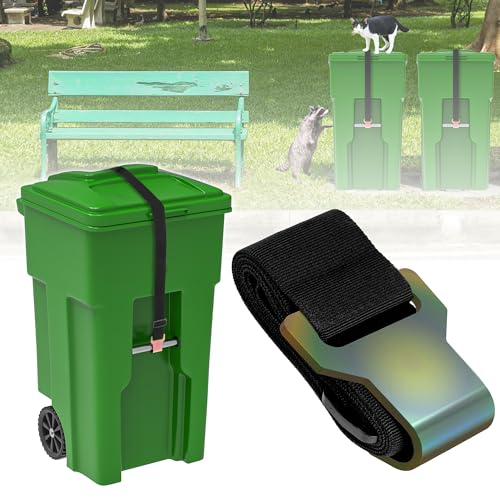
Locking trash can lids from opening: Are you tired of having to clean up the trash that is strewn about every day after a raccoon gets into your trash can? Or do you often have strong winds coming through your town blowing away trash can lids/blowing over your trash cans? Our outdoor trash can lid lock can be used to secure your trash can lid, not only to prevent animals from getting into your trash can, but also to prevent strong winds from blowing away your trash!

Animal & Weather Resistant : A practical trash can lock strap that keeps your outdoor bin sealed—helps deter bears, raccoons, squirrels, pets, and gusty wind from opening or tipping the lid. Ideal for home, curbside, camping, and other outdoor use. A simple trash can lock solution for raccoon proof garbage cans and bear proof trash can setups."
Seal Entry Points and Protect Vulnerable Areas
Seal Entry Points and Protect Vulnerable Areas
Once you’ve successfully removed raccoons from your home, your next step is stopping them from coming back. This guide covers how to seal entry points and protect vulnerable areas effectively.
1. Confirm Raccoons Have Left
Use newspaper as a temporary blocker for two to three days. This method tests whether raccoons have exited before you permanently seal entry points.
2. Seal Entry Points
Use 16-gauge wire mesh or metal flashing to deter raccoons from re-entering. Focus on attic access points, crawl spaces, and dormer junctions where gaps exist.
3. Protect Livestock and Chickens
Install a secure coop with a durable roof and auto-opening door. Bury welded wire footer around the perimeter to prevent digging underneath.
4. Regular Inspections
Inspect monthly for new openings or digging signs. Repair gaps immediately to maintain your barrier against raccoon intrusion.

Season-Long Effectiveness: Works continuously throughout the year, regardless of weather conditions, providing reliable grub control with no need for repeated treatments.

Natural Beetle Control: Provides an efficient way to naturally control Japanese beetle grubs in lawns before they can grow to maturity.

Natural Beetle Control: Provides an efficient way to naturally control Japanese beetle grubs in lawns before they can grow to maturity.
When to Call Animal Control or a Professional?
1. When Removal Attempts Fail
If you’ve tried removing the raccoon and it keeps returning, your DIY approach isn’t working. Call animal control. They have specialized equipment and training you don’t have access to.
2. Signs of Infestation
Repeated latrines, contamination in living spaces, or raccoons in your attic indicate a serious raccoon problem. Professionals can assess the damage and prevent health risks.
Repeated latrines and attic infestations signal serious raccoon problems requiring professional assessment to prevent health risks.
3. Complex Situations
Cubs present, multiple entry points, or den sites require expert help. Professionals implement long-term exclusion strategies that produce lasting results.
4. Safety Concerns
Never attempt catching a raccoon yourself. If you suspect rabies or see aggressive behavior, contact authorities immediately for proper assessment.

Hot Pepper Wax Spray effectively repels critters like deer, rabbits and squirrels from your yard and garden.
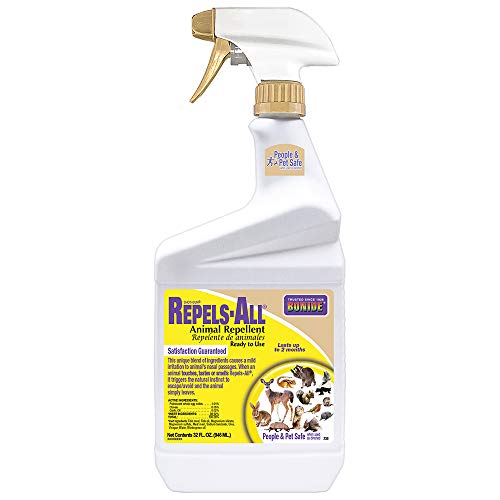
Keep animals out of your yard and garden with Repels-All Animal Repellent from Bonide! This special formula naturally deters a wide variety of garden pests including deer, mice, chipmunks, squirrels and more!

Go Away! Deer & Rabbit repellent effectively repels critters like deer, rabbits and squirrels from your yard and garden.