

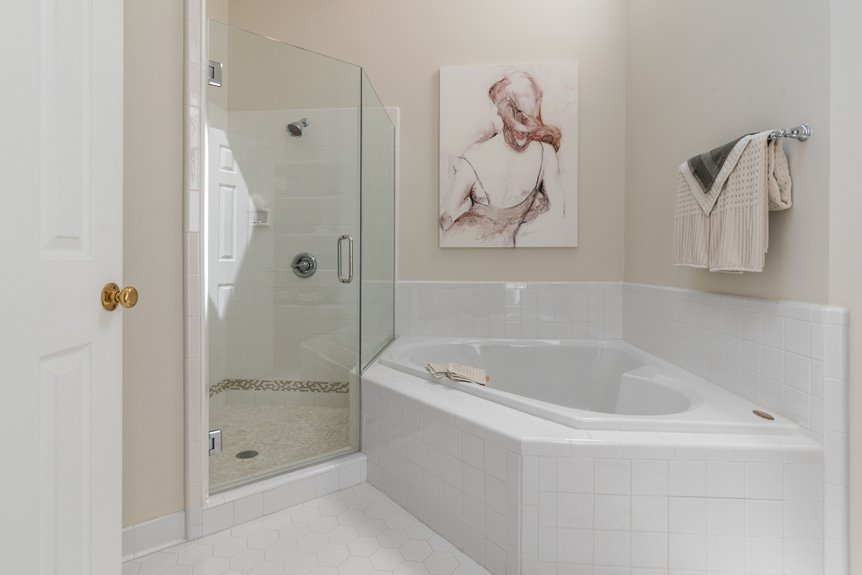
You can repaint your bathroom tiles without sanding. Start by cleaning thoroughly and filling any grout cracks with caulk. Seal the edges and grout lines to protect against water damage. Apply bonding primer in two coats, working through the grout lines first with your brush. Paint with porch and floor paint in three coats, waiting twelve or more hours between each application. Wait three full days before using your shower.
Following these five steps will give you results that look professionally done and hold up over time.
Clean Tile and Repair Damaged Grout (No Sanding Required)
Before you grab a paintbrush, prepare your tiles properly. Start with a thorough clean using heavy-duty cleaner or degreaser to remove all buildup. Rinse everything well and let it dry completely; moisture-free surfaces matter for paint adhesion.
Next, repair grout by filling any cracks with paintable caulk, which works well for small damage. For chips and joints around edges, use caulk seal to create a uniform surface. You don’t need to sand. Light roughening helps, but skip full sanding. Just wipe down tiles to remove dust.
Check grout edges carefully before moving forward. Once dry, apply bonding primer like STIX to help everything stick properly.
Seal Shower Edges and Grout Lines With Caulk
With your tiles prepped and primed, you’re ready to seal those tricky edges where water loves to sneak in. I’m using acrylic latex caulk instead of silicone because it’s paintable and bonds better with primer. I apply caulk to shower edges, around faucets, and between tile and tub. Then I smooth it with a damp gloved finger. After about one hour of drying, I’m ready to paint.
| Step | What to Caulk | Why It Matters |
|---|---|---|
| 1 | Shower edges | Prevents water damage |
| 2 | Grout lines | Creates waterproof sealant |
| 3 | Faucet areas | Stops leaks completely |
| 4 | Tile-to-tub gaps | Seals vulnerable spots |
| 5 | Damaged grout | Protects your bathroom |
If primer pulls away from caulk lines, I reseal those areas with paintable caulk. This step is important for proper paint adhesion and prevents future problems. Grout sealing with quality caulk will serve you well in protecting your bathroom surfaces.
Apply Bonding Primer in Two Coats
Since your caulk is dry and ready, it’s time to prime those tiles properly. I’m using Valspar Bonding Primer or INSL-X STIX because they grip glossy surfaces effectively. These bonding primers create strong adhesion that regular paint cannot match.
Start by brushing primer directly into grout lines and edges with careful attention. Then roll the remaining bathroom tiles with a 3/8 inch nap roller for even coverage. This tile prep step affects your final results significantly.
After the first coat dries completely, apply a second coat without sanding between them. Instead, feather any heavy areas to prevent peeling later. Two coats ensure thorough penetration into etched or glossy surfaces, creating a uniform base for paint that will adhere properly.
Paint With Porch and Floor Paint in Three Coats
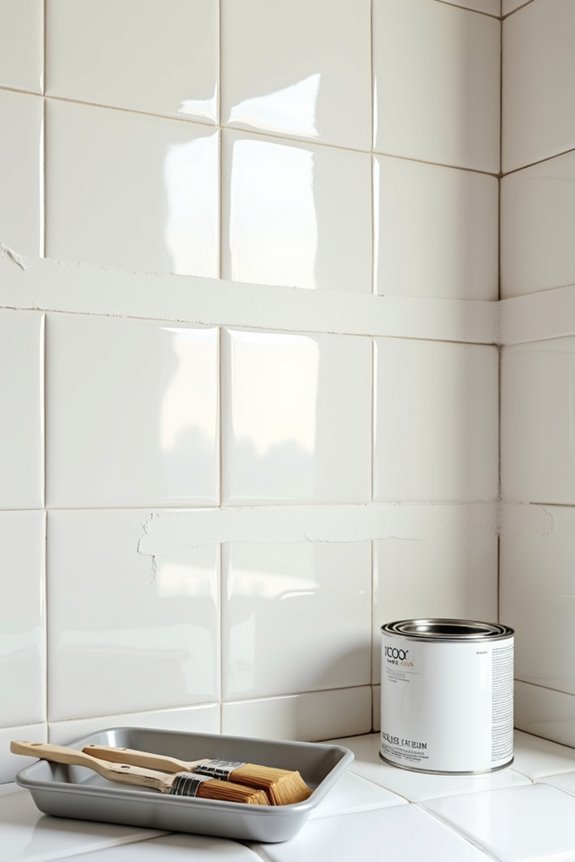
Now that your primer’s dry, you’re ready for paint. I’d recommend using porch and floor paint because it’s super durable for bathroom tiles. Apply your first coat with a brush along the edges around fixtures, then use a roller on the tile faces immediately after. This pushes paint directly into the grout lines. Let it dry twelve-plus hours before applying coat number two. Repeat this process for your third coat. Pay special attention to drains and corners, forcing paint into any gaps. If you notice pinholes, recoat those spots right away. Allow three full days of dry time after your final coat before exposing the tiles to water. This ensures your bathroom floor paint lasts.
Cure for Three Days Before Your First Shower
Why’s the waiting game so important? I’ll tell you straight: it’s everything. After I apply all three coats of paint to my bathroom tiles, I can’t just jump in the shower. The cure time is necessary here. Between each coat, I need about 12 hours of dry time. But here’s the real deal: my final coat requires a full three-day curing period before any water exposure. This means no showers, no splashing, nothing. I know it’s tough waiting, but skipping this step invites disaster. Moisture will seep into unprepared paint, causing premature peeling and water damage. By respecting the curing time, I’m protecting my painting tiles investment. Patience now prevents problems later. Trust the process, and my bathroom tiles stay beautiful longer.