

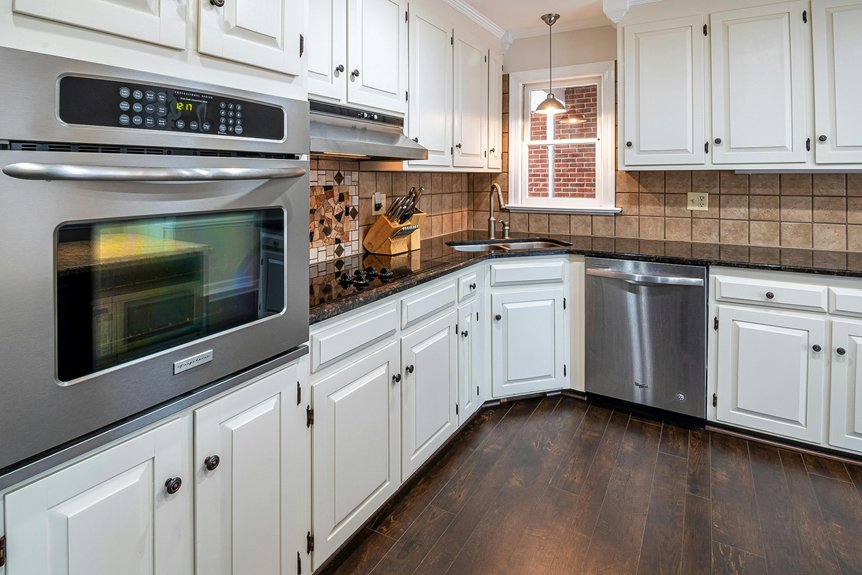
Kitchen cabinet replacement typically costs $5,000 to $25,000, with most homeowners spending around $15,000. Stock cabinets run $100 to $300 per linear foot, semi-custom options $150 to $650, and custom builds often exceed $1,200. Installation labor adds $2,000 to $4,500, depending on your region. Hidden costs, such as permits, disposal, and hardware upgrades, can add thousands more. Timing matters: spring and fall offer better contractor rates than summer months, which tend to be pricier. Understanding these cost tiers helps you find options matching your budget and kitchen needs.
Average Kitchen Cabinet Replacement Cost: What You’ll Actually Spend
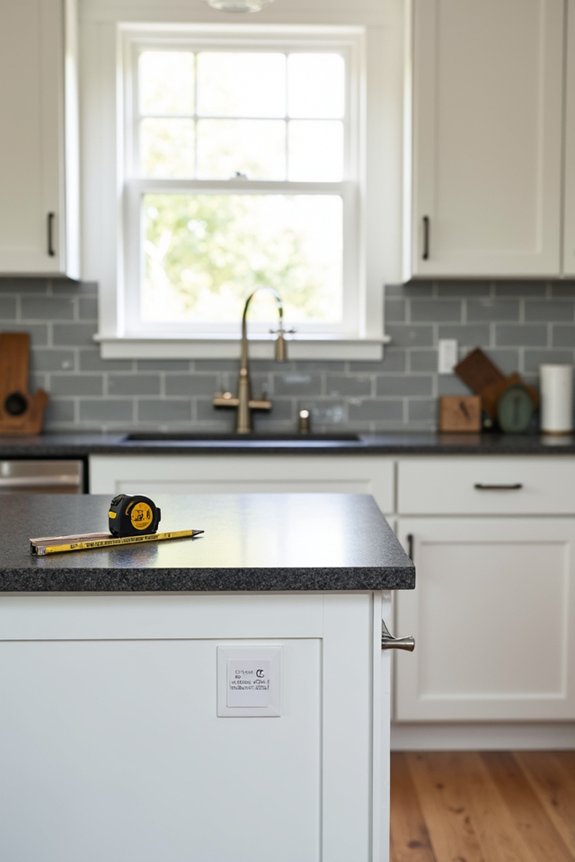
How much should you really budget for new kitchen cabinets? Most homeowners spend around $15,000 for a complete replacement. However, cabinet costs vary noticeably based on what you choose.
Most homeowners budget around $15,000 for complete kitchen cabinet replacement, though costs vary significantly based on quality and style choices.
1. Budget Range
You’ll typically invest between $5,000 and $25,000 total. This range depends on your kitchen size and cabinet quality.
2. Cabinet Type Matters
Stock cabinets cost $100 to $300 per linear foot, making them budget-friendly. Custom cabinets start at $500 per linear foot, offering personalized designs. Semi-custom options fall between these, at $150 to $650 per linear foot.
3. Labor Costs
Installation labor accounts for 15 to 25 percent of your budget. Expect $2,000 to $4,500 for standard kitchen labor. Complex projects cost more.
4. Additional Expenses
Add removal costs ($100 to $300), permits ($200 to $800), and hardware ($200 to $900).
Stock Cabinet Costs: Budget Pricing and Real Trade-Offs
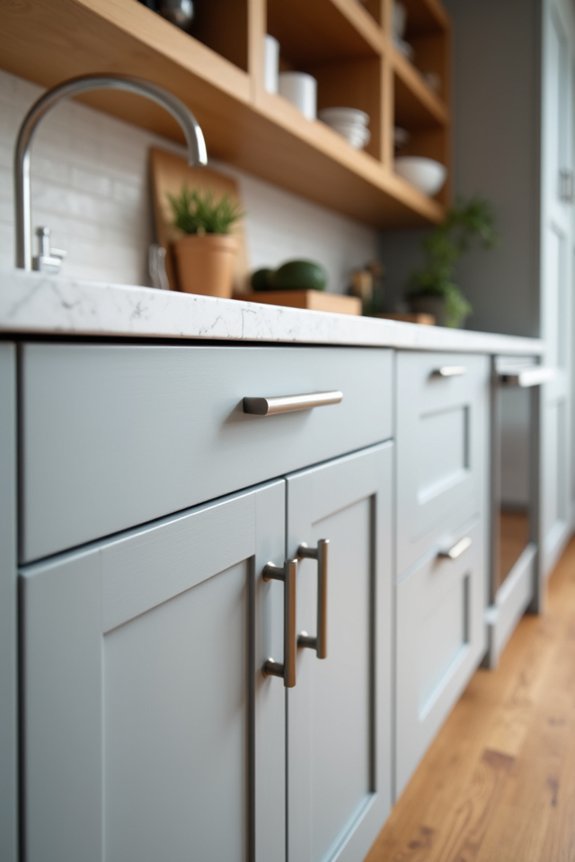
When you’re replacing kitchen cabinets on a budget, stock options offer significant savings; typically $100–$280 per linear foot installed. You’ll need to weigh those financial gains against some real limitations. This breakdown covers what makes stock cabinets affordable, how their quality holds up over time, and the layout constraints you might face. Understanding these trade-offs helps you decide if stock cabinets truly fit your kitchen’s needs and your wallet.
Budget-Friendly Installation Options
Stock cabinets offer the most affordable path forward for replacing kitchen cabinets on a limited budget. You’ll find stock cabinets range from $200 to $350 per cabinet, costing roughly $100 to $300 per linear foot installed. This economical option means your entire kitchen project typically runs $3,000 to $12,000.
1. Quick Installation Saves Money
Stock cabinets install in just days. You’re not waiting weeks like custom options require. Faster installation means lower labor costs overall.
2. Labor Keeps Costs Down
Labor represents only 15 to 25% of your total budget. That’s markedly less than semi-custom alternatives.
3. Smart Layout Choices
Keep your existing kitchen layout unchanged. You’ll avoid expensive plumbing and electrical work. Consider open shelving instead of full cabinets. Fewer cabinets mean real savings that add up quickly.
Material Quality And Durability
While budget-friendly installation keeps your costs down, what you’re actually buying matters just as much.
1. Understanding Your Material Choices
You’ll find three main material tiers. Laminate doors offer 30 to 40 percent savings and need minimal upkeep. Solid wood like oak and maple sit in the mid-range. Premium options like cherry or walnut cost substantially more.
2. Premium Features Impact Durability
Full overlay, dovetail drawers, and soft-close hardware add 15 to 25 percent to costs. These materials and durability upgrades extend cabinet lifespan noticeably.
| Material Type | Cost Level | Lifespan |
|---|---|---|
| Laminate doors | Budget | Standard |
| Solid wood (oak/maple) | Mid-range | Extended |
| Premium wood | High | Doubled |
| With premium features | +15–25% | Significantly longer |
3. Making Your Investment Count
Premium construction can double your cabinets’ lifespan compared to basic stock boxes. A higher initial investment means fewer replacements later, reducing waste and saving money over time. The durability difference between budget and premium options becomes significant after five to ten years of use, as lower-quality materials show wear more quickly in high-traffic kitchens.
Layout Limitations And Constraints
How do you know if stock cabinets will work in your kitchen?
1. Standard Sizing Constraints
Stock cabinets come in industry-standard sizes designed to fit typical kitchens. Your space might have unique angles or non-standard dimensions. You’ll need to measure carefully before committing.
2. Customization Trade-Offs
Limited customization is the biggest layout limitation you’ll face. Stock cabinets restrict where you can place shelves and storage solutions. You’re choosing from what’s already available, not designing something custom-fit for your needs.
3. Making It Work
You might need to compromise on your ideal storage layout. Some corners or awkward spaces won’t accommodate perfect solutions. Despite these constraints, stock cabinets remain affordable and install quickly, often in just days.
Semi-Custom Cabinet Pricing: The Mid-Range Sweet Spot
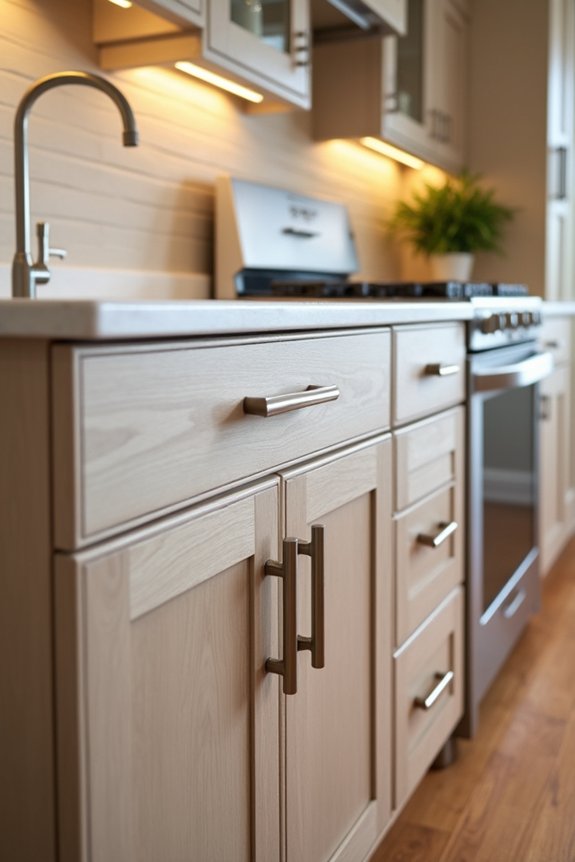
Looking for kitchen cabinets that offer more style than basic stock options without excessive costs? Semi-custom cabinets hit that balance point. You’ll find they cost about $150–$400 per linear foot for replacement, with total installation costs typically ranging from $3,000 to $8,500.
What You’re Getting:
- More size, color, and style choices than stock cabinets
- Premium materials and enhanced detailing without full custom pricing
- Per linear foot pricing around $200–$550 installed
- Individual cabinet pricing of $300–$600 each
Semi-custom cabinets let you customize your kitchen without overspending. Your final price depends mainly on linear footage and finish details you select. This category offers homeowners solid value when replacing kitchen cabinets.
Custom Cabinets: When Premium Costs Make Sense
Custom Cabinets: When Premium Costs Make Sense
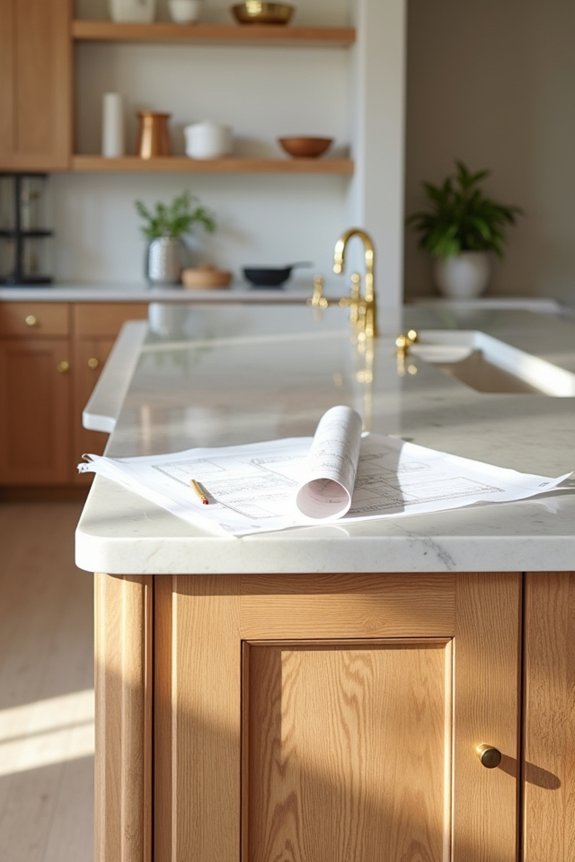
If your kitchen has an irregular layout or you’re seeking a one-of-a-kind design, custom cabinets merit consideration. Tailored joinery and bespoke materials justify premium costs when your space requires precision. You’re investing in exact specifications that stock options cannot provide.
Understanding the Investment
Custom cabinets typically cost $500 per linear foot, though pricing can exceed $1,200 depending on complexity. A replacement kitchen cabinets project runs $12,500 to $18,000 total, including installation and design services. The premium costs are substantial. However, you gain unlimited design options, superior longevity, and stronger resale appeal that often offset the initial expense.
What Installation Labor Actually Costs
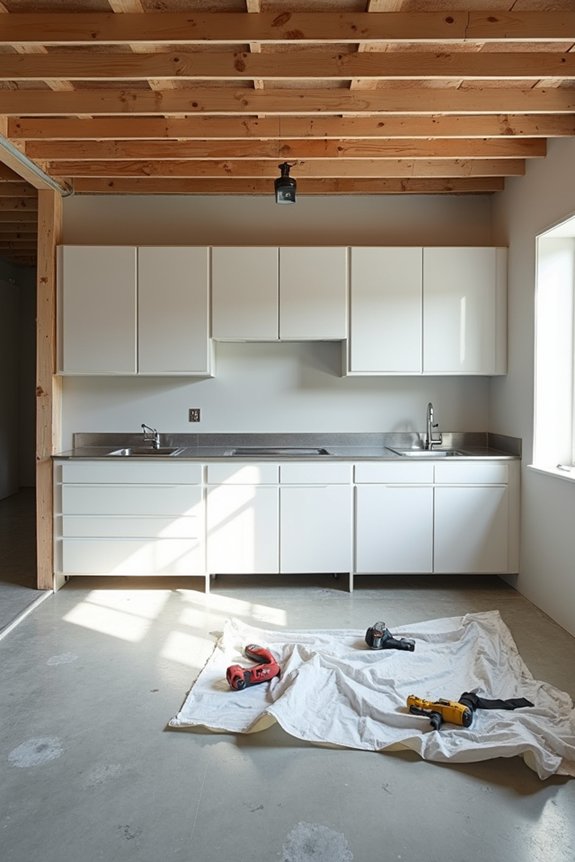
I’ll now break down what you’ll actually pay for installation labor and reveal costs that often surprise homeowners. Where you live substantially impacts your budget, since urban areas can run 20-30% higher than national averages. Beyond the base installation fee, hidden expenses like electrical work, plumbing adjustments, and old cabinet disposal can quickly add thousands to your final bill.
Labor Costs By Region
How much you’ll actually pay for cabinet installation depends heavily on where you live. Regional variation substantially impacts your labor budget. Urban areas typically see installation costs run 20-30% higher than national averages. This means you’re competing with costlier local markets and demand.
What I’ve learned about regional pricing:
- Urban centers: Premium labor rates exist due to higher overhead costs
- Suburban areas: Generally fall between urban and rural pricing tiers
- Rural regions: Often offer more affordable installation labor overall
- Coastal markets: Frequently command the highest regional premiums
Understanding your area’s labor costs helps you budget accurately. Standard kitchen installation ranges from $2,000 to $4,500 nationally, but your actual expenses depend on location. Getting local quotes shows exactly what installers charge in your region.
Hidden Installation Expenses
While you’ve budgeted for cabinet costs and labor installation rates, there’s more to your actual bill than just the sticker price.
1. Disposal Fees
Removing old cabinets creates waste. You’ll likely pay $100–300 for proper disposal, which keeps materials out of landfills.
2. Permits and Inspections
Depending on your location and project scope, permits range from $200–800. Regional variation affects these costs significantly.
3. Additional Labor Charges
Wall repairs, plumbing modifications, and hardware installation add hundreds to your labor bill. Special features like pull-outs increase installation time.
4. Finishing Touches
Crown molding, paint touch-ups, and appliance adjustments aren’t included in base labor quotes. Budget extra for these details.
Plan ahead. Understanding these hidden expenses prevents surprise charges and helps you manage your overall kitchen renovation budget effectively.
Soft-Close Hinges, Dovetail Drawers: Which Upgrades Justify the Price
When you’re upgrading your kitchen cabinets, you’ll encounter premium features that sound appealing but might leave you wondering if they’re worth the investment.
1. Understanding the Cost Impact
Soft-close hardware and dovetail drawers typically add 15-25% to your installation costs. These upgrades reflect smoother operation and higher perceived value in your kitchen space.
2. Key Upgrades Worth Considering
- Soft-close hinges reduce slamming and wear on doors, extending cabinet lifespan
- Dovetail drawers offer premium joinery with superior longevity and alignment
- Full overlay doors paired with soft-close hardware create seamless aesthetics
- Combined upgrades appear in semi-custom to custom cabinets at mid-to-high price ranges
3. Planning Your Budget
Account for both added cabinet hardware expenses and longer installation time. These features demand careful alignment and complex setup, but deliver lasting durability and smoother daily performance.
Permits, Hardware, Disposal: The Hidden Costs Nobody Mentions
Beyond the cabinet price tag itself, you’ll discover several expenses that catch many homeowners off guard.
1. Permits
Permits typically cost $200 to $800, depending on your location and project scope. Most municipalities require them for kitchen renovations. Skipping this step risks fines and complications during home sales.
2. Hardware
Handles and knobs run $40 to $800. Drawer slides and related hardware cost $200 to $900. Quality hardware lasts longer and saves money over time.
3. Disposal Fees
Old cabinet disposal usually costs $100 to $300 separately. Debris disposal for installation waste averages $486 to $736 per cabinet nationally. These fees support responsible waste management.
4. Additional Hidden Costs
Factor in demolition, crown molding, paint touch-ups, and potential plumbing or electrical modifications. Planning ahead prevents budget surprises and leads to smoother renovations.
DIY or Hire Out: Which Option Saves Money
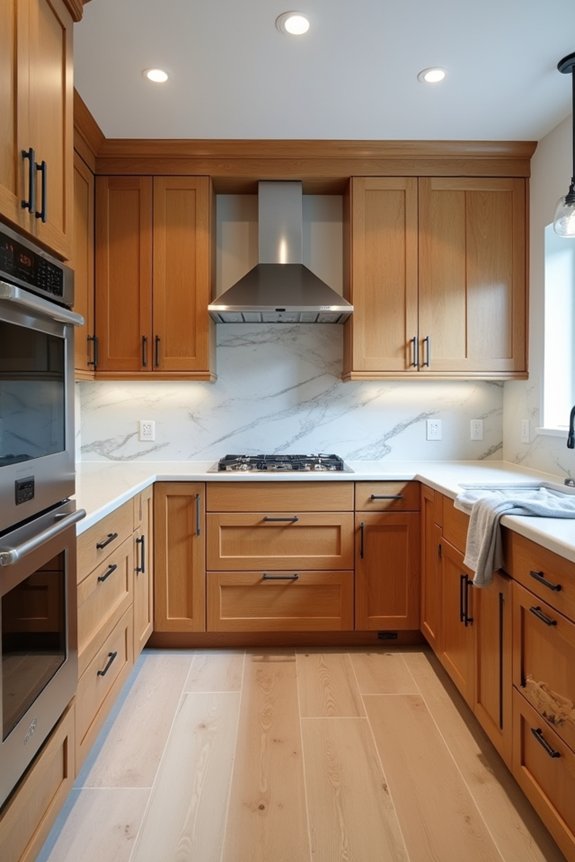
After accounting for permits, hardware, and disposal fees, you’ll face another major decision: tackling the installation yourself or hiring professionals.
1. DIY Installation Savings
You’ll save significant money by handling installation yourself. Labor typically costs 15-25% of your total budget. Stock or ready-to-assemble cabinet materials work best for DIY projects since they’re simpler to install.
2. Professional Installation Benefits
Hiring experts adds $2,000-$5,000 but provides quality results. Their skilled labor prevents costly mistakes with cabinet materials and measurements.
3. Hybrid Approach
Consider a balanced strategy: you demo the old cabinets while professionals handle installation. This approach reduces labor costs while ensuring proper cabinet placement and finishing.
4. Key Considerations
- DIY extends project timelines considerably
- Professional installation saves time and reduces stress
- Mistakes can increase overall expenses
- Stock cabinets suit DIY better than custom options
Spring vs. Summer: When Contractors Offer Better Pricing
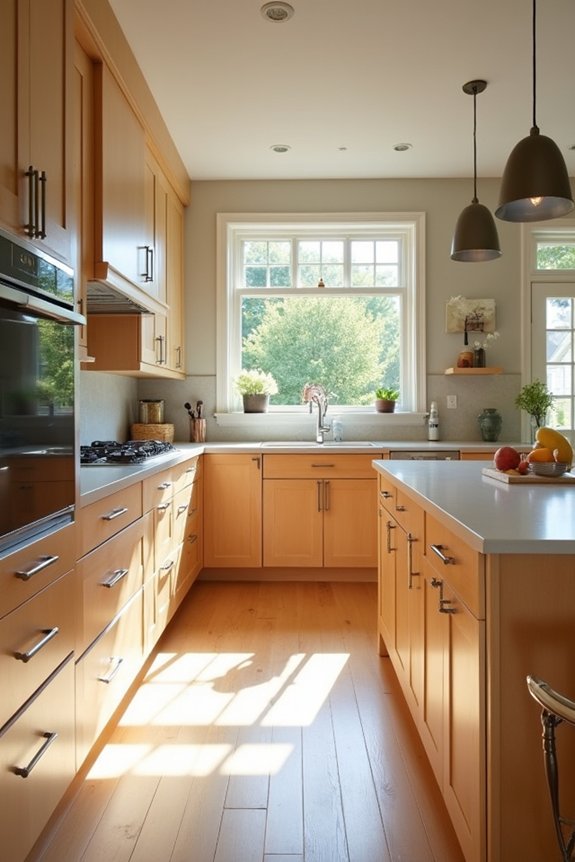
If you’re planning a cabinet replacement, timing matters because contractors charge more during summer’s peak season when demand surges. You’ll find better pricing and more flexible scheduling if you book projects in spring or fall, when contractors have more availability and fewer jobs competing for their attention. Planning ahead by getting quotes 2–3 months early locks in lower rates and helps you avoid the rush that drives up costs and delays installation.
Peak Season Pricing Premiums
When Should You Schedule Your Kitchen Cabinet Replacement?
1. Understanding Seasonality’s Impact
Peak season pricing premiums hit hardest during summer months. Contractors charge significantly more when demand surges. Spring and fall offer noticeably better rates because fewer homeowners schedule renovations then.
2. What Affects Your Budget
Consider these timing factors:
- Summer labor costs rise 15-20% due to high contractor demand
- Spring availability means shorter wait times for installation slots
- Custom cabinet lead times extend during peak season, delaying projects
- Fall pricing rivals spring rates with reduced competition for contractor time
3. Smart Scheduling Strategy
Planning your replacement during shoulder seasons saves money. You’ll access better bids, faster scheduling, and lower labor expenses. Spring and fall renovations align with contractor availability and reduced material costs, helping your budget stretch further while maintaining quality workmanship.
Off-Season Contractor Availability
While summer pricing premiums can strain your budget, spring offers a smarter alternative.
1. Lower Costs During Off-Season
Spring pricing rewards smart planning. Contractors have lower demand during off-season months, so they’re eager for work. This means you’ll negotiate better rates than summer’s peak pricing.
2. Better Contractor Availability
When you schedule your project in spring, skilled installers have shorter wait times. You’re not competing with dozens of other homeowners. Improved contractor availability means faster scheduling and quicker installation.
3. Faster Lead Times
Custom cabinet options and delivery happen quicker in spring. You’ll avoid summer delays significantly. Some contractors offer promotional discounts to attract work during slower months, stretching your budget further while supporting local businesses during quieter seasons.
Budget Planning Timeline Strategy
How’s your budget looking for a cabinet renovation?
Timing your project strategically saves you real money. Spring offers the best window for cabinet work. Contractors have more availability, and pricing stays competitive before summer demand kicks in.
1. Smart Scheduling Tips
- Plan your renovation 2–3 months in advance to align with typical lead times
- Book contractors early to secure preferred dates and avoid surcharge periods
- Avoid peak summer pricing when possible to negotiate better rates
- Schedule during spring or fall when demand decreases and costs drop
2. Why Timing Matters
When you schedule ahead, you’re not just saving money. You’ll get faster delivery windows and contractor availability. Smart planning protects your budget while ensuring quality work gets done right.
Where to Cut Costs Without Sacrificing Kitchen Function
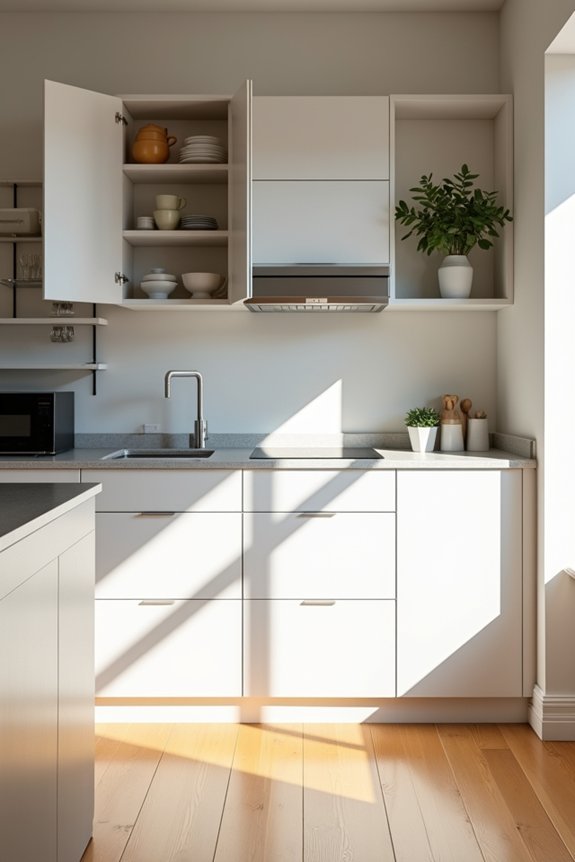
Where to Cut Costs Without Sacrificing Kitchen Function
If you’re concerned about kitchen cabinet costs, there’s good news: you don’t need to spend a fortune to get functional cabinets.
1. Choose Stock or Budget-Friendly Options
Stock cabinets cost $100–$280 per linear foot installed. They’re affordable and readily available. Thousands of homeowners rely on them for practical, reliable performance.
Stock cabinets deliver affordable kitchen solutions at $100–$280 per linear foot, trusted by thousands of homeowners nationwide.
2. Use Cost-Effective Materials
MDF and plywood with veneers deliver quality appearance without premium pricing. These materials perform well and reduce waste through efficient manufacturing.
3. Keep Your Layout Unchanged
Avoid relocating plumbing or electrical systems. This single decision saves thousands while maintaining your kitchen’s functionality.
4. Mix Smart Solutions
Combine stock cabinets with open shelving. This approach reduces expenses while creating visual interest and accessibility you’ll use daily.